November 2022 in “Journal of Investigative Dermatology” Cell-based therapy using specific immune cells may help treat alopecia areata by promoting hair regrowth.
13 citations
,
March 2020 in “Acta veterinaria Scandinavica” Stem cells from fat improve dog wound healing better than standard treatment.
 9 citations
,
October 2021 in “Biological and Pharmaceutical Bulletin”
9 citations
,
October 2021 in “Biological and Pharmaceutical Bulletin” Mupirocin nanoparticle-loaded hydrogel is safe and effective for healing burn wounds.
2 citations
,
October 1990 in “PubMed” Severe alopecia areata involves higher levels of certain immune cells, which can be normalized with betamethasone.
91 citations
,
January 2010 in “Journal of Allergy and Clinical Immunology” NK cells play a role in skin diseases like eczema and psoriasis.
 18 citations
,
May 2018 in “International Journal of Molecular Sciences”
18 citations
,
May 2018 in “International Journal of Molecular Sciences” Human body's immune cells are more common in the layer of fat just beneath the skin than in deeper fat layers.
 4 citations
,
August 2017 in “Journal of cutaneous pathology”
4 citations
,
August 2017 in “Journal of cutaneous pathology” An 8-year-old girl had a rare, benign skin tumor on her forehead.
 3 citations
,
April 2016 in “The journal of investigative dermatology/Journal of investigative dermatology”
3 citations
,
April 2016 in “The journal of investigative dermatology/Journal of investigative dermatology” Curcumin applied to the skin can start hair growth in mice.
Different types of skin cells and immune cells play a role in healing UV-damaged skin, with chronic UV exposure causing lasting damage to certain skin cells.
Different types of sun exposure can damage skin cells and affect healing, with chronic exposure being more harmful, and certain immune cells help in the repair process.
 April 2018 in “Journal of Investigative Dermatology”
 Mint water extract boosts protective enzymes in skin cells.
 February 2011 in “Journal of Investigative Dermatology”
 New findings suggest targeting IL-23 could treat psoriasis, skin cells can adapt to new roles, direct conversion of skin cells to blood cells may aid cell therapy, removing certain tumor cells could boost cancer immunotherapy, and melanoma may have many tumorigenic cells, not just cancer stem cells.
 7 citations
,
February 2015 in “Journal of comparative pathology”
7 citations
,
February 2015 in “Journal of comparative pathology” CD8+ T cells play a key role in graft-versus-host disease in certain mice models.
31 citations
,
June 2022 in “Stem Cell Research & Therapy” CD146 + mesenchymal stem cells are more effective for treating premature ovarian failure.
 16 citations
,
April 2007 in “Journal of Medical Primatology”
16 citations
,
April 2007 in “Journal of Medical Primatology” The monkey's hair loss was due to an autoimmune disease, not genetics.
 3 citations
,
September 2017 in “The journal of investigative dermatology/Journal of investigative dermatology”
3 citations
,
September 2017 in “The journal of investigative dermatology/Journal of investigative dermatology” CBD can either promote or inhibit hair growth depending on the concentration used.
 1 citations
,
October 2023 in “Journal of the Pakistan Medical Association”
1 citations
,
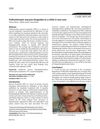
October 2023 in “Journal of the Pakistan Medical Association” Folliculotropic mycosis fungoides can occur in children and is diagnosed with specific tests, but often stays in early stages with treatment.
July 2025 in “Journal of Investigative Dermatology” γδ T cells can prevent and treat alopecia areata, offering a new therapy option.
 January 2025 in “bioRxiv (Cold Spring Harbor Laboratory)”
 Potential therapeutic targets for scarring hair loss are identified.
 November 2023 in “The Bovine practitioner”
 A bull got very sick and had to be put down after eating hairy vetch for months.
Higher PD-1 levels mean fewer CD8+ T cells in alopecia areata hair follicles.
 September 2017 in “The journal of investigative dermatology/Journal of investigative dermatology”
 Human hair follicles have a unique way of using energy and might use the Cori cycle; blocking CCR5 could help treat hair loss.
 April 2017 in “Journal of Investigative Dermatology”
 SM04755 may be an effective topical treatment for psoriasis.
 April 2017 in “Journal of Investigative Dermatology”
 SIG-1451 could be a promising new treatment for atopic dermatitis.
 April 2012 in “Informa Healthcare eBooks”
 Lichen planopilaris is a rare, chronic condition causing hair loss, mainly in middle-aged women, and early treatment is important to prevent permanent baldness.
 September 1998 in “Journal of the European Academy of Dermatology and Venereology”
 Autoimmune and inflammatory processes are involved in both scarring and non-scarring types of hair loss.
253 citations
,
December 2007 in “Journal of Investigative Dermatology” Hair follicles prevent NK cell attacks to avoid hair loss.
 139 citations
,
February 2010 in “The journal of allergy and clinical immunology/Journal of allergy and clinical immunology/The journal of allergy and clinical immunology”
139 citations
,
February 2010 in “The journal of allergy and clinical immunology/Journal of allergy and clinical immunology/The journal of allergy and clinical immunology” Transplant success has improved with better immunosuppressive drugs and donor matching.
45 citations
,
August 2018 in “Haematologica” Macrophage iron release is crucial for hair growth and wound healing.
 27 citations
,
July 2017 in “Scientific Reports”
27 citations
,
July 2017 in “Scientific Reports” N-WASP is essential for healthy skin and preventing inflammation.