352 citations
,
August 2003 in “Proceedings of the National Academy of Sciences” Nestin is found in hair follicle progenitor cells, linking them to neural stem cells.
15 citations
,
September 2014 in “PloS one” The study found that analyzing certain cell signaling pathways is not a reliable method to tell apart two types of skin tumors.
1 citations
,
January 1989 Four antibodies were developed to help study hair follicle cell differentiation.
July 1997 in “JEADV. Journal of the European Academy of Dermatology and Venereology/Journal of the European Academy of Dermatology and Venereology” 10 citations
,
May 2020 in “Dermatologic therapy” Tildrakizumab significantly improved recalcitrant lichen planopilaris and frontal fibrosing alopecia.
 August 2023 in “The journal of investigative dermatology/Journal of investigative dermatology”
 Longer immunotherapy treatment may improve outcomes for Merkel cell carcinoma patients.
 1 citations
,
June 2017 in “Nature Reviews Immunology”
1 citations
,
June 2017 in “Nature Reviews Immunology” Immune cells called Treg cells are essential for hair growth and regeneration.
January 2014 in “Institutional Repositories DataBase (IRDB)” Fibroblast spheres can form stem cells, but marker distribution needs more study.
7 citations
,
October 2008 in “Arthritis Care & Research” Aggressive immunosuppressive treatment improved a woman's severe heart condition linked to autoimmune disease.
 139 citations
,
December 1998 in “The journal of investigative dermatology/Journal of investigative dermatology”
139 citations
,
December 1998 in “The journal of investigative dermatology/Journal of investigative dermatology” K6hf is a unique protein found only in a specific layer of hair follicles.
October 1998 in “Data Archiving and Networked Services (DANS)” Basal cell carcinoma cases are rising globally.
 June 2024 in “British Journal of Dermatology”
 A rare case of a transplant patient developing a skin condition linked to HPV-49.
 2 citations
,
June 2018 in “Clinical and Experimental Dermatology”
2 citations
,
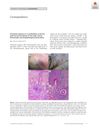
June 2018 in “Clinical and Experimental Dermatology” Permanent hair loss after a stem cell transplant can be a sign of chronic immune system attack on the scalp.
 56 citations
,
May 2017 in “Nature Cell Biology”
56 citations
,
May 2017 in “Nature Cell Biology” Hair can regrow after certain stem cells are lost because other stem cells can take over their role.
 April 2022 in “Biomedicine & Pharmacotherapy”
 CXCL12 protein slows down hair growth through its receptor CXCR4. Blocking this can potentially increase hair growth.
14 citations
,
July 2021 in “Anais brasileiros de dermatologia/Anais Brasileiros de Dermatologia” Interleukin levels are higher in alopecia areata patients but don't predict disease severity or duration.
 15 citations
,
August 2006 in “Journal of Cutaneous Pathology”
15 citations
,
August 2006 in “Journal of Cutaneous Pathology” HIV-1 may cause increased stem cell death in hair follicles, leading to hair loss.
3 citations
,
August 2024 in “Skin Research and Technology” LC-OCT can help identify lupus-related scarring hair loss by spotting unique features.
 April 2023 in “The journal of investigative dermatology/Journal of investigative dermatology”
 The study found that a key immune pathway protecting hair follicles is reduced in a mouse model of scarring hair loss.
August 2025 in “BMC Pharmacology and Toxicology” The LTF gene may help predict and manage nonspecific orbital inflammation.
18 citations
,
July 2010 in “Journal of the American Academy of Dermatology” Folliculotropic mycosis fungoides can look like alopecia areata.
18 citations
,
February 2017 in “Molecular Medicine Reports” Activating Notch signaling can kill basal cell carcinoma cells.
16 citations
,
September 2006 in “The Journal of Immunology” MILL molecules are unique immune proteins in mice that don't need TAP to appear on cell surfaces.
19 citations
,
May 2016 in “Cytotechnology” 3 citations
,
August 2024 in “Molecular Biology Reports” LncRNA018392 helps goat skin cells grow by increasing CSF1R.
 April 2023 in “Journal of Investigative Dermatology”
 IL-9/IL-9R signaling can negatively affect human hair growth and may be a target for treating hair loss conditions.
36 citations
,
September 1996 in “PubMed” DP and DS cells are different from DF cells in structure and function.
 April 2019 in “Journal of Investigative Dermatology”
 Merkel cell carcinoma is most likely to recur within two years of diagnosis, and factors like immune suppression, being over 75, and male sex increase this risk.
15 citations
,
June 2020 in “Journal of the American Academy of Dermatology” Shiny white structures in trichoscopy can indicate long-standing discoid lupus erythematosus alopecia.
May 2010 in “OPAL (Open@LaTrobe) (La Trobe University)” Vaccines and targeting TrxR variants can help prevent cancer and reduce metastasis.