Search
for
Sort by
Research
480-510 / 1000+ resultsresearch Il-10 family members as novel responders to genotoxic stress
IL-19 and IL-24 help cells respond to DNA damage and could be targeted for cancer and age-related disease treatments.
research Treatment-resistant giant unilateral Bowen’s disease of the scalp responding to radiotherapy
Radiotherapy was effective for treating a large scalp plaque of Bowen's disease when other treatments failed.
research Accurate quantification of minimal residual disease at day 15, by real-time quantitative polymerase chain reaction identifies also patients with B-precursor acute lymphoblastic leukemia at high risk for relapse
Measuring minimal residual disease on day 15 helps identify high-risk leukemia patients.
research Characterization of a new, inducible transgenic mouse model with GFP expression in melanocytes and their precursors
A new mouse model helps study melanocyte cells using GFP expression.
research Decreased CD19+CD24hiCD38hi Regulatory B Cells in Alopecia Areata
Alopecia areata patients have fewer protective regulatory B cells, which may contribute to the disease.
research A Monoclonal Antibody Established from the Immunization of Basal Cell Carcinoma (BCC) Tissues Reacts to the Intercellular Space of BCC and Hair Follicles
The antibody created from BCC tissues reacts similarly to both BCC and hair follicles, suggesting BCC may come from hair follicle cells.
research Salvage Chemotherapy in Follicular Non-Hodgkin's Lymphoma: Focus on Tolerability
Balancing treatment effectiveness with side effects is crucial for relapsed follicular non-Hodgkin's lymphoma, especially in older patients.
research LB1777 A novel ex vivo model of human hair follicle immune privilege collapse reveals the potential of farudodstat, a DHODH inhibitor, as a therapeutic for alopecia areata treatment
Farudodstat may help treat alopecia areata by protecting hair follicles.
research Increased expression of PD‐L1 and PD‐L2 in dermal fibroblasts from alopecia areata mice
PD‐L1 and PD‐L2 may not effectively control immune activation in alopecia areata.

research Differential expression of stem cell markers in human follicular bulge and interfollicular epidermal compartments
Different markers are found in stem cells of the scalp's hair follicle bulge and the surrounding skin.
research Tolerance induction by hair-specific keratins in murine alopecia areata
Nonimmunogenic forms of keratins K71 and K31 can delay and prevent alopecia areata.
research Conditional telomerase induction causes proliferation of hair follicle stem cells
Activating TERT in mice skin boosts hair growth by waking up hair follicle stem cells.
research Drug Discovery Today: Therapeutic Strategies - 2006 Editorial
The 2006 editorial concluded that immunotherapy was advancing with new drugs, focusing on specific biological therapies and convenient oral treatments, and highlighted the importance of partnerships and new regulations in the field.

research 1409 Temporary cell cycle arrest by ALRN-6924: A novel, p53-targeting strategy to protect human scalp hair follicles against cyclophosphamide-induced alopecia
ALRN-6924 can protect hair follicles from chemotherapy damage by temporarily stopping cell division.
research A New Humanized Mouse Model for Alopecia Areata
A new mouse model helps understand and find treatments for alopecia areata.
research Skin γδ T cell subsets have distinct functions in alopecia areata 3844
Different γδ T cell types have unique roles in causing alopecia areata.
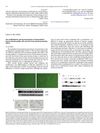
research The establishment and characterization of immortalized human dermal papilla cells and their hair growth promoting effects
Researchers made a cell line that grows quickly and can help with hair growth research.
research Mycobacterial 65,000 MW heat-shock protein shares a carboxy-terminal epitope with human epidermal cytokeratin 1/2.
A mycobacterial protein shares a similar region with a human skin protein, possibly affecting skin diseases.
research Alopecia areata as a model for T cell‐dependent autoimmune diseases
Alopecia areata helps study T cell-driven autoimmune diseases.
research Biological Features Implies Potential Use of Autologous Adipose-Derived Stem/Progenitor Cells in Wound Repair and Regenerations for the Patients with Lipodystrophy
Adipose-derived stem cells can help repair tissue in lipodystrophy patients.
research The possible implication of the S250C variant of the autoimmune regulator protein in a patient with autoimmunity and immunodeficiency: in silico analysis suggests a molecular pathogenic mechanism for the variant
The S250C variant in a gene may cause autoimmunity and immunodeficiency by impairing protein function.
research Autoimmune Disease Induction in a Healthy Human Organ: A Humanized Mouse Model of Alopecia Areata
Alopecia areata can be triggered by specific immune cells without genetic or environmental factors.
research Differential diagnosis of basal cell carcinoma and benign tumors of cutaneous appendages originating from hair follicles by using CD34.
research 319 Novel Circulating Natural Killer Cell Subset as Biomarkers in Alopecia Areata Progression
Certain NK cell changes in blood may indicate alopecia areata progression.
research 097 LFA-1 blockade prevents the onset of alopecia areata in C3H/HeJ mice
Blocking LFA-1 prevents hair loss in mice.
research Folliculotropic mycosis fungoides with central nervous system involvement: Demonstration of tumor clonality in intrafollicular T cells using laser capture microdissection
Folliculotropic mycosis fungoides can affect the central nervous system in advanced stages.
research 3D spheroid culture synchronizes heterogeneous MSCs into an immunomodulatory phenotype with enhanced anti-inflammatory effects
3D spheroid culture makes stem cells better at reducing inflammation.

research Halo naevi, vitiligo and diffuse alopecia areata associated with tocilizumab therapy
Tocilizumab therapy may cause skin and hair conditions like halo naevi, vitiligo, and alopecia areata.
research 431 Innate lymphoid cells type 1 may be new, non-antigen-specific player in the pathogenesis of alopecia areata
Innate lymphoid cells type 1 may contribute to alopecia areata.