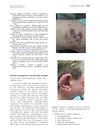
A 72-year-old man was diagnosed with a rare skin form of Rosai-Dorfman disease after years of misdiagnosis.
April 2010 in “Cancer Research” Basal cell carcinomas may use IDO to protect themselves from the immune system.
Amotosalen-treated donor T-cells can prevent late CMV infection after bone marrow transplants.
4 citations
,
June 2025 in “Cell Reports” Clonally expanded CD8+ T cells cause alopecia areata.
January 2024 in “Wiadomości Lekarskie” DEC cells show promise as a safe and effective treatment for Duchenne muscular dystrophy.
 39 citations
,
May 2004 in “Clinics in Dermatology”
39 citations
,
May 2004 in “Clinics in Dermatology” The document concludes that treatment for cutaneous T-cell lymphoma should be customized to each patient's disease stage, balancing benefits and side effects, with no cure but many patients living long lives.
 1 citations
,
November 2024 in “Cureus”
1 citations
,
November 2024 in “Cureus” Recognizing RSCC is crucial due to its aggressive nature and high risk of poor outcomes.

γδTregs may help treat autoimmune diseases like alopecia areata by promoting hair regrowth and reducing immune attacks.
April 2023 in “Journal of Investigative Dermatology” Targeting mTOR in myeloid cells may help reduce psoriasis symptoms.
 2 citations
,
June 2026 in “Frontiers in Science”
2 citations
,
June 2026 in “Frontiers in Science” Regulatory T cells help control the immune system and could lead to new treatments for diseases.
April 2016 in “The journal of investigative dermatology/Journal of investigative dermatology” Combining UVB irradiation and anti-CD154 antibody improves hair follicle transplant survival.
3 citations
,
October 1994 in “Journal of Dermatological Science” The new antibody, TYHF-1, specifically targets certain hair-related structures.
 9 citations
,
April 2021 in “Frontiers in Immunology”
9 citations
,
April 2021 in “Frontiers in Immunology” Unconventional lymphocytes are important for quick immune responses and healing of skin and mucosal barriers.
2 citations
,
August 2016 in “Journal of Investigative Dermatology” October 2025 in “Cell Death and Disease” CD271 is crucial for maintaining healthy skin and preventing inflammation.
 11 citations
,
March 2024 in “Cell and Tissue Research”
11 citations
,
March 2024 in “Cell and Tissue Research” Telocytes have potential in therapy and tissue regeneration, but challenges in identification and cultivation remain.
 April 2017 in “Journal of Dermatological Science”
 B cells can both help and hinder the body's defense against melanoma.
245 citations
,
October 2015 in “Nature medicine” Hair follicle-derived IL-7 and IL-15 are crucial for maintaining skin-resident memory T cells and could be targeted for treating skin diseases and lymphoma.
1 citations
,
May 2025 in “The Journal of Dermatology” Increased regulatory T cell activity may lead to better outcomes in acute diffuse and total alopecia.
 5 citations
,
June 1994 in “Journal of Cutaneous Pathology”
5 citations
,
June 1994 in “Journal of Cutaneous Pathology” No CD44 in alopecia areata, present in normal and androgenetic alopecia.
 1 citations
,
January 2021
1 citations
,
January 2021 CD4+ skin cells may be precursors to basal cell carcinoma.
2 citations
,
April 2025 in “Journal of Investigative Dermatology” T cells affect skin cell genes in inflammatory diseases, and therapy can normalize these changes.
2 citations
,
March 2010 in “Acta Biochimica Polonica” Raltitrexed conjugates are less potent than the free drug but more effective at high concentrations.
5 citations
,
March 2020 in “Thoracic Cancer” CT-707 is effective and safe for treating certain Chinese lung cancer patients.
22 citations
,
October 2000 in “British Journal of Haematology” Non-myeloablative stem cell transplants are a promising, less toxic option for older or weaker patients, with fewer side effects and good outcomes.
2 citations
,
July 2022 in “The Kaohsiung Journal of Medical Sciences” FTY720 helps transplanted fat survive better by reducing immune rejection and improving blood vessel growth.
November 2025 in “Journal of Investigative Dermatology” PCFCL may have unrecognized subtypes and needs more research.
9 citations
,
March 2017 in “Journal of Visualized Experiments” The assay effectively identifies compounds that affect immune cell activation.
49 citations
,
August 2022 in “Frontiers in Immunology” Psoriasis involves an imbalance between certain immune cells, and targeting these could help restore skin health.
April 2026 in “Research Square”