Search
for
Sort by
Research
90-120 / 1000+ resultsresearch CD169+ Skin Macrophages Function as a Specialized Subpopulation in Promoting Psoriasis-like Skin Disease in Mice
Targeting CD169+ skin macrophages may help treat psoriasis.
research Transient CD44 Variant Isoform Expression and Reduction in CD4+/CD25+ Regulatory T Cells in C3H/HeJ Mice with Alopecia Areata
CD44 variant changes start alopecia areata, but don't maintain it.
research Enrichment for Living Murine Keratinocytes from the Hair Follicle Bulge with the Cell Surface Marker CD34
CD34 is a marker for isolating stem-like cells in mouse hair follicles.
research Anti-CD44-mediated blockade of leukocyte migration in skin-associated immune diseases
Blocking CD44 can reduce leukocyte migration in autoimmune skin diseases.
research CD200-Mediated Regulation of Skin Immunity
research Abstract 5357: Targeting mTORC1 suppresses proliferation of keratinocyte stem cells and inhibits skin tumor promotion in mice
Blocking mTORC1 reduces skin tumor growth in mice.

research 944 Non-coding double stranded RNA induces retinoic acid synthesis and retinoid signaling to control regeneration
Non-coding RNA boosts retinoic acid production and signaling, aiding regeneration.
research CD44 expression in alopecia areata and androgenetic alopecia
No CD44 in alopecia areata, present in normal and androgenetic alopecia.
research CD44 signaling in skin wound healing and regeneration
CD44 signaling can help heal wounds without scars.

research 24 ARQ-234: a high affinity CD200-Fc fusion protein for the treatment of atopic dermatitis
ARQ-234, a protein designed to treat atopic dermatitis, shows increased effectiveness in early testing.
research 042 Characterization of Pathogenic CD8+ T Cells in an adoptive transfer Mouse Model of Alopecia Areata in C3H/HeJ mice
Certain CD8+ T cells attack hair follicles in alopecia areata, suggesting they could be targeted for treatment.

research CUTANEOUS T-CELL LYMPHOMA
The document concludes that DAB389-IL2 is promising for treating refractory cutaneous T-cell lymphoma, but more research is needed on its effectiveness and side effect management.
research CD34 glycoprotein identifies putative stem cells located in the isthmic region of canine hair follicles
CD34 marks potential stem cells in dog hair follicles.
research 778 Designing and utilizing a c-Rel specific bioassay in drug repurposing screen for HNSCC
A new test helps find drugs to treat head and neck cancer by targeting c-Rel.
research Efficacy and safety of a novel anti‐HER2 therapeutic antibody RC48 in patients with HER2‐overexpressing, locally advanced or metastatic gastric or gastroesophageal junction cancer: a single‐arm phase II study
RC48 shows promise for treating certain advanced cancers, but more research is needed.
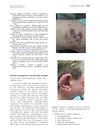
research Decades of progressive red and yellow nodules
A 72-year-old man was diagnosed with a rare skin form of Rosai-Dorfman disease after years of misdiagnosis.

research The involvement of ROS on androgen inducible TGF beta 1 regulation derived from dermal papilla cells; a suggestive implication of ROS on androgenetic alopecia
ROS may affect hair loss related to hormones.
research 058 The pattern of Fas and Fas ligand expression in alopecia areata
The Fas/FasL pathway may play a role in alopecia areata.
research Combination Of Regulatory T Cells and Rapamycin As Treatment For Experimental Chronic Graft-Versus-Host Disease
Using regulatory T cells and Rapamycin together improves chronic graft-versus-host disease treatment outcomes in mice.
research 057 Single cell RNA and TCR sequencing reveals hyperexpansion of T cell clones and novel regulatory mechanisms of CD8+ T cells in murine alopcecia areata skin and draining lymph nodes
CD8+ T cells expand significantly in alopecia areata, suggesting new treatment targets.
research CD271 orchestrates skin structure, differentiation, and inflammation via PI3K/Akt and PKCα/ERK pathways
CD271 is crucial for maintaining healthy skin and preventing inflammation.

research 413 DC-HIL+ myeloid-derived suppressor cells are elevated in the peripheral blood and lesional skin of cutaneous lupus patients
Cutaneous lupus patients have higher levels of certain immune cells in their blood and skin.
research 176 Myeloid cell-specific deletion of mTOR suppresses psoriasis-like skin inflammation in C57BL/6 mice
Targeting mTOR in myeloid cells may help reduce psoriasis symptoms.
research CD34 defines melanocyte stem cell subpopulations with distinct regenerative properties
CD34+ and CD34- melanocyte stem cells have different regenerative abilities.
research Regenerative potential of CD200- subpopulations of hair follicle bulge
CD200- cells in hair follicles have a higher ability to regenerate hair.
research In vitro analyses of CD4-protein function in dedifferentiated keratinocyte cell lines
The CD4 protein may play a role in the behavior of certain skin cells, affecting their growth, movement, and differentiation.
research Abstract 1489: Basal cell carcinomas express functional indoleamine 2,3-dioxygenase (IDO) which may confer immunoprotection
Basal cell carcinomas may use IDO to protect themselves from the immune system.

research Regenerative potential of CD200- subpopulations of hair follicle bulge
CD200- cells in hair follicles have a higher ability to regenerate hair.

research CD80CD86 deficiency disrupts regulatory CD4+FoxP3+T cell homoeostasis and induces autoimmune-like alopecia
CD80CD86 deficiency causes hair loss by disrupting regulatory T cells.