10-20% of mouse Tregs have dual TCRs, suggesting potential functional benefits.
1 citations
,
October 2021 in “bioRxiv (Cold Spring Harbor Laboratory)” Heat shock proteins help basal cell carcinoma grow by responding to inflammation signals.
1 citations
,
January 2022 in “bioRxiv (Cold Spring Harbor Laboratory)” Injury boosts normal skin cell growth, reducing cancer cell advantage.
 67 citations
,
January 2020 in “Cellular & Molecular Immunology/Cellular & molecular immunology”
67 citations
,
January 2020 in “Cellular & Molecular Immunology/Cellular & molecular immunology” Tissue-resident memory T cells can protect against infections and cancer but may also contribute to autoimmune diseases.
 June 2024 in “Journal of Clinical Oncology”
 Dalpiciclib is the safest and most satisfying CDK4/6 inhibitor for advanced breast cancer patients in China.
10 citations
,
January 2020 in “Genes & Diseases” Circ-Smad5 slows cell growth by blocking a specific cell signaling pathway.
84 citations
,
October 2007 in “The Journal of Immunology” Myeloid-derived suppressor cells help control autoimmune cells and promote hair regrowth in alopecia areata.
 116 citations
,
August 2010 in “Nature”
116 citations
,
August 2010 in “Nature” Scientists turned rat thymus cells into stem cells that can help repair skin and hair.
30 citations
,
January 2014 in “Journal of Controlled Release” This method is effective for needle-free HIV-1 vaccination by activating immune responses in the skin.
52 citations
,
September 2014 in “Nature medicine” JAK inhibitors might help treat alopecia areata.
 7 citations
,
October 2024 in “Frontiers in Immunology”
7 citations
,
October 2024 in “Frontiers in Immunology” A humanized CXCL12 antibody may delay and treat alopecia areata by altering the immune response.
 April 2023 in “The journal of investigative dermatology/Journal of investigative dermatology”
 Folliculotropic mycosis fungoides has unique molecular features and cell interactions that could guide targeted therapy.

New insights into cell communication in psoriasis suggest innovative drug treatments.
Keratinocytes can reduce the survival of certain melanoma cells, suggesting new therapy paths.
 February 2011 in “Journal of Clinical Investigation”
 Genetically repaired stem cells may treat certain genetic diseases, Th17 cells are key in fighting systemic fungal infections, hair loss in AGA is due to progenitor cell loss, and α-synuclein transfer might contribute to Parkinson's disease progression.
27 citations
,
February 2003 in “European Journal Of Oral Sciences” SVpgC2a cells show abnormal growth and keratin changes, modeling early cancer development.
 48 citations
,
January 2024 in “Immune Network”
48 citations
,
January 2024 in “Immune Network” IL-15 is key for T cell function and could help improve treatments for immune-related diseases.
 9 citations
,
July 2008 in “Oncology Reports”
9 citations
,
July 2008 in “Oncology Reports” HPV16-transformed cells can change human skin cell properties, aiding tumor growth.
 June 2026 in “Frontiers in Oncology”
 GSDMA deficiency slows skin cancer growth.
 January 2024 in “Wiadomości Lekarskie”
 AI can help diagnose Follicular Lymphoma by accurately identifying specific cell types.
November 2025 in “Journal of Investigative Dermatology” Chronic refractory alopecia areata has more skin-resident memory T cells, and JAK inhibitors may help reduce them.
19 citations
,
September 2008 in “Journal of Cellular Physiology” Blocking EGFR can cause skin inflammation by disrupting IL-1 signaling.
91 citations
,
March 1994 in “Journal of Investigative Dermatology” 159 citations
,
October 1986 in “The Histochemical Journal” 19 citations
,
August 2019 in “Journal of Cellular Biochemistry” ADSCs help protect skin from UV damage and aging.
 October 2021 in “Journal of Investigative Dermatology”
 The study concluded that the developed models are effective for studying hair growth mechanisms and testing new treatments.
 April 2018 in “Journal of Investigative Dermatology”
 The role of γδT-cells in causing alopecia areata remains unclear.
 14 citations
,
January 2011 in “Journal of Cutaneous Pathology”
14 citations
,
January 2011 in “Journal of Cutaneous Pathology” CK15 is not a reliable marker for stem cells in damaged hair follicles from patients with CCCA.
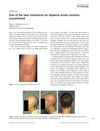 1 citations
,
June 2018 in “International Journal of Dermatology”
1 citations
,
June 2018 in “International Journal of Dermatology” DNCB is highly effective for treating alopecia areata with minimal long-term side effects.
December 2023 in “Journal of Thoracic Disease” Increased EGFR gene variations may predict chemotherapy outcomes in small cell lung cancer patients.