22 citations
,
September 2001 in “Journal of Investigative Dermatology” S100A8 and S100A9 proteins help form hair shafts during growth.
51 citations
,
September 2020 in “Nucleic Acids Research” The package helps analyze and interpret gene expression data by comparing it to a database of conditions.
 October 2020 in “Our Dermatology Online”
 Chronic bacterial infections of hair follicles can cause ongoing skin inflammation.
September 2023 in “Journal of the American Academy of Dermatology”  September 2016 in “Journal of Dermatological Science”
 Certain gene mutations in Japanese people are linked to different types of hair loss, with some causing mild hair thinning and others leading to complete baldness.
 March 2025 in “OncoTargets and Therapy”
 A specific genetic trait in tumor cells is linked to longer survival without disease in certain lymphoma patients.
January 2024 in “Animals” Circular RNA ERCC6 helps activate stem cells important for cashmere goat hair growth by interacting with specific molecules in an m6A modification-dependent way.
 30 citations
,
August 2021 in “Oncogene”
30 citations
,
August 2021 in “Oncogene” miR-22 helps skin cancer grow and spread by activating specific cell signals.
 October 2024 in “Journal of the Endocrine Society”
 Certain genetic variants reduce enzyme activity, contributing to non-classic congenital adrenal hyperplasia.
 36 citations
,
January 2019 in “Nature communications”
36 citations
,
January 2019 in “Nature communications” High lactate dehydrogenase activity is not necessary for the growth of squamous cell carcinoma.
88 citations
,
August 1998 in “Carcinogenesis” High levels of ODC and a mutant Ha-ras gene cause tumors in mice.
1 citations
,
July 2017 in “Cancer Research” Overexpressing NSD3 in mice causes breast cancer-like tumors and gland abnormalities.
 9 citations
,
January 2018 in “Acta dermato-venereologica”
9 citations
,
January 2018 in “Acta dermato-venereologica” A substance called poly(I:C) increases a protein called carbonic anhydrase II in skin cells, which might help with skin defense and healing.
 October 2007 in “Clinical Biochemistry”
 New genotype linked to non-classical congenital adrenal hyperplasia found in Italian siblings.
39 citations
,
July 1997 in “American Journal of Medical Genetics” The gene for Clouston syndrome in a large Indian family is located in the 13q11-q12.1 region.
8 citations
,
February 2025 in “Cell Systems” Engineered bacteria can deliver antioxidants to protect skin.
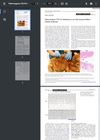 May 2024 in “Animal genetics”
 A cat's poor wound healing was linked to a genetic deletion in the COL5A1 gene.
July 2024 in “Journal of Investigative Dermatology” A KLK5 inhibitor effectively improved skin symptoms in a mouse model of Netherton Syndrome.
January 2011 in “Junshi yixue” A mouse model for studying scleroderma in chronic graft-versus-host disease was successfully created.
 April 2023 in “Journal of Investigative Dermatology”
 IL-9/IL-9R signaling can negatively affect human hair growth and may be a target for treating hair loss conditions.
23 citations
,
December 1977 in “Virchows Archiv B Cell Pathology” 3 citations
,
January 2022 in “Burns & Trauma” CTHRC1 helps sweat glands recover by rebuilding nearby blood vessels.
 April 2026 in “International Journal of Drug Delivery Technology”
 Lactobacillus acidophilus substances can kill and stop the spread of cervical cancer cells.
 April 2018 in “The journal of investigative dermatology/Journal of investigative dermatology”
 The model can effectively test gene functions and drug responses in human skin.
24 citations
,
January 2023 in “Cancer Research” AMPK activation may reduce melanoma risk in red-haired individuals.
 November 2022 in “Journal of Investigative Dermatology”
 Most Recessive Dystrophic Epidermolysis Bullosa patients with a specific mutation likely have Sephardic ancestry from about 500 years ago.
65 citations
,
September 2014 in “Orphanet Journal of Rare Diseases” Different STUB1 gene mutations cause varied symptoms in autosomal recessive ataxias.
 4 citations
,
October 2018 in “Asia-Pacific Journal of Clinical Oncology”
4 citations
,
October 2018 in “Asia-Pacific Journal of Clinical Oncology” CDK4/6 inhibitors have improved treatment outcomes for certain advanced breast cancer patients.
 13 citations
,
June 2024 in “Asian Pacific Journal of Cancer Prevention”
13 citations
,
June 2024 in “Asian Pacific Journal of Cancer Prevention” The (+) enantiomer of YH239-EE effectively kills breast cancer cells.
 April 2023 in “Journal of Investigative Dermatology”
 Cyclosporin A, a drug, reduces TGF-β2 expression in skin cells, potentially causing excessive hair growth through a process involving the calcineurin/NFAT pathway.