 81 citations
,
November 2012 in “Journal of the National Cancer Institute”
81 citations
,
November 2012 in “Journal of the National Cancer Institute” The tumor suppressor gene FLCN affects mitochondrial function and energy use in cells.
3 citations
,
April 2018 in “Journal of Investigative Dermatology” CCCA may be a fibroproliferative disorder, and anti-fibrotic therapies could help.
November 2024 in “Journal of Investigative Dermatology” Genetic changes in specific proteins contribute to hair loss in some women of African descent.
 August 2022 in “Frontiers in genetics”
 A new genetic change in the DSC3 gene is linked to a rare condition causing hair loss and skin blisters in a child.
1 citations
,
April 2024 in “Animal Genetics” A genetic defect in an Appenzeller Mountain Dog caused skin issues, improved with ketoconazole, showing the importance of advanced genetic testing.
8 citations
,
June 2001 in “Journal of Biological Chemistry” A truncated protein linked to breast cancer may change cell adhesion.
 13 citations
,
June 2010 in “Journal of The American Academy of Dermatology”
13 citations
,
June 2010 in “Journal of The American Academy of Dermatology” A man with Cronkhite-Canada syndrome had all 20 nails detach but improved with treatment.
Deleting the MAD2L1 gene in mice led to rapid tumor growth despite chromosomal instability.
 5 citations
,
October 2019 in “The journal of investigative dermatology/Journal of investigative dermatology”
5 citations
,
October 2019 in “The journal of investigative dermatology/Journal of investigative dermatology” The research linked PLCD1 gene variants to the development of trichilemmal cysts.
 1 citations
,
November 2024 in “Diabetes Metabolic Syndrome and Obesity”
1 citations
,
November 2024 in “Diabetes Metabolic Syndrome and Obesity” A specific gene variant is linked to severe insulin resistance and hormone imbalance in a teenage girl.
25 citations
,
February 2021 in “Diabetes” Dock5 is important for skin healing and could help treat diabetic wounds.
April 2021 in “The journal of investigative dermatology/Journal of investigative dermatology” CTCF protein is essential for skin and hair follicle development in mice.
October 2025 in “Cell Death and Disease” CD271 is crucial for maintaining healthy skin and preventing inflammation.
39 citations
,
October 2012 in “Familial cancer” New therapies for Birt–Hogg–Dubé syndrome are being developed based on understanding the FLCN gene's role.
9 citations
,
January 2015 in “Medical hypotheses” TCDD disrupts skin stem cells, causing skin issues like chloracne.
 13 citations
,
January 2013 in “Applied and Environmental Microbiology”
13 citations
,
January 2013 in “Applied and Environmental Microbiology” A gene in Sebekia benihana, CYP-sb21, is needed for a specific reaction on the drug Cyclosporine A, which could be important for hair growth without affecting the immune system.
10 citations
,
November 2023 in “Science Immunology” Super-enhancers control CD25 expression in specific cell types, affecting immune function.
1 citations
,
July 2024 in “JCEM Case Reports” A new genetic variant of Woodhouse-Sakati syndrome was found in two adult sisters in Russia.
 7 citations
,
January 2015 in “Dermatology”
7 citations
,
January 2015 in “Dermatology” Two gene variations, rs6493497 and rs7176005, may be linked to female hair loss in Chinese people.
 4 citations
,
January 2021 in “Journal of Clinical Medical Research”
4 citations
,
January 2021 in “Journal of Clinical Medical Research” c-Kit is important for heart regeneration and cancer development.
 260 citations
,
July 2010 in “Cell”
260 citations
,
July 2010 in “Cell” Mutations in the SRD5A3 gene cause a new type of glycosylation disorder by blocking the production of a molecule necessary for protein glycosylation.
 61 citations
,
January 2008 in “Cold Spring Harbor Symposia on Quantitative Biology”
61 citations
,
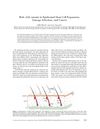
January 2008 in “Cold Spring Harbor Symposia on Quantitative Biology” Beta-catenin is crucial for skin cell growth, development, and cancer formation.
 10 citations
,
December 2015 in “International Journal of Molecular Sciences”
10 citations
,
December 2015 in “International Journal of Molecular Sciences” PDCD4 is important for controlling skin cell growth and healing.
 November 2022 in “Gigascience”
 A specific genetic deletion in goats affects cashmere yield and thickness.
28 citations
,
May 2000 in “Proceedings of the National Academy of Sciences” The Walleye dermal sarcoma virus cyclin causes excessive skin cell growth in mice.
A new genetic mutation was found causing hair and eye issues in a boy.
May 2025 in “BMC Genomics” Circ 0020938 slows down hair growth in cashmere goats.
 44 citations
,
November 2009 in “Archives of Dermatology”
44 citations
,
November 2009 in “Archives of Dermatology” CYLD mutations cause a variety of skin tumors with symptoms starting around age 16, and treatments are currently limited.
 June 2023 in “British Journal of Dermatology”
 Coinheritance of BRCA2 and CYLD genes may lead to new treatment options for certain cancers.
30 citations
,
January 2013 in “Human Mutation” A mutation in the HOXC13 gene causes hair and nail problems in a Syrian family.