 August 2025 in “Preprints.org”
 Timely diagnosis and treatment are crucial for managing skin infections in wildlife.
June 2025 in “Advances in Clinical and Experimental Medicine” Keratin biomaterials could help heal wounds and regenerate tissue, but more testing is needed.
 January 2025 in “Annals of Dermatology”
 PCA patients have more harmful bacteria and antibiotic resistance, needing specific testing for treatment.
January 2025 in “Case Reports in Veterinary Medicine” Timely diagnosis and treatment are crucial for managing skin infections in wildlife.
May 2026 in “Colloids and Surfaces B Biointerfaces”  3 citations
,
January 2019 in “Bulgarian Journal of Veterinary Medicine”
3 citations
,
January 2019 in “Bulgarian Journal of Veterinary Medicine” The cat was put to sleep due to recurring infections.
 40 citations
,
November 2017 in “International journal of nanomedicine”
40 citations
,
November 2017 in “International journal of nanomedicine” DA liposomes with chloramphenicol effectively target hair follicles and combat MRSA with minimal skin toxicity.
 1 citations
,
May 2015 in “Journal of The American Academy of Dermatology”
1 citations
,
May 2015 in “Journal of The American Academy of Dermatology” Oral clindamycin and rifampicin are the most effective treatments for Folliculitis decalvans.
11 citations
,
July 1984 in “Australian Veterinary Journal” Some treatments worked for horse ringworm, but mass treatment should focus on stopping infection spread, not just hair regrowth.
11 citations
,
October 2024 in “PLoS ONE” Phage-containing hydrogels effectively heal wounds infected with Enterococcus faecalis.
January 2024 in “Faculty of 1000 Research Ltd” Tazarotene gel may be more effective for acne than adapalene gel.
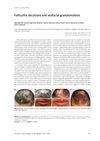 January 2018 in “Advances in Dermatology and Allergology”
 Treatment with dapsone, topical corticosteroids, and antibiotics improved the man's skin conditions.
 4 citations
,
May 2019 in “Sultan Qaboos University Medical Journal”
4 citations
,
May 2019 in “Sultan Qaboos University Medical Journal” Tofacitinib helped regrow hair in a patient with severe hair loss and improved their quality of life without side effects.
Combining pentoxifylline with corticosteroids improves alopecia areata treatment.
49 citations
,
November 2013 in “JAMA dermatology” Clobetasol propionate, 0.05%, is more effective and safe for treating childhood alopecia areata than hydrocortisone, 1%.
6 citations
,
February 2019 in “Journal of dermatology” Favus, a rare fungal infection, has reappeared in Japan.
7 citations
,
March 2022 in “International Journal of Molecular Sciences” FGF21 can help reduce skin inflammation caused by C. acnes.
February 2006 in “Inpharma Weekly” 4 citations
,
November 2020 in “Acta Dermato Venereologica” Tofacitinib effectively improved severe skin symptoms in a patient with Hypohidrotic Ectodermal Dysplasia.
 November 2023 in “Dermatology Research and Reports”
 A stable ivermectin cream may effectively treat rosacea without long-term antibiotics.

The document corrects a mistake by stating that pimecrolimus, not tacrolimus, is the drug that concentrates in the skin.
September 2023 in “Journal of the American Academy of Dermatology” CTP-543 is generally safe for treating alopecia areata.
 January 2024 in “Skin Research and Technology”
 Oral tofacitinib may be an effective future treatment for children with severe alopecia areata, but more research is needed.
January 2018 in “Urologe A” Botulinum neurotoxin injections into the pelvic muscles successfully prevented priapism relapse for over six months.
June 2025 in “Basrah Journal of veterinary Research” Vaccination and hygiene are key to preventing Feline Calicivirus in cats.
 19 citations
,
September 2002 in “Acta dermato-venereologica”
19 citations
,
September 2002 in “Acta dermato-venereologica” Topical tacrolimus did not regrow hair in alopecia universalis patients.
16 citations
,
June 2018 in “JAAD case reports” A JAK inhibitor improved both severe hair loss and chronic skin disease in one patient.
June 2026 in “Frontiers in Medicine” The excimer laser is a promising and safe treatment for frontal fibrosing alopecia.
14 citations
,
April 2022 in “Molecules” Pulmonary delivery of cepharanthine significantly improves its effectiveness and shows promise for treating lung fibrosis linked to COVID-19.