 59 citations
,
April 2016 in “Breast Cancer Research and Treatment”
59 citations
,
April 2016 in “Breast Cancer Research and Treatment” Targeting vitamin D and androgen receptors may effectively treat triple-negative breast cancer, especially with chemotherapy.
 36 citations
,
May 2016 in “Biomaterials”
36 citations
,
May 2016 in “Biomaterials” Endo-HSE helps grow hair-like structures from human skin cells in the lab.
 35 citations
,
July 2018 in “Cell Reports”
35 citations
,
July 2018 in “Cell Reports” The study found that a specific area of the hair follicle helps start hair growth by reducing the blocking effects on certain cells and controlling growth signals.
 32 citations
,
May 2018 in “Cell Cycle”
32 citations
,
May 2018 in “Cell Cycle” Melatonin helps Cashmere goats grow more hair by affecting certain genes and cell pathways.
 27 citations
,
July 2017 in “European Journal of Dermatology”
27 citations
,
July 2017 in “European Journal of Dermatology” Certain microRNAs are linked to various skin diseases and could be used to diagnose and treat these conditions.
22 citations
,
April 2022 in “Stem cell research & therapy” Hair follicle-derived extracellular vesicles may help heal chronic wounds as effectively as those from adipose tissue.
 21 citations
,
March 2018 in “Experimental Dermatology”
21 citations
,
March 2018 in “Experimental Dermatology” The guide explains how to study human skin fat cells and their tissue, aiming to improve research and medical treatments.
15 citations
,
June 2020 in “The journal of investigative dermatology/Journal of investigative dermatology” Mice with extra human KLK14 had hair and skin problems, including weaker cell bonds and inflammation, linked to Netherton syndrome.
 12 citations
,
February 2025 in “Scientific Reports”
12 citations
,
February 2025 in “Scientific Reports” MSC-EVs and UCB-EVs improve skin wound healing and reduce scarring.
 5 citations
,
October 2022 in “Cosmetics”
5 citations
,
October 2022 in “Cosmetics” Cell-based models help test if cosmetic ingredients really work for hair growth and skin health.
 4 citations
,
May 2018 in “Electronic Journal of Biotechnology”
4 citations
,
May 2018 in “Electronic Journal of Biotechnology” All-trans retinoic acid at high doses harms goat hair growth cells and could be bad for hair growth.
3 citations
,
December 2024 in “Stem Cell Reports” Low fucosylation boosts stem cell growth in the eye.
 August 2025 in “Stem Cell Research & Therapy”
 Exosomes from stem cells can help regrow hair better than minoxidil.
February 2025 in “Experimental Cell Research” Combining specific proteins and cell-derived particles may help treat hair loss.
 April 2023 in “Journal of Investigative Dermatology”
 POUF51 and HES3 are key in controlling stem cell numbers in psoriasis.
 April 2019 in “Journal of Investigative Dermatology”
 BRG1 is essential for skin cells to move and heal wounds properly.
 April 2017 in “Journal of Investigative Dermatology”
 Fisetin may help treat psoriasis and reduce skin inflammation.
 25 citations
,
August 2010 in “Acta Biomaterialia”
25 citations
,
August 2010 in “Acta Biomaterialia” Researchers developed a method to grow hair follicle cells for transplantation using a special chip.
 January 2015 in “Springer eBooks”
 Fat-derived stem cells and their secretions show promise for treating skin aging and hair loss.
 4 citations
,
June 2021 in “Basic and Clinical Neuroscience Journal”
4 citations
,
June 2021 in “Basic and Clinical Neuroscience Journal” Rat hair follicle stem cells can improve nerve repair and muscle function after injury.
 September 2023 in “Stem cell reviews and reports”
 Scientists found a new, less invasive way to get stem cells from horse hair for veterinary medicine.

The CD4 protein may play a role in the behavior of certain skin cells, affecting their growth, movement, and differentiation.
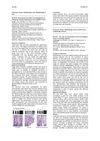 April 2018 in “Radiotherapy and Oncology”
 Prostaglandin helps regenerate hair follicles after radiation damage.
 4 citations
,
April 2002 in “Medical Hypotheses”
4 citations
,
April 2002 in “Medical Hypotheses” Hormones cause hair loss by affecting cell growth and weakening cell attraction.
16 citations
,
September 2006 in “Journal of Cutaneous Pathology” P63 is a marker for epidermal stem cells in rats.
June 2009 in “Faculty Opinions – Post-Publication Peer Review of the Biomedical Literature” Lrig1 marks a unique group of stem cells in mouse skin that can become different skin cell types.
 4 citations
,
October 2022 in “Frontiers in public health”
4 citations
,
October 2022 in “Frontiers in public health” Cadmium chloride pollution can cause skin disorders, speed up aging, and prevent hair growth.
1 citations
,
April 2025 in “BMC Veterinary Research” PSAT1 is key for hair growth and stem cell function in cashmere goats.
 January 2026 in “Communications Biology”
 Yak hair follicles adapt to cold through specific gene regulation, enhancing cell growth.
October 2025 in “Animals” miR-200a reduces goose fibroblast growth by targeting PITX2 in the Wnt pathway.