3 citations
,
February 2023 in “Frontiers in Immunology” The IGRA test effectively detects past SARS-CoV-2 exposure, especially using nucleocapsid peptides.
1 citations
,
January 2025 in “Genes & Diseases” Understanding T cells and signaling pathways can lead to better treatments for hair loss.
 July 2025 in “Journal of Investigative Dermatology”
 Immune system changes may contribute to female pattern hair loss.
 14 citations
,
January 1985 in “International Journal of Dermatology”
14 citations
,
January 1985 in “International Journal of Dermatology” The cause of alopecia areata was unknown, and while various treatments existed, no best treatment was agreed upon.
 8 citations
,
October 1989 in “Journal of the American Academy of Dermatology”
8 citations
,
October 1989 in “Journal of the American Academy of Dermatology” A 5-year-old boy's seasonal hair loss is linked to his allergies.
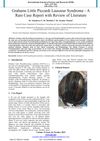 October 2023 in “International Journal of Science and Research (IJSR)”
 Early diagnosis of GLPLS is crucial to prevent complications, but scarring alopecia is irreversible.
January 2022 in “Clinical Cases in Dermatology” A woman has a permanent hair loss condition treated with steroids and new medicines, but hair might not regrow.
May 2019 in “Small Animal Dermatology” The dog had a good prognosis with proper treatment and cleaning.
December 2017 in “The Sri Lanka Journal of Dermatology” Infliximab successfully treated a severe hair loss case in Sri Lanka.
 May 2022 in “Liver transplantation”
 The document explains how the immune system reacts to organ transplants and the treatments used to prevent rejection.
 January 2020 in “Benha Journal of Applied Sciences”
 People with psoriasis have higher levels of Apelin-13 in their blood than healthy people.
717 citations
,
June 2010 in “Nature” Alopecia areata involves both innate and adaptive immunity, with specific genes linked to the disease.
 4 citations
,
June 2025 in “Frontiers in Immunology”
4 citations
,
June 2025 in “Frontiers in Immunology” BAFF-targeted therapies can reduce autoimmune disease activity, but more research is needed for precise treatments.
39 citations
,
June 2023 in “Advanced Materials” Microneedles offer a promising, painless, and efficient way to deliver vaccines and therapies directly to the skin.
101 citations
,
July 1998 in “Journal of Investigative Dermatology” UVB exposure in human skin causes macrophages to produce more IL-10 and less IL-12, leading to immunosuppression.
 24 citations
,
September 2005 in “Journal of Cellular Biochemistry”
24 citations
,
September 2005 in “Journal of Cellular Biochemistry” Retinoids increase steroid sulfatase activity in leukemia cells through RARα/RXR and involves certain pathways like phosphoinositide 3-kinase and ERK-MAP kinase.
50 citations
,
August 2019 in “Cell Communication and Signaling” NFAT5 triggers atherosclerosis under stress by activating inflammation in blood vessels.
114 citations
,
August 2002 in “Journal of Investigative Dermatology” Alopecia areata is caused by an immune response, and targeting immune cells might help treat it.
2 citations
,
November 2025 in “Pharmaceutics” Cell-mediated drug delivery systems improve skin disease treatment by using living cells for precise, prolonged, and less toxic therapy.
 61 citations
,
September 2010 in “Genomics”
61 citations
,
September 2010 in “Genomics” The study found that immune responses disrupt hair growth cycles, causing hair loss in alopecia areata.
8 citations
,
October 2020 in “Stem cell research & therapy” DNMT1 helps turn hair follicle stem cells into fat cells by blocking a specific microRNA.

Ca²⁺-mediated protein citrullination controls cell growth in the CNS and may help treat brain tumors.
 March 2021 in “bioRxiv (Cold Spring Harbor Laboratory)”
 A specific immune response helps control mite populations on the skin, maintaining healthy hair follicles.
 610 citations
,
April 2014 in “Nature Reviews Immunology”
610 citations
,
April 2014 in “Nature Reviews Immunology” The document concludes that understanding how the skin's immune system and inflammation work is complex and requires more research to improve treatments for skin diseases.
 57 citations
,
March 2019 in “Immunity”
57 citations
,
March 2019 in “Immunity” The document concludes that the skin's immune system is complex, involving interactions with hair follicles, nerves, and microbes, and can protect or cause disease, offering targets for new treatments.
10 citations
,
December 2023 in “International Journal of Nanomedicine” Cell membrane-coated nanoparticles could improve gene therapy by enhancing delivery and targeting of nucleic acids.
 59 citations
,
July 2015 in “Journal of Immunology”
59 citations
,
July 2015 in “Journal of Immunology” Certain proteins, caspases-1 and -11, are important in the early development of skin inflammation in mice.
 238 citations
,
March 2013 in “Development”
238 citations
,
March 2013 in “Development” Fat cells help recruit healing cells and build skin structure during wound healing.
 January 2026 in “Inflammation and Regeneration”
 Two-photon microscopy improves skin imaging but faces safety and cost challenges for clinical use.
245 citations
,
October 2015 in “Nature medicine” Hair follicle-derived IL-7 and IL-15 are crucial for maintaining skin-resident memory T cells and could be targeted for treating skin diseases and lymphoma.