18 citations
,
July 2010 in “Journal of the American Academy of Dermatology” Folliculotropic mycosis fungoides can look like alopecia areata.
 November 2015 in “European journal of dermatology/EJD. European journal of dermatology”
 A 55-year-old woman with several health conditions did not see hair regrowth after a transplant.
 14 citations
,
January 2011 in “Journal of Cutaneous Pathology”
14 citations
,
January 2011 in “Journal of Cutaneous Pathology” CK15 is not a reliable marker for stem cells in damaged hair follicles from patients with CCCA.
January 2023 in “Zenodo (CERN European Organization for Nuclear Research)” An 8-year-old boy with neurofibromatosis type one also has rare hair and eye disorders.
4 citations
,
January 2018 in “Annals of dermatology/Annals of Dermatology” Hair transplantation successfully treated hair loss in a patient with Trichorhinophalangeal syndrome.
 6 citations
,
January 2012 in “Springer eBooks”
6 citations
,
January 2012 in “Springer eBooks” Trichoscopy is not specific for diagnosing telogen effluvium and both telogen effluvium and androgenetic alopecia often occur together.
 April 2023 in “Our Dermatology Online”
 Trichoscopy is effective in diagnosing trichotillomania by showing specific hair patterns.
1 citations
,
November 2022 in “International journal of trichology” A girl with a rare skin condition improved after one month of treatment with acitretin.
November 2012 in “Annales de Dermatologie et de Vénéréologie” Frontal fibrosing alopecia can occur in children, not just postmenopausal women.
 7 citations
,
July 2019 in “The Journal of Dermatology”
7 citations
,
July 2019 in “The Journal of Dermatology” Terbinafine effectively treated kerion celsi despite disrupted immune responses.
54 citations
,
November 2007 in “Actas Dermo-Sifiliográficas” Early diagnosis of frontal fibrosing alopecia is crucial to prevent permanent hair loss.
 November 2017 in “International journal of research in dermatology”
 A rare skin disorder, nevus comedonicus, can appear on one side of the body following Blaschko's lines.
 23 citations
,
September 2014 in “JEADV. Journal of the European Academy of Dermatology and Venereology/Journal of the European Academy of Dermatology and Venereology”
23 citations
,
September 2014 in “JEADV. Journal of the European Academy of Dermatology and Venereology/Journal of the European Academy of Dermatology and Venereology” Laser treatments are the most effective for porokeratotic adnexal ostial nevus.
May 2026 in “Journal of International Medical Research” Atrichia with papular lesions causes irreversible hair loss from infancy and is often misdiagnosed.
19 citations
,
January 2015 in “Skin appendage disorders” The report found a new type of hair loss in African-American women that affects more areas of the scalp than previously thought.
 41 citations
,
July 2017 in “Journal of The American Academy of Dermatology”
41 citations
,
July 2017 in “Journal of The American Academy of Dermatology” Men with Frontal fibrosing alopecia typically lose hair on the front scalp and sometimes on sideburns and upper lip, with treatments showing varied success.
1 citations
,
January 2017 in “International Journal of Trichology” A new mutation caused a rare hair disorder in a Polish girl, not inherited from her family.
June 2026 in “Indian Journal of Postgraduate Dermatology” Trichoscopy helps diagnose unclear hair loss cases effectively.
12 citations
,
May 2009 in “Ophthalmic plastic and reconstructive surgery” Multiple pilomatrixoma may indicate Turner syndrome.
1 citations
,
January 2008  April 2025 in “Clinical Dermatology Review”
 Trichoscopy is effective for diagnosing hair and scalp disorders without invasive biopsies.
25 citations
,
May 1995 in “Journal of the American Academy of Dermatology” Erythromelanosis follicularis faciei can also affect women, though it's rare.
1 citations
,
October 2023 in “European Journal of Dermatology” Combining hair transplantation with PRP is more effective for treating hair loss than hair transplantation alone.
 14 citations
,
July 2012 in “Journal of the American Academy of Dermatology”
14 citations
,
July 2012 in “Journal of the American Academy of Dermatology” Topical tacalcitol ointment can help improve symptoms of EFFC.
A new genetic mutation was found causing hair and eye issues in a boy.
 9 citations
,
August 2018 in “Journal der Deutschen Dermatologischen Gesellschaft”
9 citations
,
August 2018 in “Journal der Deutschen Dermatologischen Gesellschaft” Most patients with frontal fibrosing alopecia are middle-aged women, often have thyroid disease, and some treatments can help stabilize the condition.
 14 citations
,
January 2006 in “Australasian journal of dermatology”
14 citations
,
January 2006 in “Australasian journal of dermatology” Alopecia areata can look like frontal fibrosing alopecia, making diagnosis hard.
71 citations
,
January 2011 in “Journal of cutaneous pathology” A rare skin condition was confirmed to be associated with a specific virus in a young girl.
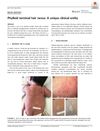 August 2018 in “Pediatric Dermatology”
 A baby had a unique skin condition with a pale patch and surrounding dark hairs, not linked to other health issues.
November 2021 in “CRC Press eBooks” Tinea capitis is a fungal infection of the scalp that mainly affects children and can cause symptoms from mild itching to severe inflammation.