January 2006 in “Chinese Journal of Aesthetic Medicine” Lipo-minoxidil increases VEGF expression more than regular minoxidil.
 September 2023 in “Медицинский совет”
 Minoxidil effectively treats stress-induced non-scarring hair loss.
![Minoxidil and Its Use in Hair Disorders: A Review [Corrigendum]](/images/assets/d5b5fb1b-96a4-4e61-a554-3fe9a1f78497/small/11472.jpg) 1 citations
,
February 2020 in “Drug Design Development and Therapy”
1 citations
,
February 2020 in “Drug Design Development and Therapy” Low-dose Minoxidil combined with Spironolactone helps reduce hair loss and improve hair density in women, with some mild side effects.
 February 2024 in “PubMed”
 The new minoxidil lotion using Aloplus Total is stable and can be mixed with other ingredients for treating hair loss.
 February 2025 in “Archives of Dermatological Research”
 Combining PRP with topical minoxidil is most effective for hair growth in androgenetic alopecia.
 February 2022 in “Faculty Opinions – Post-Publication Peer Review of the Biomedical Literature”
 Low-dose oral minoxidil is a promising, safe treatment for various hair diseases, improving hair thickness and density, but more research is needed on long-term side effects and treatment duration.
 36 citations
,
July 1977 in “The Journal of Pediatrics”
36 citations
,
July 1977 in “The Journal of Pediatrics” Minoxidil helps lower blood pressure in kids with severe hypertension, but may cause temporary excessive hair growth.
1 citations
,
January 2022 in “Brazilian Journal of Pharmaceutical Sciences” Minoxidil can be effectively encapsulated in coated nanovesicles for potential drug delivery.
1 citations
,
September 2015 in “MVP journal of medical science” Topical Minoxidil 5% is as effective as the combination treatment for hair loss.
September 2025 in “OPAL (Open@LaTrobe) (La Trobe University)” Different solvents affect minoxidil crystal shapes, improving flowability and revealing a unique butterfly-shaped crystal.
 15 citations
,
January 2000 in “Japanese Heart Journal”
15 citations
,
January 2000 in “Japanese Heart Journal” A man developed heart problems after using a baldness treatment for 4 months, suggesting that people with heart issues should avoid this treatment.
 5 citations
,
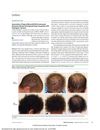
July 2020 in “JAMA Dermatology”
5 citations
,
July 2020 in “JAMA Dermatology” Minoxidil solution applied twice daily improved hair growth in patients with Woolly Hair/Hypotrichosis due to LIPH gene issues, with mild side effects.
 70 citations
,
April 1990 in “Journal of The American Academy of Dermatology”
70 citations
,
April 1990 in “Journal of The American Academy of Dermatology” Minoxidil treatment increased hair growth for up to 5 years, requiring twice daily application.
 November 2024 in “Cureus”
 Massive minoxidil ingestion can cause prolonged shock requiring extended supportive care.
 17 citations
,
April 1975 in “The Journal of Pediatrics”
17 citations
,
April 1975 in “The Journal of Pediatrics” Minoxidil effectively controls severe high blood pressure in children with few side effects.
 April 2024 in “JAMA dermatology”
 Oral minoxidil is as effective as topical minoxidil for male hair loss but has more side effects like excessive hair growth and headaches.
 9 citations
,
December 1991 in “Annals of the New York Academy of Sciences”
9 citations
,
December 1991 in “Annals of the New York Academy of Sciences” Minoxidil helps hair growth by increasing blood flow and stimulating hair follicles.
 March 2024 in “Case Reports in Ophthalmology”
 A young woman developed a vision-threatening eye condition after using minoxidil for hair loss, which improved when she stopped the medication.
1 citations
,
June 2022 in “Pharmaceutics” Minoxidil's absorption is too variable for it to be a reliable reference drug.
October 2013 in “Evidence-Based Practice” Minoxidil is effective and safe for female hair loss, with the 5% foam having the fewest side effects.
1 citations
,
September 2021 in “Frontiers in Endocrinology” Minoxidil can help transgender males grow facial hair before starting testosterone therapy.

Oral minoxidil can be more comfortable and effective than topical, but treatment should be personalized.
 January 2017 in “Faculty Opinions – Post-Publication Peer Review of the Biomedical Literature”
 60% of women who didn't respond to 5% minoxidil for hair loss showed significant improvement with a 15% minoxidil solution.
 September 2025 in “Frontiers in Medicine”
 Combining minoxidil with other treatments is more effective for hair growth than using minoxidil alone.
1 citations
,
March 2017 in “PubMed” Topical minoxidil did not significantly regrow hair in alopecia areata patients after 3 months.
 16 citations
,
June 2021 in “Journal of Dermatological Treatment”
16 citations
,
June 2021 in “Journal of Dermatological Treatment” Minoxidil effectively treats hair loss, especially androgenetic alopecia, but needs more research for better understanding.
March 1983 in “International Journal of Dermatology” Minoxidil can cause excessive hair growth.

Sublingual minoxidil increases hair thickness in men with hair loss.
 15 citations
,
October 1981 in “Archives of internal medicine”
15 citations
,
October 1981 in “Archives of internal medicine” Minoxidil can cause severe skin reactions like Stevens-Johnson syndrome in rare cases.
5 citations
,
January 2016 in “Surgical and Cosmetic Dermatology”