Search
for
Sort by
Research
390-420 / 1000+ resultsresearch An Analytical Framework for the Selective Extraction and Determination of Nine Multiclass Endocrine-Disrupting Chemicals from Haircare Products
Haircare products may expose users to harmful chemicals despite regulations.

research N‑K GM SERIES: COMPLETE GEOMETRIC MEDICINE FOR SUDAN AND THE AFLATOXIN BELT — A Unified Solution for Aflatoxin Poisoning, Cancer, and Public Health Transformation
The N-K GM Series offers a new method to reduce aflatoxin poisoning and cancer, improving health and saving costs in affected regions.
research Physiological Insights from the Vitamin D Receptor Knockout Mouse
research CRISPR/Cas9-mediated Generation ofCOL7A1-deficient Keratinocyte Model of Recessive Dystrophic Epidermolysis Bullosa
Scientists created cell lines to study a genetic skin disorder using CRISPR technology.
research DRUGS OF ABUSE | Hair

research RP-HPLC METHOD FOR SIMULTANEOUS ESTIMATION OF FINASTERIDE AND TAMSULOSIN IN TABLET FORMULATIONS
A simple, precise method was created for estimating Tamsulosin and Finasteride in medicine using common lab solvents, showing good precision and stability.

research 2-Substituted 4-(Thio)chromenone 6-O-Sulfamates: Potent Inhibitors of Human Steroid Sulfatase
New compounds were made that block an enzyme linked to breast cancer better than existing treatments.
research Clinical Value Analysis of Pemetrexed Combined with Cisplatin in the Treatment of Non-Small Cell Lung Cancer
The document lists research on Pemetrexed and Cisplatin for lung cancer but doesn't give a final conclusion.
research Disease-related biomarkers as experimental endpoints in 3D skin culture models
research 85 Primary cutaneous follicle center lymphoma spans yet unrecognised subtypes including polyclonal reactions
PCFCL may have unrecognized subtypes and needs more research.
research [Determination of finasteride in human plasma by HPLC-MS].
The two finasteride formulations are bioequivalent.
research K6/ODC transgenic mice as a sensitive model for carcinogen identification
K6/ODC transgenic mice are effective for quickly identifying cancer-causing chemicals.
![The Synthesis of (−)-4-Methyl-8-Chloro-Trans-1,2,3,4,4a,5,6,10b-Octahydrobenzo-[f]-Quinolin-3-One-[3-14C] (LY300502-14C) via a Circuitous Route](/images/assets/73bab8dc-bdf0-45e3-8ef7-73d0d4b93cb1/small/21074.jpg)
research The synthesis of (−)-4-methyl-8-chloro-trans-1,2,3,4,4a,5,6,10b-octahydrobenzo-[f]-quinolin-3-one-[3-14C] (LY300502-14C]) via a circuitous route
Scientists made a carbon-14 labeled version of a drug with a 48% yield and over 99% purity.

research 1465 Optimization/characterization of a Focal Dermal Hypoplasia mouse model to test potential treatments
Li2CO3 improved skin disease in a mouse model of Focal Dermal Hypoplasia without toxicity.
research BJD Editor's Choice
Some Greek melanoma patients have gene mutations linked to increased cancer risk, a new color feature helps diagnose melanoma, the incidence of a skin condition in the Netherlands is rare, and a gene possibly affects male-pattern baldness.
research Metabolic pathway of Cis-UCA upon Ultraviolet B (UVB) exposure using ¹H Nuclear Magnetic Resonance (NMR) spectroscopy, Molecular Docking and cell viability of human keratinocytes (HaCaT) cell lines
Cis-UCA can form new compounds without enzymes, and sulphide donors reduce its UVB-induced toxicity in skin cells.
research Morphological and Macromolecular Structure
research Morphological and Macromolecular Structure
research Validation and casework testing of the BioPlex-11 for STR typing of telogen hair roots
BioPlex-11 improves DNA profiling from telogen hair roots in forensic work.

research MULTIOMICS – A NEW EXCITING ERA OF RESEARCH
Multiomics is revolutionizing biology by enabling breakthroughs in research and disease diagnosis.
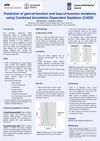
research Prediction of gain-of-function and loss-of-function mutations using Combined Annotation Dependent Depletion (CADD)
C-scores can help predict gain-of-function and loss-of-function mutations.

research Peer Review #2 of "Computational drug repositioning based on side-effects mined from social media (v0.1)"
Reviewers suggested the study on finding new drug uses through social media side-effects needs better methods and clearer limitations.
research A Ca 2+ /calmodulin-dependent protein kinase required for symbiotic nodule development: Gene identification by transcript-based cloning
The DMI3 gene is essential for nodule development and symbiosis in certain plants.
research In vivo delivery of CRISPR-Cas9 genome editing components for therapeutic applications

research Betaine supplementation is less effective than methionine restriction in correcting phenotypes of CBS deficient mice
Methionine restriction works better than betaine for treating CBS deficiency symptoms in mice.

research A guide to the use of bioassays in exploration of natural resources
Bioassays help find useful compounds in nature for making medicines, supplements, and cosmetics.

research Ethinylestradiol/Chlormadinone Acetate
Ethinylestradiol/Chlormadinone Acetate is a safe and effective birth control pill that also helps regulate menstrual cycles, reduces period pain, and treats certain skin and hair conditions.
research Exploring the Chorioallantoic Membrane (CAM) as a Platform for Burn Wound Modelling and Analysis
The CAM is a useful model for studying burn wounds and testing treatments.

research Logic-based modeling and drug repurposing for the prediction of novel therapeutic targets and combination regimens against E2F1-driven melanoma progression
Tadalafil and Finasteride may help treat aggressive melanoma.