1 citations
,
April 2022 in “F1000Research” Most pediatric cancer patients at Muhimbili National Hospital in Tanzania experienced side effects from chemotherapy, with nausea, hair loss, and low white blood cell count being the most common.
January 2024 in “Faculty of 1000 Research Ltd” Most pediatric cancer patients at Muhimbili National Hospital experienced adverse drug reactions during chemotherapy, highlighting the need for careful monitoring.
 3 citations
,
April 2019 in “Clinical Therapeutics”
3 citations
,
April 2019 in “Clinical Therapeutics” Computational tools identified 29 drugs that could potentially target 19 genes involved in chemotherapy-induced hair loss, which could lead to more effective treatments.
 1 citations
,
January 2015 in “Springer eBooks”
1 citations
,
January 2015 in “Springer eBooks” Chemotherapy can cause skin side effects that affect patients' lives, but they can be managed to avoid interrupting cancer treatment.
 July 2025 in “Pharmaceuticals”
 Phenobarbital-loaded chitosan nanoparticles are promising for preventing hair loss from chemotherapy.
 19 citations
,
October 2011 in “Clinics in Dermatology”
19 citations
,
October 2011 in “Clinics in Dermatology” New chemotherapy drugs cause skin side effects, but treatments like minocycline and tetracycline can help reduce them.
Scalp cooling is recommended to prevent chemotherapy-induced hair loss, but no effective drugs are available.
11 citations
,
October 2020 in “PLoS ONE” Cooling can protect hair follicles from chemotherapy damage by reducing drug uptake.
4 citations
,
July 2025 in “Frontiers in Pharmacology” Cooling with antioxidants helps protect hair during chemotherapy.
January 2025 in “AYUSHDHARA” Herbomineral drugs effectively manage chemotherapy-induced diarrhea in oral cavity cancer patients.
 1 citations
,
May 2021 in “Scientific Reports”
1 citations
,
May 2021 in “Scientific Reports” Certain cancer drugs are strongly linked to nerve damage, requiring close monitoring and early treatment.
April 2025 in “Journal of Pharma Insights and Research.” Females had more chemotherapy side effects than males, with many being preventable.
1108 citations
,
January 2018 in “Dalton transactions” Platinum-based chemotherapy drugs can cause many severe side effects, often requiring dose reductions and additional medications to manage.
1 citations
,
December 2023 in “Nanomaterials” Combining specific nanoparticles with immune therapy significantly improves cancer treatment.
 August 2025 in “MedScien”
 Tumor-targeted drug carriers can improve chemotherapy precision and reduce side effects.
3 citations
,
April 2020 in “PubMed” Combining DEB-BACE with chemotherapy is more effective and has fewer side effects than chemotherapy alone for treating unresectable lung squamous cell carcinoma.
 522 citations
,
January 2001 in “Cancer investigation”
522 citations
,
January 2001 in “Cancer investigation” Doxil is an effective, modified chemotherapy drug with a unique toxicity profile and shows promise in treating certain cancers.
 63 citations
,
March 1995 in “International Journal of Dermatology”
63 citations
,
March 1995 in “International Journal of Dermatology” Some drugs can cause hair loss, and stopping these drugs often leads to hair regrowth.
 38 citations
,
September 2017 in “Oncologist”
38 citations
,
September 2017 in “Oncologist” Scalp cooling can help prevent chemotherapy-induced hair loss with a 50-90% success rate and is safe for patients.
 3 citations
,
May 2017 in “Heliyon”
3 citations
,
May 2017 in “Heliyon” Wound healing can help prevent hair loss from chemotherapy in young rats by increasing interleukin-1β signaling.
 3 citations
,
May 1980 in “American Journal of Nursing”
3 citations
,
May 1980 in “American Journal of Nursing” Scalp tourniquets did not significantly prevent hair loss from chemotherapy.
2 citations
,
June 2024 in “JAAD reviews.” Some drugs can cause permanent hair loss, though it's rare.
 July 2018 in “Elsevier eBooks”
 Some drugs can cause reversible hair loss, but certain chemotherapy drugs may lead to permanent hair loss; drugs can also change hair color and texture.
 June 2017 in “Reactions Weekly”
 Some breast cancer treatments caused long-term hair loss in women, similar to a condition called alopecia areata.
 70 citations
,
February 2015 in “Expert Opinion on Drug Discovery”
70 citations
,
February 2015 in “Expert Opinion on Drug Discovery” Topical drugs and near-infrared light therapy show potential for treating alopecia.
 47 citations
,
July 2005 in “British Journal of Dermatology”
47 citations
,
July 2005 in “British Journal of Dermatology” Topical vitamin D3 does not prevent hair loss from chemotherapy.
 March 2024 in “Cancer Research”
 Eliminating senescent cells can prevent and reverse chemotherapy-induced peripheral neuropathy.

Some medications can cause hair loss, and it's important to track when the hair loss starts after taking a new medication.
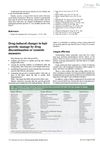 August 1994 in “Drugs & Therapy Perspectives”
 Some drugs can cause hair loss or growth, but hair usually returns to normal after stopping the drug.
 7 citations
,
May 2014 in “Clinical practice”
7 citations
,
May 2014 in “Clinical practice” Cooling the scalp may prevent hair loss from chemotherapy, hair often grows back after treatment, and nail issues usually improve after stopping the drug.