12 citations
,
September 2015 in “Drug Design Development and Therapy” AD198 is more effective than doxorubicin in stopping certain dog cancer cells.
 9 citations
,
January 2018 in “Acta Clinica Croatica”
9 citations
,
January 2018 in “Acta Clinica Croatica” Bendamustine, often combined with other drugs, is effective and less toxic for certain blood cancers, but less effective for young, fit patients with CLL.
 April 2026 in “Preprints.org”
 Cold Atmospheric Plasma shows promise in treating aggressive breast cancer by targeting cancer cells while sparing normal tissue.
 April 2022 in “JOURNAL OF RESEARCH AND REVIEW IN SCIENCE”
 African plants may help treat cancer by boosting immunity and protecting cells.
46 citations
,
April 2021 in “International Journal of Molecular Sciences” Curcumin shows promise in reducing pain and inflammation, but more research is needed.
4 citations
,
March 1989 in “PubMed” Radiotherapy can cause various side effects, but symptoms improve after treatment, and staff protection is crucial.
3 citations
,
July 2025 in “Current Issues in Molecular Biology” Dental pulp stem cells can help heal skin and mucosal wounds effectively.
September 2024 in “Actas Dermo-Sifiliográficas” Trichodynia is a painful scalp condition linked to hair loss and mental health issues, with limited treatment options.
 January 2024 in “Wiadomości Lekarskie”
 New technologies improve diagnosis and treatment of digestive disorders.
 April 2017 in “Journal of Investigative Dermatology”
 Sweat glands and hair follicles are determined by opposing signals, with BMPs promoting sweat glands and blocking BMPs leading to hair follicles.
18 citations
,
December 2016 in “European journal of pharmacology” A new compound slows cancer cell growth and causes cell death by blocking cell cycle progression and increasing cell-damaging molecules.
4 citations
,
September 2025 in “International Journal of Molecular Sciences” EGCG in green tea benefits skin, hair, cancer treatment, weight loss, diabetes, heart, and brain health.
 April 2018 in “Journal of Investigative Dermatology”
 The document concludes that ERBB2 mutations are common in extramammary Paget disease and may respond to systemic treatments like cancer immunotherapy.
 25 citations
,
December 2001 in “Expert Opinion on Pharmacotherapy”
25 citations
,
December 2001 in “Expert Opinion on Pharmacotherapy” Potassium channel openers show promise for treating heart disease and other conditions, but more research is needed to fully understand their effects and safety.
 11 citations
,
August 1997 in “Expert Opinion on Therapeutic Patents”
11 citations
,
August 1997 in “Expert Opinion on Therapeutic Patents” Many potential alopecia treatments need more testing to confirm they promote acceptable hair growth with minimal side effects.
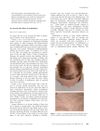 2 citations
,
March 2015 in “Clinical and Experimental Dermatology”
2 citations
,
March 2015 in “Clinical and Experimental Dermatology” Azathioprine can cause unusual hair loss, which may reverse after stopping the drug.
 March 2012 in “Journal of The American Academy of Dermatology”
 Hair casts are often mistaken for head lice, scalp pain in hair loss is linked to certain nerve factors, eyelash growth treatment is safe and effective, and nail shedding in children may follow hand-foot-mouth disease.
 6 citations
,
November 2018 in “Antimicrobial agents and chemotherapy (Print)”
6 citations
,
November 2018 in “Antimicrobial agents and chemotherapy (Print)” Fluconazole can cause hair loss, but the exact cause is unknown.
 724 citations
,
April 2004 in “Lancet Oncology”
724 citations
,
April 2004 in “Lancet Oncology” Chemotherapy in the first trimester of pregnancy is risky, but in the second and third trimesters, it's generally safe with careful drug selection and timing.
 32 citations
,
August 2019 in “Nature Communications”
32 citations
,
August 2019 in “Nature Communications” Chemotherapy causes permanent hair follicle damage by triggering stem cell loss.
 24 citations
,
November 2013 in “British Journal of Dermatology”
24 citations
,
November 2013 in “British Journal of Dermatology” Chemotherapy causes hair loss starting soon after treatment begins and recovers about 3 months after ending, while tamoxifen does not significantly affect hair growth.
 16 citations
,
October 2012 in “British Journal of Dermatology”
16 citations
,
October 2012 in “British Journal of Dermatology” Chemotherapy can cause significant hair thinning and changes in hair texture, while tamoxifen has a smaller effect.
 14 citations
,
November 2005 in “Life sciences”
14 citations
,
November 2005 in “Life sciences” Vitamin D3 may protect rat hair follicles from radiation damage.
 8 citations
,
September 2015 in “Journal of the European Academy of Dermatology and Venereology”
8 citations
,
September 2015 in “Journal of the European Academy of Dermatology and Venereology” Hair and scalp pain is more common and severe in breast cancer patients on chemotherapy than those on tamoxifen.
 January 2019 in “Springer eBooks”
 Some chemicals and drugs can cause hair loss, which usually grows back after stopping the treatment.
 40 citations
,
August 2006 in “Current Drug Safety”
40 citations
,
August 2006 in “Current Drug Safety” Some drugs can cause hair loss, excessive growth, or color changes, often reversible but sometimes permanent.
 31 citations
,
January 1981 in “Pharmacology & Therapeutics”
31 citations
,
January 1981 in “Pharmacology & Therapeutics” Oral retinoids are effective for treating severe skin disorders but have reversible side effects and risks for pregnant women.
 January 2022 in “International Journal of Science and Research (IJSR)”
 Certain medications can cause hair loss, which varies in severity and can be treated with specific drugs.
 162 citations
,
August 2002 in “Survey of Ophthalmology”
162 citations
,
August 2002 in “Survey of Ophthalmology” Latanoprost can make eyelashes longer, thicker, and darker.
 108 citations
,
July 2004 in “American Journal of Pathology”
108 citations
,
July 2004 in “American Journal of Pathology” Stress increases a factor in mice that leads to hair loss, and blocking this factor may prevent it.