 6 citations
,
March 2022 in “Frontiers in drug discovery”
6 citations
,
March 2022 in “Frontiers in drug discovery” Some small molecule antivirals show promise against COVID-19, but more research is needed to understand and improve them.
 2 citations
,
October 2022 in “Current Allergy and Asthma Reports”
2 citations
,
October 2022 in “Current Allergy and Asthma Reports” Biologic therapies can cause various adverse events, but allergy/immunology clinicians can manage them.
1 citations
,
October 2025 in “Micromachines” Portable point-of-care testing can improve quick and accurate genetic disorder detection.
 March 2026 in “Journal of Nanotheranostics”
 Nanotechnology improves CRISPR-Cas9 delivery for cancer treatment, but challenges remain.
CAR-T cell therapy shows promise for treating autoimmune disorders but faces challenges like complex manufacturing and limited tissue penetration.
45 citations
,
July 2025 in “Journal of Medicinal Chemistry” Vepdegestrant may become the first FDA-approved PROTAC degrader, marking a new era in drug development.
July 2024 in “Journal of Investigative Dermatology” Targeting TCR-Vβ2 in cutaneous T cell lymphoma shows promise for safer, more specific treatment.
January 2024 in “Wiadomości Lekarskie” DEC cells show promise as a safe and effective treatment for Duchenne muscular dystrophy.
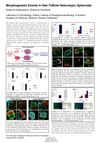
Researchers developed a method to create artificial hair follicles that may help with hair loss treatment and research.
 184 citations
,
December 2018 in “Nature Communications”
184 citations
,
December 2018 in “Nature Communications” Researchers created human hair follicles using a new method that could help treat hair loss.
January 2006 in “Chinese Journal of Dermatology” Hair follicle-like structures can be created using hair cells on collagen/chitosan scaffolds.
40 citations
,
June 2019 in “Biochemical and Biophysical Research Communications” CHIR99021 helps create human skin with hair follicles, offering hope for hair loss treatments.
Hair follicle-like structures can form when specific hair cells are mixed and implanted in mice.
August 2013 in “International Wound Journal” Non-hairy skin cells might be used to regenerate hair, helping with baldness and skin wounds.
 September 2007 in “PubMed”
 Implanted human scalp cells can regenerate hair-like structures in mice.
July 2026 in “Biochemical and Biophysical Research Communications” 8 citations
,
October 2022 in “Biomedical Materials” Researchers made progress in creating skin with hair by integrating special cell clusters.
44 citations
,
January 2011 in “Journal of biotechnology” Scientists recreated human hair follicles in the lab that can grow hair.
 February 2017 in “International Journal on Advanced Science, Engineering and Information Technology”
 Human hair follicle stem cells can grow and turn into skin cells on chitosan templates, which may help in regenerative medicine.
 April 2016 in “Journal of Investigative Dermatology”
 Scientists have found a way to grow hair follicles from human cells in a lab, which could help treat hair loss and skin damage.
Hair bulb cells can create skin-like tissues for potential skin repair.
 45 citations
,
November 2017 in “Biomaterials”
45 citations
,
November 2017 in “Biomaterials” Researchers found a new way to create hair-growing structures in the lab that can grow hair when put into mice.
1 citations
,
June 2022 in “bioRxiv (Cold Spring Harbor Laboratory)” Reprogramming 3D environments can create hair follicles in the lab.
 September 2016 in “Journal of dermatological science”
 Adult skin cells can be used to create new hair in a lab.
October 2022 in “Experimental Dermatology” New technologies show promise for better hair regeneration and treatments.
 61 citations
,
October 1996 in “Development”
61 citations
,
October 1996 in “Development” Hair growth can be stimulated by combining certain skin cells, which can rejuvenate old cells and cause them to specialize in hair follicle creation.
31 citations
,
August 2000 in “Journal of Investigative Dermatology” Stem cells are key for hair follicle recovery.
 January 2014 in “Hair transplant forum international”
 Hair follicle cloning is possible but faces many challenges before it can replace traditional hair transplants.
2 citations
,
July 1994 in “Journal of Dermatological Science” Grafted human scalp samples on mice can produce human hair, useful for studying hair genetics.
 66 citations
,
May 2012 in “Scientific Reports”
66 citations
,
May 2012 in “Scientific Reports” Scientists successfully created and transplanted bioengineered hair follicles that function like natural ones, suggesting a new treatment for hair loss.