46 citations
,
September 2023 in “Cell Reports” Sebaceous glands can regenerate after injury using stem cells from hair follicles.
11 citations
,
October 2014 in “Gene” Researchers identified a new variant of the FGF5 gene in sheep that affects hair length.

Fetal environments contain various chemicals that may disrupt hormones.
106 citations
,
June 2009 in “BMC Genomics” Sea cucumbers have unique genes that help them regenerate their intestines.
125 citations
,
March 2017 in “Micromachines” Microfluidic technology improves cell spheroid creation for better drug testing and tissue engineering.
98 citations
,
May 2016 in “Genes” Understanding wool keratin-associated proteins in sheep can help improve wool quality through selective breeding.
8 citations
,
May 2025 in “Biomolecules” Forensic genetics can now predict physical traits and lifestyle habits, with future advancements expected from new technologies.
2 citations
,
August 2022 in “World Journal of Clinical Cases” Albumin and prednisone improved symptoms in a woman with Cronkhite-Canada syndrome, revealing potential genetic causes.
 February 2026 in “Nature Communications”
 A specific group of immune and skin cells may cause chronic inflammation in atopic dermatitis.
 November 2021 in “Research Square (Research Square)”
 A 532 nm laser at 15 J/cm2 speeds up tendon healing by increasing tendon stem cell growth and tendon-related gene activity.
February 2026 in “Advanced Sensor Research” Advanced technologies can improve understanding and monitoring of skin-brain interactions.
 June 2022 in “Authorea (Authorea)”
 Efficient delivery systems are needed for the clinical use of CRISPR-Cas9 gene editing.
10 citations
,
June 2022 in “Development” Gene regulation evolved differently in mouse and chicken skin, but remained stable in their trunks.
 1 citations
,
October 2022 in “JCI insight”
1 citations
,
October 2022 in “JCI insight” Deleting the BRD4 protein in certain skin cells causes hair loss and skin inflammation.
7 citations
,
April 2024 in “Life Medicine” Standardizing and engineering organoids can improve their use in medicine and drug testing.
4 citations
,
January 2026 in “Micro” Bioinspired conductive materials and advanced bioprinting can improve tissue regeneration by creating smart, adaptable scaffolds.
June 2026 in “Nature Communications” Stretching skin helps fibroblasts support stem cell renewal for skin growth.
February 2026 in “Advanced Science” Targeting the p300/AR axis may help treat polycystic ovary syndrome.
 January 2026 in “Stem Cell Research & Therapy”
 ASLNC168501 can help treat hair loss by restoring hair follicle stem cell function.
 5 citations
,
May 2023 in “European Journal of Human Genetics”
5 citations
,
May 2023 in “European Journal of Human Genetics” NIPT can help detect potential maternal cancer, and GIPXplore can identify immune diseases in pregnancies.
85 citations
,
June 2017 in “Journal of Investigative Dermatology” Blimp1 is crucial for hair follicle growth and skin health.
 January 2018 in “Stem cell biology and regenerative medicine”
 The conclusion is that the nuclear lamina and LINC complex in skin cells respond to mechanical signals, affecting gene expression and cell differentiation, which is important for skin health and can impact skin diseases.
 239 citations
,
December 2013 in “Scientific Reports”
239 citations
,
December 2013 in “Scientific Reports” A new method quickly creates controllable cell clusters for tissue engineering and drug testing.
 1 citations
,
November 2015 in “Indian Journal of Clinical Biochemistry”
1 citations
,
November 2015 in “Indian Journal of Clinical Biochemistry” The conference presented findings on how vitamin D levels, genetic factors, and lifestyle choices like smoking and yoga affect various health conditions and diseases.
 January 2006 in “Seibutsu Butsuri”
 Curly and straight hair differ in how their internal fibers are arranged.
 106 citations
,
March 2013 in “Nature Communications”
106 citations
,
March 2013 in “Nature Communications” A new genetic region, 17q21.31, is linked to higher ovarian cancer risk.
 59 citations
,
June 2023 in “Nature Aging”
59 citations
,
June 2023 in “Nature Aging” Blocking IL-17 signaling may reduce skin inflammation and delay aging.
 42 citations
,
February 2016 in “Science”
42 citations
,
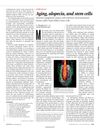
February 2016 in “Science” The document concludes that both internal stem cell factors and external influences like the environment and hormones affect hair loss and aging, with potential treatments focusing on these areas.
 6 citations
,
December 2021 in “PLoS Genetics”
6 citations
,
December 2021 in “PLoS Genetics” Polycomb Repressive Complex 2 is not needed for hair regeneration.
 4 citations
,
October 2018 in “Cell Stem Cell”
4 citations
,
October 2018 in “Cell Stem Cell” Hox genes control hair growth patterns in mammals by regulating stem cell activity in the skin.