
The research shows how certain drug molecules form stable structures with polymers, which could help create new drug forms.
8 citations
,
August 2018 in “Journal of Investigative Dermatology”  August 2019 in “Journal of Investigative Dermatology”
 Frog skin cells need the protein desmoplakin for proper development and cell layer formation.
5 citations
,
November 2024 in “Biomedicine & Pharmacotherapy” The chitosan-peptide system helps cartilage regeneration using fat-derived cells.
January 2011 in “InTech eBooks” Pesticide exposure may increase the risk of hypospadias in males.
 2 citations
,
January 2012 in “Hair therapy & transplantation”
2 citations
,
January 2012 in “Hair therapy & transplantation” DDAIP-HCl significantly increases minoxidil absorption into the skin.
 27 citations
,
June 2015 in “Journal of photochemistry and photobiology. B, Biology”
27 citations
,
June 2015 in “Journal of photochemistry and photobiology. B, Biology” The new lab-grown skin model is good for testing sunscreen's protection against DNA damage from UV light.
3 citations
,
December 2022 in “Russian Journal of General Chemistry” CoCr2O4 catalysts effectively and sustainably produce diaminopyrimidine oxides with high yield.
 January 2011 in “Yearbook of Dermatology and Dermatologic Surgery”
 The adapalene-benzoyl peroxide gel works better and faster for acne treatment than using either ingredient alone, with manageable side effects.
 10 citations
,
November 2016 in “International Journal of Cosmetic Science”
10 citations
,
November 2016 in “International Journal of Cosmetic Science” A tough membrane between the outer and inner layers of human hair protects it from damage.
 4 citations
,
January 1998 in “Heterocycles”
4 citations
,
January 1998 in “Heterocycles” Researchers made two new compounds that could be used for medicine.
13 citations
,
April 1982 in “The Journal of Dermatology” Poly(ADP-ribose) synthesis is linked to skin cell differentiation.
 3 citations
,
September 2005 in “Experimental dermatology”
3 citations
,
September 2005 in “Experimental dermatology” The cornified envelope is crucial for skin's barrier function and involves key proteins and genetic factors.
31 citations
,
February 2007 in “Journal of Structural Biology” Oxidation changes the structure of hair protein filaments, causing them to compact and rearrange.
2 citations
,
February 1983 in “International Journal of Cosmetic Science” Selenium disulphide detergents increase hair oiliness by boosting some lipids and reducing fatty acids.
13 citations
,
January 2010 in “Immunopharmacology and immunotoxicology” Diphencyprone increases Bcl-2 protein in patients with hair regrowth from alopecia areata.
 2 citations
,
November 2017 in “PloS one”
2 citations
,
November 2017 in “PloS one” Some vitamin D analogs can thicken skin and reduce pore size like a common acne treatment, with one analog also affecting skin growth factors.
 8 citations
,
January 2013 in “Medicinal chemistry”
8 citations
,
January 2013 in “Medicinal chemistry” The compound 4c showed strong potential as an anticancer agent.
7 citations
,
December 2024 in “International Journal of Pharmaceutics” Dissolving microneedle patches can effectively deliver drugs over time.
51 citations
,
December 2006 in “Mammalian Genome” January 2026 in “SSRN Electronic Journal”  5 citations
,
January 2005 in “Journal of Enzyme Inhibition and Medicinal Chemistry”
5 citations
,
January 2005 in “Journal of Enzyme Inhibition and Medicinal Chemistry” New steroids were effective in blocking male hormone receptors in hamster prostates.
May 2022 in “Current Enzyme Inhibition” Compound 7b is a promising candidate for treating benign prostatic hyperplasia and prostate cancer.
6 citations
,
November 2017 in “Journal of the Peripheral Nervous System” Mercury exposure damages small nerve fibers in rats' skin.
 4 citations
,
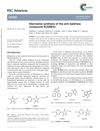
January 2014 in “RSC Advances”
4 citations
,
January 2014 in “RSC Advances” A new, less toxic and more efficient method to create the anti-baldness compound RU58841 was developed in 2014.
9 citations
,
January 2023 in “Langmuir” Solubility in skin changes with hydration, affecting chemical absorption.
60 citations
,
August 1969 in “British Journal of Dermatology” Germicides mostly stay on the skin's surface, but some penetrate deeper depending on the product used.
January 1988 in “Toxicological Sciences” 4PeCDF is highly toxic to male rats, causing weight loss, organ damage, and death.
14 citations
,
March 2019 in “European journal of pharmaceutics and biopharmaceutics” Proretinal nanoparticles improve skin absorption and reduce irritation of topical retinoids.
 May 2026 in “International Journal of Scientific Research in Chemistry”
 Finasteride breaks down into new compounds under acidic conditions.