 March 2025 in “International Journal of Scientific Research in Science and Technology”
 Early diagnosis and personalized treatment can lead to significant hair regrowth in children with alopecia areata.

Janus kinase inhibitors are the most supported treatment for pediatric alopecia areata, while other options have limited evidence.
 January 2025 in “Biomedical Reports”
 Telitacicept helped stabilize complement levels in a patient with lupus and thyroid cancer.
 January 2025 in “International Journal of Dermatology”
 Tofacitinib improved hair and nail conditions in a teen with alopecia areata.
January 2025 in “Clinical Case Reports” Timely and aggressive treatment is crucial for improving outcomes in severe complications of adult-onset Still's disease.
 August 2024 in “Polo del Conocimiento”
 Scalp psoriasis is treated with topical therapies, phototherapy, and systemic medications.
 March 2024 in “Residência Pediátrica”
 An infant developed excessive hair growth after a bone marrow transplant and cyclosporine treatment.
 January 2024 in “Journal der Deutschen Dermatologischen Gesellschaft”
 Non-biologic immunosuppressive drugs are crucial for treating autoimmune and chronic inflammatory skin diseases.
November 2023 in “International Journal of Trichology” Alopecia areata may be linked to kidney issues, but more research is needed.
 October 2023 in “International Journal of Science and Research (IJSR)”
 Early diagnosis of GLPLS is crucial to prevent complications, but scarring alopecia is irreversible.
 August 2023 in “Journal of The American Academy of Dermatology”
 Early treatment is key for permanent hair loss disorders, with options ranging from medications and phototherapy to immunomodulators and antibiotics, depending on severity and type.
 July 2023 in “Skin Research and Technology”
 Baricitinib combined with other immune therapies may safely and effectively treat severe scalp hair loss.
 May 2023 in “Elsevier eBooks”
 Systemic immunotherapies are used for immune-related hair loss but not usually for genetic hair loss, unless the patient has both conditions.
January 2023 in “Figshare” Triple therapy with clobetasol, hydroxychloroquine, and N-acetylcysteine is recommended for better outcomes in treating lichen planopilaris.
September 2022 in “Health and Medical Journal” Minoxidil and oral antioxidants helped improve hair growth in a patient with hair loss due to lupus.
January 2022 in “Clinical Cases in Dermatology” Scalp psoriasis is hard to treat and may need various medications.
 October 2020 in “Veterinary Dermatology”
 New treatments and diagnostic methods for various animal skin conditions showed promising results.
 May 2019 in “Small Animal Dermatology”
 The dog had sebaceous adenitis, treated with ciclosporin, leading to some hair regrowth.
 October 2018 in “InTech eBooks”
 The gene Foxn1 is important for hair growth, and understanding it may lead to new alopecia treatments.
 October 2018 in “InTech eBooks”
 The most effective treatments for hair loss are minoxidil, finasteride, PRP, and hair transplants, with steroids and immunosuppressants for autoimmune types.
 July 2018 in “Elsevier eBooks”
 Lichen Planopilaris is a hair loss condition best treated early with various medications, including hydroxychloroquine, to prevent permanent baldness.
 May 2018 in “International journal of cell science & molecular biology”
 Early anti-aging hair treatments should focus on anti-inflammatory agents and promoting healthy hair growth cycles.
 November 2017 in “Journal of Surgical Academia”
 Visual field defects in lupus nephritis can be caused by hypertensive retinopathy, not glaucoma or medication toxicity.
 March 2016 in “Journal of evolution of medical and dental sciences”
 Combining OMP with cyclosporine can effectively treat severe alopecia areata in children.
 January 2016 in “Journal of The Korean Medical Association”
 The document says how to diagnose and treat hair loss from alopecia areata, but there's no cure and treatments vary.
 January 2016 in “Kafkas Journal of Medical Sciences”
 Turkish pregnant women commonly experienced skin issues like itching and acne, and doctors mainly used topical treatments due to safety concerns during pregnancy.
 June 2014 in “Basic & Clinical Pharmacology & Toxicology”
 Some plant extracts may treat livestock diseases, certain animal treatments are safe and effective, but more research on drug safety and resistance is needed.
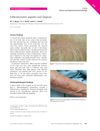 May 2014 in “Clinical and Experimental Dermatology”
 A 70-year-old woman with a rare skin condition improved after treatment with topical steroids and acitretin.
 March 2014 in “Journal of The American Academy of Dermatology”
 Azathioprine may be an effective treatment for severe hair loss.
 March 2014 in “Journal of The American Academy of Dermatology”
 Azathioprine treatment led to rapid hair regrowth in a woman with alopecia universalis.