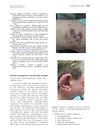
A 72-year-old man was diagnosed with a rare skin form of Rosai-Dorfman disease after years of misdiagnosis.
 4 citations
,
June 1998 in “The Journal of Clinical Endocrinology & Metabolism”
4 citations
,
June 1998 in “The Journal of Clinical Endocrinology & Metabolism” KGF and its receptor are found in enlarged prostate tissue and KGF strongly increases cell growth.
198 citations
,
September 2007 in “Clinics in Dermatology” Radiofrequency devices effectively tighten skin without surgery.
32 citations
,
January 2020 in “Journal of Molecular Histology” K31 can identify clear secretory cells in human sweat glands.
 1 citations
,
December 2014 in “Scanning”
1 citations
,
December 2014 in “Scanning” Multiphoton microscopy effectively images rabbit skin structures in detail without staining and shows differences from human skin.
 3 citations
,
January 2011 in “Intestinal Research”
3 citations
,
January 2011 in “Intestinal Research” Cronkhite-Canada syndrome can cause multiple gastrointestinal polyps and various physical symptoms.
May 2018 in “Dermatologic Surgery” 13 citations
,
December 2009 in “Journal of the Peripheral Nervous System” TRPA1 and TRPV1 channels don't affect mechanotransduction in rat sinus hair follicles.
60 citations
,
December 1988 in “Journal of Biochemical Toxicology” TCDD reduces EGF receptors in the liver, affecting growth and development.
28 citations
,
March 2013 in “Journal of Investigative Dermatology” Kv1.3 blockers may help treat alopecia areata and promote hair regrowth.
68 citations
,
January 2014 in “Dermatology research and practice” Skin side effects from cancer drugs targeting EGFR can affect treatment adherence but can be managed with antibiotics like tetracycline.
1 citations
,
January 2015 ERK activation spreads between cells, influencing cell division and wound healing.
21 citations
,
November 2014 in “Cytotechnology”  October 2014 in “Cancer Research”
 A new topical treatment may prevent hair loss from cancer therapy by adjusting cell death processes in hair follicles.
18 citations
,
September 1994 in “Clinical and Experimental Dermatology” Localized trichorrhexis nodosa is a hair condition where hair becomes fragile and breaks easily due to damage.
rhKGF2 significantly promotes hair growth and follicle development.
6 citations
,
May 2024 in “JAAD Case Reports” Topical ruxolitinib cream may help treat frontal fibrosing alopecia.
29 citations
,
February 1989 in “Journal of Cutaneous Pathology” A unique hair tumor with a rippled pattern was identified, showing incomplete differentiation and unusual cell arrangements.
 2 citations
,
May 2021 in “Clinical Pharmacology in Drug Development”
2 citations
,
May 2021 in “Clinical Pharmacology in Drug Development” Clascoterone is safe for the heart, even at high doses.

Key genes for mink fur have been identified, aiding conservation efforts.
 December 2013 in “Appetite”
 A defective gene causes hair loss and taste insensitivity in BTBR mice.
 October 2021 in “Revista Medicina Cutánea Ibero-Latino-Americana”
 PRIDE syndrome helps identify skin side effects from EGFR inhibitors like erlotinib.
 1 citations
,
June 2021 in “Journal of dermatology and dermatitis”
1 citations
,
June 2021 in “Journal of dermatology and dermatitis” Tyrosine kinase inhibitors show promise in treating some skin diseases but their definitive role in dermatology is still unclear.
 14 citations
,
January 2011 in “Journal of Cutaneous Pathology”
14 citations
,
January 2011 in “Journal of Cutaneous Pathology” CK15 is not a reliable marker for stem cells in damaged hair follicles from patients with CCCA.
 1 citations
,
January 2021 in “Journal of biological chemistry/The Journal of biological chemistry”
1 citations
,
January 2021 in “Journal of biological chemistry/The Journal of biological chemistry” FLCN helps control iron levels in cells.
December 2005 in “Science s STKE” Localized ROS production is essential for cell growth and movement in plants and animals.
1 citations
,
May 2016 in “Journal of Cosmetic Dermatology” Cytokeratins 15 and 19 may help track vitiligo treatment progress.
14 citations
,
November 1979 in “Pediatric Research” January 2013 in “edoc (University of Basel)” TRF1 is crucial for creating and maintaining stem cells and marks both pluripotent and adult stem cells.