 November 2023 in “Frontiers in pharmacology”
 Drug repositioning offers hope for new, affordable treatments for a genetic skin disorder called ARCI.
 October 2023 in “Naunyn-Schmiedeberg's Archives of Pharmacology”
 Custom software found that common allergy drugs might have new uses for various conditions and could improve survival in some cancers.
March 2007 in “Journal of Cell Science” K10 may not prevent tumors as previously thought and might increase benign tumor risk.
 2 citations
,
March 2015 in “Toxicology and Environmental Health Sciences”
2 citations
,
March 2015 in “Toxicology and Environmental Health Sciences” Rice bran extract caused moderate skin irritation but no eye irritation, while a diluted essence was not irritating to skin and only slightly to guinea pigs.
 19 citations
,
July 2015 in “Journal of Ginseng Research”
19 citations
,
July 2015 in “Journal of Ginseng Research” Korean Red Ginseng may protect against hair loss caused by chemotherapy.
February 2016 in “Journal of Allergy and Clinical Immunology” Consider DRIF and perform skin biopsies for persistent papular rashes.
87 citations
,
September 2006 in “Clinical Cancer Research” Protein Kinase C shows promise for cancer treatment, but more research is needed to develop effective inhibitors.
 37 citations
,
January 2015 in “Evidence-based Complementary and Alternative Medicine”
37 citations
,
January 2015 in “Evidence-based Complementary and Alternative Medicine” An extract from Quercus acutissima bark was found to reduce sebum production and block an enzyme linked to acne.
2 citations
,
October 2025 in “Cells” PKM2 is a promising target for heart repair and regeneration.

The document is retracted and cannot be summarized.
 January 2013 in “International Journal of Trichology”
 A new mutation in the TRPS1 gene was found in a Ukrainian girl with Trichorhinophalangeal syndrome type I.
 18 citations
,
August 2018 in “The FASEB journal”
18 citations
,
August 2018 in “The FASEB journal” Rabbits lacking the Hoxc13 gene show similar hair and skin issues to humans with ECTD-9, making them good for research on this condition.
 5 citations
,
October 2018 in “Dermatologic therapy”
5 citations
,
October 2018 in “Dermatologic therapy” Recognizing congenital triangular alopecia is crucial to avoid unnecessary treatments.
June 2026 in “Journal of Orthopaedic Science and Research” Delayed PRP treatment may help ACL healing in older patients.
10 citations
,
November 2021 in “International journal of molecular sciences” Sheep and goat hair fibers are complex due to keratin-associated proteins, which are important for fiber properties and growth.
15 citations
,
March 2000 in “The journal of investigative dermatology/Journal of investigative dermatology” As skin cells mature, vitamin D receptor levels decrease while retinoid X receptor α levels increase.
January 2014 in “Journal of Guangdong Pharmaceutical University” The new rabbit model better mimics human acne symptoms.
 4 citations
,
May 2022 in “Journal of Nepal Medical Association”
4 citations
,
May 2022 in “Journal of Nepal Medical Association” Steroids, infection management, and nutritional support can significantly improve symptoms of Cronkhite-Canada Syndrome.
ocu-miR-205 affects hair density in Rex rabbits by altering hair follicle growth and signaling pathways.
4 citations
,
July 2024 in “Radiotherapy and Oncology” A standardized scoring system is needed to improve model reliability for predicting hair loss in brain tumor patients treated with proton therapy.
 August 2023 in “Journal of Investigative Dermatology”
 Different body areas have unique skin cell communication patterns, explaining why certain skin diseases occur in specific regions.
April 2014 in “The FASEB Journal” Testosterone reduces knee movement, while flutamide and finasteride increase it.
 July 2026 in “Journal of Ovarian Research”
 The study identified diverse cell types and gene expressions in ovarian steroid cell tumors, improving understanding of this rare tumor.
3 citations
,
November 2024 in “Egyptian Journal of Medical Human Genetics” SGK1 is important in cancer growth and treatment resistance, and targeting it could improve therapies.

Activating certain potassium channels in honey bees can lower antioxidant levels and reduce death rates during heavy mite infestations, potentially aiding their immune response.
7 citations
,
May 2022 in “Cancers” UC.145 may be a new biomarker for predicting gastric cancer.
26 citations
,
May 2007 in “Differentiation” Foxn1 helps skin cells mature by controlling a specific protein's activity.
September 2023 in “Journal of the American Academy of Dermatology” CTP-543 significantly improved eyebrow and eyelash regrowth and patient satisfaction in adults with alopecia areata.
 11 citations
,
May 2023 in “Journal of Cancer Research and Clinical Oncology”
11 citations
,
May 2023 in “Journal of Cancer Research and Clinical Oncology” CRISPR/Cas systems show promise for cancer treatment by targeting miRNAs, but delivery and specificity challenges remain.
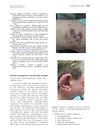
A 72-year-old man was diagnosed with a rare skin form of Rosai-Dorfman disease after years of misdiagnosis.