 December 2025 in “International Journal of Innovative Technologies in Social Science”
 New treatments for androgenetic alopecia show promise but need more research for validation.
 September 2025 in “PubMed”
 Combining microneedling with drugs and stem cells shows promise for improving hair growth in androgenetic alopecia.
 January 2025 in “Dermatology and Therapy”
 Hormonal therapies effectively treat acne and improve quality of life.
 May 2024 in “Aktualʹnì problemi sučasnoï medicini: Vìsnik Ukraïnsʹkoï medičnoï stomatologìčnoï akademì”
 Spironolactone and clascoterone are promising acne treatments with fewer side effects.
April 2026 in “ACS Applied Materials & Interfaces” A new treatment using probiotic microneedles shows promise for promoting hair growth and reducing inflammation in androgenetic alopecia.
 October 2023 in “Journal of the American Academy of Dermatology”
 Clascoterone cream could be used for other skin conditions affected by hormones.
 5 citations
,
January 2024 in “Journal of the American Academy of Dermatology”
5 citations
,
January 2024 in “Journal of the American Academy of Dermatology” Use benzoyl peroxide, retinoids, antibiotics, and isotretinoin for acne, and combine treatments for better results.
June 2026 in “Expert Opinion on Pharmacotherapy” New treatments for hair loss focus on targeting specific causes to improve effectiveness and safety.
 August 2025 in “Journal of Cosmetic Dermatology”
 Interest in new and personalized treatments for hair loss is growing.
July 2025 in “Canadian Family Physician” Use topical treatments for mild acne and oral treatments for moderate to severe acne, avoiding antibiotic monotherapy.
68 citations
,
May 2024 in “International Journal of Molecular Sciences” Personalized acne treatments and new therapies show promise for better results.
 March 2014 in “Journal of The American Academy of Dermatology”
 Azathioprine may help with severe hair loss, a new topical treatment could counteract hair thinning, and trichoscopy can diagnose hair-pulling disorder effectively.
 March 2014 in “Journal of The American Academy of Dermatology”
 Cortexolone 17a-propionate may be an effective new treatment for hair loss.
 March 2025 in “HAL (Le Centre pour la Communication Scientifique Directe)”
 De nouvelles thérapies promettent de mieux traiter la perte de cheveux due à l'alopécie androgénétique.
 1 citations
,
October 2022 in “Adolescent Health, Medicine and Therapeutics”
1 citations
,
October 2022 in “Adolescent Health, Medicine and Therapeutics” Gender-affirming therapy can cause skin issues like acne and hair loss in transgender adolescents, and more research is needed on its dermatological effects.
 July 2025 in “American Journal of Clinical Dermatology”
 Alopecia treatments like 5α-reductase inhibitors and spironolactone are safe for breast cancer patients and high-risk women.

Advancements in diagnostics, treatments, and technology have improved hair loss detection and restoration, with some types being reversible.
August 2024 in “Cosmetics” Personalized treatments for hair loss are becoming more effective by using genetic information.
 February 2024 in “Biomedicines”
 Hormones like androgens, estrogen, thyroid hormones, and stress hormones can contribute to hair loss, and treatments target these hormonal imbalances.
 February 2024 in “International Journal of Molecular Sciences”
 Hair loss in Androgenetic Alopecia is caused by genetics, aging, and lifestyle, leading to hair follicle shrinkage and related health risks.
 January 2024 in “Journal of Biosciences and Medicines”
 Future treatments for androgenic alopecia may focus on reactivating hair follicle stem cells and improving drug delivery.
 October 2025 in “Dermatology Practical & Conceptual”
 ChatGPT 4.0 and Gemini 1.5 Flash are effective for educating patients about androgenetic alopecia, while Deepseek R1 is less reliable.

Topical minoxidil 5% is the most effective treatment for male hair loss, but other therapies show promise.
Adding a topical agent to IPL improves hair reduction and satisfaction without extra side effects.
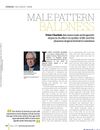
Most American men experience hair loss by age 50, with limited effective treatments available and new options not expected soon.
 110 citations
,
August 2016 in “Drugs”
110 citations
,
August 2016 in “Drugs” Minoxidil is the only FDA-approved topical drug for treating male or female pattern hair loss, and other medications like finasteride and dutasteride can also increase hair growth.
September 2022 in “Journal of the American Academy of Dermatology” The serum reduces acne and improves skin clarity.
 March 2014 in “Journal of The American Academy of Dermatology”
 Azathioprine may be an effective treatment for severe hair loss.
 April 2012 in “Journal of the American Academy of Dermatology”
 Clofazimine effectively treated ashy dermatosis in a patient.
4 citations
,
July 2023 in “Journal of Drugs in Dermatology” Hormonal treatments can effectively improve hidradenitis suppurativa symptoms.