 1 citations
,
January 2016 in “Hair therapy & transplantation”
1 citations
,
January 2016 in “Hair therapy & transplantation” Liposomal cepharanthine lotion speeds up hair growth in men with early balding.

This rare genetic disorder causes permanent hair loss and skin bumps from birth.
June 2024 in “Dermatopathology” A rare type of skin cancer on the scalp can be mistaken for hair loss, causing delayed diagnosis and severe damage.
 February 2021 in “Cureus”
 A woman's hair loss was initially misdiagnosed as scarring hair loss but was actually a treatable autoimmune hair loss.
 August 2023 in “JAAD Case Reports”
 A woman with lupus experienced hair regrowth after treatment, but hair transplantation is not advised for her condition.
 July 2009 in “Medical & surgical dermatology”
 Low-dose acitretin helps nail psoriasis, stem cells may treat scarring alopecia, Chinese men have lower baldness rates, lateral foldplasty is good for ingrown toenails, hair diameter helps diagnose female baldness, childhood trauma linked to alopecia areata, certain hair-weaving leads to scalp conditions in African American women, and new methods for hair research and understanding hair and sweat gland development were introduced.
26 citations
,
January 2009 in “Annals of Dermatology” Two rare bald spots on the back of the scalp were found to be lupus, not alopecia areata.
 3 citations
,
April 2016 in “Dermatologic Surgery”
3 citations
,
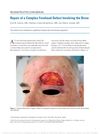
April 2016 in “Dermatologic Surgery” A man's forehead and eyebrow were successfully reconstructed with a skin and hair graft that matched his other eyebrow, without needing frequent trimming.
August 2025 in “Annals of African Medicine”  4 citations
,
November 2021 in “Journal of Clinical Medicine”
4 citations
,
November 2021 in “Journal of Clinical Medicine” Higher levels of CCL7 are linked to more severe hair loss in alopecia areata patients.
March 2025 in “Revista Foco” Early diagnosis of Alopecia Frontal Fibrosante is crucial for effective treatment.
 18 citations
,
January 2017 in “Annals of dermatology/Annals of Dermatology”
18 citations
,
January 2017 in “Annals of dermatology/Annals of Dermatology” Certain immune cells contribute to severe hair loss in chronic alopecia areata, with Th17 cells possibly having a bigger impact than cytotoxic T cells.
1 citations
,
March 2013 in “Journal of Dermatological Case Reports” A rare skin condition affected only the facial hair of a 46-year-old man.
 1 citations
,
April 2010 in “Expert Review of Dermatology”
1 citations
,
April 2010 in “Expert Review of Dermatology” The document concludes that early diagnosis and treatment are crucial for managing rare hair loss disorders and that more research is needed to improve treatment strategies.
 August 2016 in “Journal of Investigative Dermatology”
 Blocking the CCR5 receptor may be a new way to treat hair loss from alopecia areata.
 14 citations
,
August 2012 in “Clinics in Dermatology”
14 citations
,
August 2012 in “Clinics in Dermatology” In the Middle Ages, European noblewomen intentionally removed forehead hair to be fashionable, showing how beauty standards can affect the perception of hair loss.
 March 2021 in “Journal of Maxillofacial and Oral Surgery”
 Beard hair can be used for hair transplants in severe alopecia cases, with minimal complications and good results.
 January 2020 in “Nasza Dermatologia Online”
 A mixture of Dijon mustard, turmeric powder, and linseed oil can effectively treat alopecia barbae.
 April 2019 in “The journal of investigative dermatology/Journal of investigative dermatology”
 Targeting cholesterol, fatty acids, fibrosis, and mast cells may help treat CCCA.
5 citations
,
March 2017 in “Journal of the American Academy of Dermatology” Cytokeratin-15 loss is not specific to any single type of scarring alopecia.
April 2026 in “Medicine Updates”  February 2023 in “Archives of Dermatological Research”
 Laser treatment, especially when combined with other therapies, is effective for hair regrowth in alopecia areata.
May 2026 in “Journal of International Medical Research” Atrichia with papular lesions causes irreversible hair loss from infancy and is often misdiagnosed.
May 2011 in “Harper's Textbook of Pediatric Dermatology” Alopecia areata causes patchy hair loss and has no cure, but treatments like corticosteroids and minoxidil can help.
 January 2022 in “Consultant”
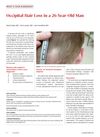
 The man's occipital hair loss was due to temporal triangular alopecia, not alopecia areata.
 5 citations
,
September 2018 in “Acta histochemica”
5 citations
,
September 2018 in “Acta histochemica” The mTOR pathway proteins are altered in the hair follicles of patients with Lichen Planopilaris and Frontal Fibrosing Alopecia.
16 citations
,
June 2015 in “The journal of investigative dermatology/Journal of investigative dermatology” The enzyme DHHC13 is essential for healthy hair and skin, and its deficiency leads to hair loss and skin problems.
 November 2014 in “Prescriber”
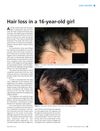
 The 16-year-old girl with hair loss was successfully treated for alopecia areata, leading to significant hair regrowth.
 3 citations
,
July 2018 in “Journal of Oral and Maxillofacial Surgery”
3 citations
,
July 2018 in “Journal of Oral and Maxillofacial Surgery” Hair loss can occur after oral surgery, likely due to stress and pressure on the scalp, and usually gets better on its own.
Combining vertical and horizontal sectioning improves scalp biopsy analysis for alopecia.