 15 citations
,
February 1999 in “The anatomical record”
15 citations
,
February 1999 in “The anatomical record” Some mutant mice have hair with abnormal cross-linking, mainly in the cuticle, not affecting other hair parts.
503 citations
,
May 2009 in “Cell stem cell” Lrig1 marks a unique group of stem cells in mouse skin that can become different skin cell types.
 140 citations
,
March 2013 in “The journal of immunology/The Journal of immunology”
140 citations
,
March 2013 in “The journal of immunology/The Journal of immunology” Memory regulatory T cells need IL-7, not IL-2, to stay in peripheral tissues.
1 citations
,
October 1988 in “Clinics in Dermatology” Scientists identified and cloned specific keratin proteins in mouse hair.
 38 citations
,
January 2016 in “Cell Death and Disease”
38 citations
,
January 2016 in “Cell Death and Disease” The TCL1 transgenic mouse model is useful for understanding human B-cell leukemia and testing new treatments.
19 citations
,
December 2006 in “Journal of Structural Biology” Type I and Type II keratin chains can form heterodimers despite sequence differences.
January 2026 in “International Journal of Molecular Sciences” Eyebrow follicles are best for accurate genetic testing after stem cell transplants.
11 citations
,
December 2015 in “Indian journal of dermatology, venereology, and leprology” Dermoscopy quickly and accurately diagnosed a rare hair disorder in a 12-year-old girl.
9 citations
,
December 2012 in “Indian Journal of Dermatology Venereology and Leprology” Two sisters had rare, widespread cysts and complete hair loss, suggesting a genetic link.
27 citations
,
July 1997 in “PubMed” The harlequin ichthyosis mouse mutation causes thick skin and early death, resembling a human skin disorder.
 7 citations
,
January 1998 in “EXPERIMENTAL ANIMALS”
7 citations
,
January 1998 in “EXPERIMENTAL ANIMALS” The skin of both rat strains showed similar lectin binding patterns.
 11 citations
,
December 2010 in “Archives of Dermatology”
11 citations
,
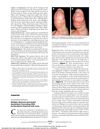
December 2010 in “Archives of Dermatology” A man with rare skin changes on his fingers was diagnosed with multiple myeloma-linked amyloidosis.
 1 citations
,
January 2020 in “Skin appendage disorders”
1 citations
,
January 2020 in “Skin appendage disorders” A family was found with both Trichorhinophalangeal syndrome and Loose Anagen Syndrome, suggesting a genetic connection.
3 citations
,
January 2021 in “Veterinary dermatology” A litter of cats had a hair condition similar to a mouse mutation, leading to hair loss and abnormal hair and skin.
52 citations
,
February 2012 in “PloS one” Lack of Ctip2 in skin cells delays wound healing and disrupts hair follicle stem cell markers in mice.
10 citations
,
June 1999 in “Veterinary Dermatology” Two cows had a rare hair disorder causing hair loss but were otherwise healthy.
January 2022 in “Mammalian Genome” The wavy coat in NCT mice is caused by multiple genes, including a mutation in the Prss53 gene.
 8 citations
,
January 2019 in “Acta dermato-venereologica”
8 citations
,
January 2019 in “Acta dermato-venereologica” Some children with localized scleroderma are rarely resistant to methotrexate, and no common profile for resistance was found.
73 citations
,
January 2004 in “Journal of the American Academy of Dermatology” Immunocompromised patients can develop skin and hair issues due to a virus.
5 citations
,
March 2017 in “Gene” CAP1 decreases the expression of a hair-related protein in young Tan sheep's skin.
37 citations
,
December 1995 in “Journal of Cell Science” Nexin 1 may help control hair growth.
1 citations
,
June 2018 in “World rabbit science” Different miRNAs in Rex rabbit skin affect cell processes and hair growth.
4 citations
,
February 2023 in “Stem Cell Research & Therapy” Mouse skin cells can become sperm-like cells in the lab.
41 citations
,
June 2022 in “Biomedicines” PCOS should be reclassified into two types based on hormone levels and symptoms.
April 2026 in “Research Square” 6 citations
,
March 2005 in “Journal of the American Academy of Dermatology” Follicular dystrophy in immunocompromised patients may be linked to medication or viral factors and can improve with treatment changes.

Newly designed proteins can effectively degrade specific proteins in cells, offering a promising alternative for targeted protein degradation.
 4 citations
,
September 2013 in “Expert Review of Endocrinology & Metabolism”
4 citations
,
September 2013 in “Expert Review of Endocrinology & Metabolism” Different types of polycystic ovary syndrome show varying levels of insulin resistance, with the 'PHO' type being the most insulin resistant.
24 citations
,
October 2019 in “Genes” A new sheep gene, KRTAP36-1, may help breed sheep with better wool by reducing prickle factor.
Acitretin improved monilethrix symptoms temporarily, but they returned after stopping treatment.