 October 2023 in “Journal of the Endocrine Society”
 Machine learning identified three unique subtypes of androgen excess in women with PCOS, each with different metabolic risks.
January 2025 in “SSRN Electronic Journal”  10 citations
,
June 2018 in “Aaps Pharmscitech”
10 citations
,
June 2018 in “Aaps Pharmscitech” The flutamide-loaded hydrogel is a promising, skin-friendly treatment for acne and hair loss, potentially requiring less frequent application.
 May 2023 in “Accounts of chemical research”
 New methods can better classify curly hair types and lead to improved hair care products.
8 citations
,
October 2024 in “Developmental Cell” 14 citations
,
March 2021 in “Regenerative Biomaterials” The hydrogels help stem cells stay healthy and maintain their stem cell properties.
 113 citations
,
March 2018 in “Biological reviews/Biological reviews of the Cambridge Philosophical Society”
113 citations
,
March 2018 in “Biological reviews/Biological reviews of the Cambridge Philosophical Society” Animals that change color with the seasons mainly do so in response to daylight changes, but climate change is causing camouflage problems that may require evolutionary changes.
 December 2013 in “International Journal of Dermatology”
 The clinical signs of Adams-Oliver syndrome can vary greatly, even among family members.
4 citations
,
July 2010 in “International Journal of Cosmetic Science” Curved human hair has different structures on its convex and concave sides.
124 citations
,
January 2009 Understanding and controlling crystallization is crucial for producing high-quality organic compounds in industry.
 7 citations
,
January 2013 in “BioMed research international”
7 citations
,
January 2013 in “BioMed research international” Hair follicles and deer antlers regenerate similarly through stem cells and are influenced by hormones and growth factors.

CAM practitioners in the eThekwini area are exploring ways to manage and diagnose Polycystic Ovarian Syndrome.
 April 2026 in “Diagnostics”
 Parry–Romberg Syndrome can involve the brain even without obvious symptoms, and a new diagnostic framework is suggested for early detection.
 January 2023 in “Biomaterials Science”
 Certain genes are more active during wound healing in axolotl and Acomys, which could help develop materials that improve human wound healing and regeneration.
 June 2026 in “arXiv (Cornell University)”
 Hair beds in fluid show nonlinear response due to viscosity, inertia, and elasticity.
June 2021 in “SWU eJournals System (Srinakharinwirot University)” Mixed coconut oil/solvent is suitable for cyproterone acetate injections, but more safety checks are needed.
 151 citations
,
July 2011 in “Archives of Dermatological Research”
151 citations
,
July 2011 in “Archives of Dermatological Research” Liposomal systems show promise for delivering drugs through the skin but face challenges like high costs and stability issues.
 April 2026 in “Lithuanian University of Health Sciences”
 Cinnamic acid in hydrogels can effectively fight fungi but spreads less than in solution.
New methods to classify curly hair types were developed based on shape and strength.
 January 2014 in “International Journal of Trichology”
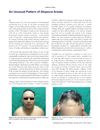
 A man had an unusual type of hair loss that didn't match known patterns and didn't improve with treatment.
 106 citations
,
June 2005 in “Journal of Investigative Dermatology”
106 citations
,
June 2005 in “Journal of Investigative Dermatology” The document concludes that assessing hair follicle damage due to cyclophosphamide in mice involves analyzing structural changes and suggests a scoring system for standardized evaluation.
 15 citations
,
July 2004 in “Journal of morphology”
15 citations
,
July 2004 in “Journal of morphology” Monotreme hair structure and protein distribution are similar to other mammals, but their inner root sheath cornifies differently, suggesting a unique evolution from reptile skin.
9 citations
,
June 2021 in “Biological reviews/Biological reviews of the Cambridge Philosophical Society” Understanding molecular pathways is key to improving organ regeneration.
 8 citations
,
July 2024 in “PLoS ONE”
8 citations
,
July 2024 in “PLoS ONE” Botryococcus braunii's three chemical races should be reclassified as separate species.
 6 citations
,
January 2015 in “Biochemical Society Transactions”
6 citations
,
January 2015 in “Biochemical Society Transactions” The Ysc84/SH3yl1 protein family is important for cell movement and the process of taking in materials by interacting with actin and cell membranes.
January 2016 in “Universitätsbibliothek der FU Berlin Hochschulschriftenstelle u. Dokumentenserver” The new biodegradable nanocarriers safely and effectively deliver drugs into the skin.
 March 2026 in “Preprints.org”
 Chirality affects the structure, strength, and function of peptide-based hydrogels.
20 citations
,
January 2002 in “Laboratory Animals” Mutations in the hairless gene cause hair loss and skin cysts in rhesus macaques.
 July 2025 in “Communications Biology”
 Rat vibrissae structure relates to their sensory function.
 April 2019 in “Journal of Investigative Dermatology”
 The search scheme SMRI is faster and more secure for retrieving encrypted data from the cloud.