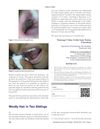
 January 2012 in “International Journal of Trichology”
 Two siblings have a rare genetic condition causing curly, coarse hair.
February 2026 in “Small Ruminant Research” The IRF2BP2 gene affects sheep fleece quality by influencing fiber traits.
 18 citations
,
February 2014 in “PubMed”
18 citations
,
February 2014 in “PubMed” Androgenetic alopecia is a common hair loss condition caused by testosterone effects on hair follicles, leading to thinner, shorter, and less pigmented hair, diagnosed using scalp dermoscopy and treated with topical minoxidil, antiandrogen agents, and 5-alpha reductase inhibitors.
 January 2024 in “Journal of Cosmetic Dermatology”
 The 1565 nm non-ablative fractional laser is more effective and satisfying than 5% minoxidil for treating hair loss.
December 2018 in “Вестник Российской Военно-медицинской академии” PRP therapy significantly improves hair growth and density in men with androgenic alopecia.
March 2026 in “World Rabbit Science” DKK4 can be used to improve wool quality in Zhexi Angora rabbits.
January 2022 in “International Journal of Trichology” Using both PRP and minoxidil together works better for treating hair loss in men than using either one alone.
 June 2024 in “Journal of clinical oncology”
 Scalp cooling can effectively prevent hair loss during chemotherapy, improving patients' quality of life.
 2 citations
,
June 2021 in “Cosmoderma”
2 citations
,
June 2021 in “Cosmoderma” Platelet-rich plasma (PRP) shows promise in skin and hair treatments but results vary with preparation methods.
Guard hair length is positively correlated with guard hair diameter and down fiber length, but negatively correlated with variation in guard hair diameter and down fiber diameter.
1 citations
,
September 2024 in “Animals” Specific gene variants affect wool traits in Chinese Tan sheep.
 September 2025 in “Dermatology and Therapy”
 The treatment improved hair growth and was well-received without side effects.
 September 2023 in “International Journal of Dermatology”
 Younger people are at a higher risk for Fibrosing Alopecia in a Pattern Distribution than previously thought, with common symptoms and possible involvement of mast cells in its development.
 January 2023 in “Journal of surgery and research”
 New treatment effectively reverses hair thinning in most patients with mild side effects.
KRTAP6 genes affect wool quality in sheep.
 December 2024 in “Journal of Skin and Stem Cell”
 Trichoscopy helps diagnose and manage different types of hair loss in the Indian population.
14 citations
,
January 2018 in “Indian Journal of Dermatology, Venereology and Leprology” Adding low-level light therapy to minoxidil improves hair growth and patient satisfaction.
 5 citations
,
January 2022 in “Journal of Clinical Medicine”
5 citations
,
January 2022 in “Journal of Clinical Medicine” Dermoscopy and trichoscopy are useful for diagnosing skin signs in Dermatomyositis.
 August 2024 in “Journal of Clinical Medicine”
 Pruritus is common in LPP and FFA, worsened by heat and stress, and relieved by cold, affecting quality of life.
January 2020 in “Global dermatology” The growth factor cocktail significantly increased hair growth in patients with androgenetic alopecia.
 10 citations
,
January 2003 in “Seminars in reproductive medicine”
10 citations
,
January 2003 in “Seminars in reproductive medicine” The article explains how to identify and treat excessive hair growth in women, which can be distressing and may signal other health problems.
 39 citations
,
March 1987 in “Journal of The American Academy of Dermatology”
39 citations
,
March 1987 in “Journal of The American Academy of Dermatology” Topical minoxidil is a safe and effective treatment for hair loss caused by androgenetic alopecia.
 1 citations
,
March 1994 in “Proceedings of the British Society of Animal Production”
1 citations
,
March 1994 in “Proceedings of the British Society of Animal Production” Prolactin and melatonin affect the growth of Angora and Cashmere goat hair differently.
 February 2009 in “Springer eBooks”
 Pregnancy can cause more body and scalp hair growth and make nails brittle, but these changes often revert after giving birth.
 40 citations
,
December 2011 in “British Journal of Dermatology”
40 citations
,
December 2011 in “British Journal of Dermatology” Women's hair generally gets thinner and less dense starting in their mid-thirties, with hair loss becoming more common as they age due to both genetics and environment.
 1 citations
,
January 2017 in “International Journal of Dermoscopy”
1 citations
,
January 2017 in “International Journal of Dermoscopy” Digital imaging can effectively evaluate the donor area for hair transplants, showing variations in hair density and grouping by age and severity of hair loss.
 98 citations
,
June 2008 in “Human mutation”
98 citations
,
June 2008 in “Human mutation” A genetic change in the EDAR gene causes the unique hair traits found in East Asians.
 September 2002 in “Dermatologic Surgery”
 The recipient site can affect the growth and survival of transplanted hair but not its thickness.
 13 citations
,
August 1995 in “Australasian Journal of Dermatology”
13 citations
,
August 1995 in “Australasian Journal of Dermatology” Hair follicles are smaller in people with androgenetic alopecia compared to those with normal scalps.
 7 citations
,
January 2012 in “International Journal of Trichology”
7 citations
,
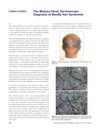
January 2012 in “International Journal of Trichology” A man with Woolly Hair Syndrome had very curly, fragile hair, and doctors used a special scalp examination to diagnose him without invasive tests.