November 2025 in “Veterinary and Animal Science” Camel hair structure, not color, helps camels stay cool in the desert.
 4 citations
,
July 2022 in “Scientific reports”
4 citations
,
July 2022 in “Scientific reports” Crossbreeding improves goat fiber quality, and specific genes affect hair traits and color.
14 citations
,
September 2017 in “Hereditas” Genes influence horse coat color and may help understand human skin conditions.
4 citations
,
June 2024 in “Animals” Genes like MC1R, TYR, MITF, ASIP, and KIT determine horse and donkey coat colors and affect breeding and health.
 18 citations
,
January 2020 in “Ecology and evolution”
18 citations
,
January 2020 in “Ecology and evolution” Genes related to pigmentation, body rhythms, and behavior change during hares' seasonal coat color transition, with a common genetic mechanism in two hare species.
 92 citations
,
December 2016 in “Scientific Reports”
92 citations
,
December 2016 in “Scientific Reports” Researchers identified genes linked to coat color, body size, cashmere production, and high altitude adaptation in goats.
11 citations
,
May 2010 in “Pigment Cell & Melanoma Research” Two genes, Tabby and Ticked, determine cat coat patterns.
 4 citations
,
February 2025 in “BMC Genomics”
4 citations
,
February 2025 in “BMC Genomics” Black wool in Qira sheep is linked to specific gene mutations, especially in the TYRP1 gene.
 2 citations
,
April 2025 in “Frontiers in Genetics”
2 citations
,
April 2025 in “Frontiers in Genetics” The ASIP gene is crucial for determining cattle coat color.
 1 citations
,
January 2020 in “Research Square (Research Square)”
1 citations
,
January 2020 in “Research Square (Research Square)” Inherited color dilution in Rex rabbits is linked to DNA methylation changes in hair follicles.
 28 citations
,
May 2017 in “Molecular ecology”
28 citations
,
May 2017 in “Molecular ecology” Researchers found genes that control hair color and growth change before the visible coat color changes in snowshoe hares.
 January 2026 in “Animal Advances”
 Genes linked to coat color and fiber length in Chinese goats were identified.
 October 2025 in “Journal of Veterinary Diagnostic Investigation”
 Black hair in cats has higher cortisol levels than white hair.
 113 citations
,
March 2018 in “Biological reviews/Biological reviews of the Cambridge Philosophical Society”
113 citations
,
March 2018 in “Biological reviews/Biological reviews of the Cambridge Philosophical Society” Animals that change color with the seasons mainly do so in response to daylight changes, but climate change is causing camouflage problems that may require evolutionary changes.
7 citations
,
January 2021 in “Frontiers in genetics” Inherited color dilution in rabbits is linked to DNA methylation changes.
 May 2026 in “Preprints.org”
 Dark-coated cats are more stressed, and adoption reduces stress in cats.
The FGF5 gene variant causes long hair in Akitas, and genetic testing is advised to manage coat length and welfare.
 May 2019 in “Small Animal Dermatology”
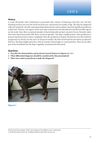
 The dog has Color Dilution Alopecia, causing hair loss and increased risk of skin infections.
30 citations
,
November 2019 in “Genetics selection evolution” Chinese domestic goats have unique genetic traits due to domestication and geographic isolation.
 November 2025 in “Journal of Medicine and Health Technology”
 No link between finger length ratios and color blindness was found.
 20 citations
,
September 2021 in “Nature communications”
20 citations
,
September 2021 in “Nature communications” Cat color patterns are determined early in development by gene expression and epidermal changes, with the Dickkopf 4 gene playing a crucial role.
 43 citations
,
November 2019 in “PLoS ONE”
43 citations
,
November 2019 in “PLoS ONE” MED23 and GNAQ genes are crucial for chicken feather color.
 October 2025 in “HAL (Le Centre pour la Communication Scientifique Directe)”
 Variegated coat color in cats is linked to the Silver locus.
 12 citations
,
January 1981 in “Springer eBooks”
12 citations
,
January 1981 in “Springer eBooks” Environmental factors like temperature and nutrition affect hair growth, with humans showing seasonal hair growth differences.
7 citations
,
March 2023 in “Frontiers in Veterinary Science” Camelina oil can improve dog coat quality like flaxseed and canola oils.
73 citations
,
December 2015 in “Nature Genetics” Mutations in TBX3 cause horses to have more even hair color instead of Dun camouflage.

TBX3 gene affects horse coat color, with higher expression in darker areas.
Genetic analysis of rabbits identified key genes for traits like coat color, body size, and fertility.
11 citations
,
April 2020 in “Animals” Moving horses to new places can increase their stress levels, as shown by higher stress hormone in their hair.
31 citations
,
November 2015 in “PloS one” Reducing Tyrosinase prevents mature color pigment cells from forming in mouse hair.