 October 2019 in “Journal of Evolution of Medical and Dental Sciences”
 A 56-year-old man was diagnosed with Cronkhite-Canada Syndrome after showing symptoms like diarrhea, weight loss, and skin changes.
 December 2024 in “Indian Journal of Veterinary Public Health”
 Argentine-cross polo ponies commonly develop sarcoid tumors with distinct types and histopathological features.
42 citations
,
August 2016 in “Nanomedicine” The new adapalene formulation using TyroSpheres is more effective and less irritating for acne treatment.
Pseudopelade is likely an independent disease due to its distinct features.
March 2026 in “Sexual Development” Tortoiseshell tomcats with XX/XY chimerism can be fertile.
37 citations
,
June 2000 in “Experimental dermatology” The Lanceolate hair-J mutation in mice mimics human hair disorders like Netherton's syndrome.
 March 2026 in “Dermatology Online Journal”
 Cystic panfolliculoma is a rare, harmless tumor that can be confused with other skin tumors.
1 citations
,
January 2019 in “Zenodo (CERN European Organization for Nuclear Research)” Eclipta alba has unique stem, leaf, and root features, including air cavities and secretory structures.
24 citations
,
May 2000 in “Journal of the American Academy of Dermatology” Pseudopelade can affect both the scalp and beard, causing hair loss.
 11 citations
,
March 2014 in “Journal of Investigative Dermatology”
11 citations
,
March 2014 in “Journal of Investigative Dermatology” Genetic mutation and carcinogen treatment are both needed for skin cancer to develop in these specific mice.
August 1969 in “Archives of Dermatology” After calciphylaxis, rats showed incomplete skin and hair regeneration, resembling scar tissue with fewer hairs.
March 2021 in “Annals of King Edward Medical University” Clouston syndrome causes issues with teeth, hair, nails, and skin, and has no cure, but recognition has improved.
1 citations
,
April 2022 in “Crystal Growth & Design” December 2009 in “Journal of Veterinary Clinics” The dog's back mass was a keratoacanthoma with inflammation, successfully removed without recurrence.
34 citations
,
June 2005 in “Developmental dynamics” Runx3 helps determine hair shape.
January 2006 in “Dianzi xianwei xuebao” Netherton syndrome causes specific skin and hair changes that help in early diagnosis.
9 citations
,
August 2024 in “Journal of Orthopaedic Translation” Strontium zinc silicate may help treat osteoporosis and muscle loss.
190 citations
,
July 2006 in “Experimental Dermatology” The hedgehog signalling pathway is key in skin development and basal cell carcinoma, offering insights for prevention and treatment.
 December 2025 in “Journal of Pharma Insights and Research.”
 Injectable cryogels can deliver drugs and aid tissue repair with minimal surgery.
 March 2023 in “International Journal of Dermatology”
 COVID-19 can cause hair to become progressively kinked.
28 citations
,
September 2011 in “Stem Cell Reviews and Reports”  April 2019 in “Journal of Investigative Dermatology”
 Calcium signals and SHH guide the direction of feather growth in chicken skin.
 2 citations
,
January 2004 in “PubMed”
2 citations
,
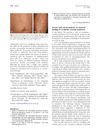
January 2004 in “PubMed” Conditioners with PQ-10 soften the flat part of hair cuticles but harden the edges.
 13 citations
,
June 2010 in “Journal of The American Academy of Dermatology”
13 citations
,
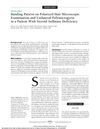
June 2010 in “Journal of The American Academy of Dermatology” A man with Cronkhite-Canada syndrome had all 20 nails detach but improved with treatment.
 13 citations
,
September 2011 in “Archives of dermatology”
13 citations
,
September 2011 in “Archives of dermatology” A patient with steroid sulfatase deficiency had a unique hair pattern and a brain malformation not previously linked to the condition.
November 2011 in “Molecular Cancer Therapeutics” The Hedgehog signaling pathway is linked to cancer development, and targeting it with inhibitors shows promise but faces challenges like resistance.
48 citations
,
August 1998 in “Developmental Biology” Deleting part of a gene in mice causes wavy hair and high pup loss.
2 citations
,
April 1970 in “Archives of Dermatology” Ichthyosis serpentina may be a variant linked to bamboo hair, with a possible genetic component.
 9 citations
,
January 1980 in “Dermatology”
9 citations
,
January 1980 in “Dermatology” Hair casts may be caused by repetitive hair pulling or styling and are often misdiagnosed.
September 2019 in “Journal of Investigative Dermatology” CCCA in women of African ancestry may be caused by PADI3 gene mutations and intense hair grooming.