3 citations
,
January 2013 in “Türk veterinerlik ve hayvancılık dergisi/Turkish journal of veterinary and animal sciences” A cat in Turkey had Ehlers-Danlos syndrome, showing very stretchy skin and easy bruising.
15 citations
,
March 1996 in “PubMed” Anorexia nervosa may cause a hair defect called pili torti due to malnutrition and high vitamin A levels.
12 citations
,
July 2004 in “Molecular genetics and genomics” A new mouse mutation causes skin and hair defects due to a gene change.
 April 2017 in “Journal of Investigative Dermatology”
 Cholecystokinin may help reduce skin inflammation in psoriasis.
8 citations
,
March 2011 in “Endocrine” A new gene mutation causes vitamin D-resistant rickets and hair loss in two siblings.
June 2026 in “Clinical Case Reports” Early recognition and treatment of multiple carboxylase deficiency with biotin can prevent serious health issues in infants.
 August 2019 in “International journal of contemporary pediatrics”
 A child with a rare type of rickets showed some improvement with high doses of vitamin D, but such conditions often respond poorly to treatment.
 June 2026 in “Institutional Repositories DataBase (IRDB)”
 Vitiligo can occur suddenly in Graves' disease patients with alopecia areata.
51 citations
,
December 2012 in “Clinics in Dermatology” Skin changes can help identify eating disorders early.
 3 citations
,
June 2013 in “Turkish Journal of Rheumatology”
3 citations
,
June 2013 in “Turkish Journal of Rheumatology” A 16-year-old boy with Castleman's disease and lupus was successfully treated and showed no recurrence.
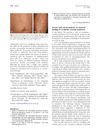 13 citations
,
June 2010 in “Journal of The American Academy of Dermatology”
13 citations
,
June 2010 in “Journal of The American Academy of Dermatology” A man with Cronkhite-Canada syndrome had all 20 nails detach but improved with treatment.
 January 2025 in “Clinical Pediatric Endocrinology”
 Calcium supplements improved bone deformities but not skin papules or hair loss.
33 citations
,
October 2018 in “BMJ Case Reports” Aggressive treatment in young patients with certain drug reactions may lead to multiple autoimmune diseases later.
 1 citations
,
February 2021 in “Gastroenterology”
1 citations
,
February 2021 in “Gastroenterology” A woman with inflammatory bowel disease improved after treatment with ustekinumab for a rare skin condition associated with her disease.
19 citations
,
February 2001 in “Journal of paediatrics and child health” A new mutation in the mitochondrial DNA was found in a boy with MELAS, even though his family didn't show typical signs.
11 citations
,
May 2011 in “The Journal of Dermatology” A man had two rare autoimmune diseases that might be connected.
28 citations
,
November 2018 in “American Journal of Medical Genetics Part A” ODC1 gene mutations cause a neurodevelopmental disorder with large head size, hair loss, and facial abnormalities.
9 citations
,
February 2023 in “Medicine” Traditional Chinese medicine may help relieve symptoms of Cronkhite-Canada syndrome.
 36 citations
,
January 2018 in “Scientific reports”
36 citations
,
January 2018 in “Scientific reports” Eating glucoraphanin can help prevent psychosis in offspring whose mothers had immune system activation.
February 2026 in “Journal of Chittagong Medical College Teachers Association” A 17-year-old girl with Kartagener's syndrome also has unusual skin, hair, and nail issues.
 50 citations
,
October 1986 in “European journal of pediatrics”
50 citations
,
October 1986 in “European journal of pediatrics” A boy with severe Vitamin D-resistant rickets did not respond to treatment and lacked a common symptom, suggesting a need for alternative treatments.
 January 2024 in “Editora In Vivo eBooks”
 Early diagnosis and management are crucial for feline inflammatory bowel disease.
5 citations
,
January 2023 in “IDCases” Albendazole and praziquantel can cause severe side effects, especially with prolonged use or liver issues.
September 2014 in “Archives of disease in childhood” A 12-year-old boy had severe shingles and skin damage after a stem-cell transplant.
 88 citations
,
February 2010 in “JEADV. Journal of the European Academy of Dermatology and Venereology/Journal of the European Academy of Dermatology and Venereology”
88 citations
,
February 2010 in “JEADV. Journal of the European Academy of Dermatology and Venereology/Journal of the European Academy of Dermatology and Venereology” Vitiligo is linked to autoimmune diseases and hearing issues, so hearing tests are recommended for patients.
 March 2024 in “Skin research and technology”
 High CRP levels could indicate vitamin D deficiency in people with alopecia areata.
37 citations
,
August 2011 in “Journal of Bone and Mineral Research” A girl had rickets due to a gene mutation affecting vitamin D response.
 4 citations
,
January 2017 in “Ciência Rural”
4 citations
,
January 2017 in “Ciência Rural” A horse in Brazil with skin and gut issues was diagnosed with a severe disease and had to be euthanized.
A rare genetic mutation causes severe immune issues, hair loss, and nail problems.
31 citations
,
September 2003 in “International Journal of Dermatology” Vitamin D-dependent rickets Type II causes bone problems and hair loss, and doesn't improve with Vitamin D treatment.