 September 2023 in “International Journal of Science and Research (IJSR)”
 PRP and PRF can effectively heal chronic wounds.
 1 citations
,
July 2023 in “Aesthetic Plastic Surgery”
1 citations
,
July 2023 in “Aesthetic Plastic Surgery” PRP treatment for hair loss might improve how patients feel about their quality of life, but more research is needed to confirm its effectiveness.
 28 citations
,
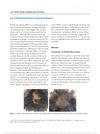
August 2018 in “Dermatologic Surgery”
28 citations
,
August 2018 in “Dermatologic Surgery” Platelet-Rich Plasma (PRP) may help improve hair density in primary cicatricial alopecias (PCAs) patients, but more trials are needed to confirm its benefits.
 October 2023 in “Peer review”
 PRP is a safe and effective treatment for hair loss.
June 2026 in “Zenodo (CERN European Organization for Nuclear Research)” June 2026 in “Zenodo (CERN European Organization for Nuclear Research)” 
PRP therapy effectively treats hair loss, wrinkles, scars, ulcers, and skin pigmentation disorders.
November 2023 in “Scientific Papers Journal VETERINARY SERIES” Platelet-rich plasma can boost embryo production and implantation in mammals.
 13 citations
,
February 2024 in “Cureus”
13 citations
,
February 2024 in “Cureus” Platelet-rich plasma can speed up bone healing and shows promise in orthopaedic treatments.
 June 2024 in “IP Indian journal of clinical and experimental dermatology”
 PRP therapy is effective and safe for various skin and hair conditions.

Platelet-Rich Plasma treatment is effective for hair loss and chronic ulcers.
 November 2023 in “European medical journal. Dermatology”
 PRP can reduce pain and improve function, but more standardized research is needed.
 2 citations
,
May 2024 in “Cureus”
2 citations
,
May 2024 in “Cureus” The single spin PRP method helps heal chronic ulcers effectively.
 March 2026 in “Frontiers in Pharmacology”
 Exprecell™ is as effective as traditional methods but produces more f-PRF and is simpler to use.
 February 2023 in “World journal of plastic surgery”
 Platelet-rich plasma is now used in plastic surgery.
 2 citations
,
April 2017 in “Plastic and Aesthetic Nursing”
2 citations
,
April 2017 in “Plastic and Aesthetic Nursing” Platelet-rich plasma therapy shows promise for hair regrowth in alopecia patients.
 June 2026 in “Indian Journal of Veterinary Medicine”
 PRP therapy improves hair regrowth and quality in dogs with alopecia.
2 citations
,
January 2021 in “Clinical dermatology review” Modified PRP therapy successfully treated severe alopecia unresponsive to traditional methods.
PRP treatment can be effective for hair loss.
August 2024 in “OBM Transplantation” Platelets can help heal and regenerate tissues, but personalized methods are needed for best results.
 June 2020 in “Journal of Investigative Dermatology”
 FDA-cleared devices often fail to produce high-quality platelet-rich plasma consistently.
 June 2023 in “Journal of Burn Care & Research”
 Using both bone marrow concentrate and platelet-rich plasma together improves skin wound healing in mice.
4 citations
,
October 2022 in “Current Urology” Platelet-rich plasma shows promise in reducing pain for bladder pain syndrome.
7 citations
,
October 2024 in “Cells” PRP therapy shows promise for anti-aging but lacks consistent evidence and standardization.
 December 2025 in “International Journal of Pharmacology”
 iPSC-derived artificial platelets show promise for consistent and effective regenerative therapies.
January 2023 in “Aesthetic Plastic Surgery” 20 citations
,
July 2019 in “Stem cell investigation” Combining SVF and PRP speeds up wound healing.
September 2024 in “Revista Foco” Platelet-Rich Plasma (PRP) is a safe and effective tool for facial rejuvenation and scar treatment.
 3 citations
,
January 2016 in “South African family practice”
3 citations
,
January 2016 in “South African family practice” Platelet-rich plasma is considered safe but needs more research to prove its effectiveness in medical treatments.
1 citations
,
December 2023 in “PubMed” Combining PRP and SVF speeds up burn healing by controlling inflammation.