 January 2026 in “Annals of Clinical Endocrinology and Metabolism”
 Restoring NAD⁺ may help with aging and chronic diseases, but more research is needed.
 December 2025 in “Journal of AI”
 The USA, China, Italy, and Türkiye lead in diverse PRP research, focusing on healing and pain management.
 December 2025 in “Journal of World Economy”
 Natural organic cosmetics with high natural content and patent labeling are popular and profitable in the US market.
 November 2025 in “Scientific Reports”
 Blinking at least 20 times per minute helps maintain eye moisture and reduce dry eye symptoms.
 October 2025 in “Frontiers in Immunology”
 Platelet-rich plasma might help treat eczema by reducing inflammation and repairing the skin.
 September 2025 in “International Journal of Ayurvedic Medicine”
 Hair medulla patterns vary by Prakruti type, affecting hair strength.
 July 2025 in “Scientific Reports”
 Pioglitazone, Trimipramine, and Dimetindene may be repurposed to treat psoriasis.
 November 2024 in “Journal of Scientific Agriculture”
 Silk proteins are great for cosmetics because they protect and improve skin and hair while being eco-friendly.
 August 2024 in “New Zealand Medical Student Journal”
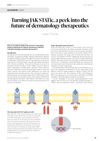
 JAK inhibitors show promise for treating skin diseases effectively and safely.

Blocking the Mitochondrial Pyruvate Carrier causes stress in hair follicles, which can be reduced by an ISR inhibitor.
 April 2024 in “ScienceRise. Pharmaceutical science”
 Men with hair loss feel it affects their emotions and life quality, and want more effective treatments.

The Chromolaena odorata patch significantly speeds up wound healing.
 January 2024 in “Diabetes & metabolism journal”
 Disrupting natural body clocks increases the risk of developing type 2 diabetes.
 December 2023 in “Pakistan Journal of Medical & Health Sciences”
 NAFLD in PCOS patients is linked to early kidney problems.

Dianabol boosts muscle growth but has serious health risks and legal issues.
 October 2023 in “Oriental Journal of Chemistry/Oriental journal of chemistry”
 Almond oil works well as a biodegradable lubricant and has health benefits.
 September 2023 in “Biology of reproduction”
 New testosterone analogs show promise for male contraception with better activity and potentially fewer side effects.

Higher TGF-β signaling may increase skin cancer risk in organ transplant recipients.
 January 2023 in “bioRxiv (Cold Spring Harbor Laboratory)”
 Newly born mesenchymal cells quickly spread out in response to tissue tension during early development.
 September 2022 in “TURKDERM”
 A rare benign skin nodule was found on the buttock, a unique location for this condition.
 September 2022 in “Research Square (Research Square)”
 Hydrocolloid wound dressings emit energy that can affect human hair follicle metabolism.
 June 2022 in “Journal of the turkish academy of dermatology”
 People with plantar corns and calluses may have a higher chance of having metabolic syndrome.
 December 2021 in “Dermatology research”
 Low levels of vitamin B12, ferritin, and calcium are linked to premature graying of hair.
 August 2021 in “International Journal of Research in Dermatology”
 Skin tags may be linked to metabolic syndrome.
 March 2021 in “bioRxiv (Cold Spring Harbor Laboratory)”
 Removing a specific gene in certain skin cells causes hair loss on the body by disrupting normal hair development.
 February 2020 in “International Journal of Current Microbiology and Applied Sciences”
 Canine hair follicle cells show stem cell properties, aiding hair growth.
 January 2020 in “Durham e-Theses (Durham University)”
 UK law does not effectively ensure workplace equality for people with visible differences.
 November 2019 in “Journal of Aesthetic Nursing”
 The article concludes that a thorough diagnosis and treatment plan, including medications, non-invasive methods, or surgery, is important for managing hair loss, with a combination of minoxidil and finasteride being particularly effective.

L-PGDS has specific binding sites for its functions and could help in drug delivery system design.
 January 2019 in “Springer eBooks”
 Modified HDL can better deliver drugs and genes, potentially improving treatments and reducing side effects.