 November 2022 in “The journal of investigative dermatology/Journal of investigative dermatology”
 Deleting the CD271 gene in mouse skin cells leads to disorganized skin and increased hair growth, suggesting CD271 is important for skin health.
 60 citations
,
March 2011 in “Proceedings of the National Academy of Sciences of the United States of America”
60 citations
,
March 2011 in “Proceedings of the National Academy of Sciences of the United States of America” RANK-RANKL signaling is essential for hair growth and skin health.
January 1998 in “Differentiation” Basonuclin is crucial for hair follicle development and cycling in mice.
 January 2023 in “International journal of biological sciences”
 COX2 and ATP synthase control the size of hedgehog spines.
48 citations
,
March 2010 in “PloS one” C/EBPalpha and C/EBPbeta are crucial for normal skin and oil gland cell development in adult mice.
August 2020 in “bioRxiv (Cold Spring Harbor Laboratory)” Normal cells outcompete and remove mutant cells in the pancreas with the help of the EphA2 receptor.
 February 2025 in “Biomolecules”
 RORA boosts autophagy in hair follicle stem cells, potentially aiding hair growth.
20 citations
,
October 2017 in “Stem Cell Reports” Alkaline Ceramidase 1 prevents early hair loss in mice by keeping hair follicle stem cells balanced.
January 2018 in “bioRxiv (Cold Spring Harbor Laboratory)” The mutant HR bmh protein mis-localizes in cells, affecting skin and hair development.
ANE syndrome is caused by a mutation in the RBM28 protein that disrupts ribosome assembly.
 May 2026 in “Discover Oncology”
 Targeting LGR4 may help treat cancer by reducing cancer stem cell traits and drug resistance.
 5 citations
,
October 2013 in “Experimental Dermatology”
5 citations
,
October 2013 in “Experimental Dermatology” The commentary explains that a balance of HR protein and putrescine is important for normal hair growth.
 13 citations
,
April 2020 in “Experimental Cell Research”
13 citations
,
April 2020 in “Experimental Cell Research” PCAT1 helps hair growth by controlling miR-329/Wnt10b.
 2 citations
,
August 2013 in “Journal of Investigative Dermatology”
2 citations
,
August 2013 in “Journal of Investigative Dermatology” Nuclear shape and chromatin changes affect gene expression in skin cell differentiation.
56 citations
,
February 2012 in “Developmental biology” Sostdc1 controls the size and number of hair and mammary gland structures.
3 citations
,
August 2025 in “Advanced Therapeutics” Engineered cytokines show promise for improving tissue healing and safety in regenerative medicine.
33 citations
,
September 1990 in “Proceedings of the National Academy of Sciences” The study showed that a specific DNA sequence can control gene expression in hair growth areas of mice.

Ca²⁺-mediated protein citrullination controls cell growth in the CNS and may help treat brain tumors.
58 citations
,
November 2004 in “The journal of investigative dermatology/Journal of investigative dermatology” The Foxn1 gene is essential for normal nail and hair development.
252 citations
,
November 1995 in “The EMBO Journal” Blocking EGFR in mice causes hair loss and skin changes.
 July 2022 in “Journal of Investigative Dermatology”
 Dkk4 is necessary for the initial development and arrangement of hair follicles.
 September 2025 in “Digital Commons - RU (Rockefeller University)”
 Nfib in hair follicle stem cells boosts melanocyte stem cell growth and differentiation.
 1 citations
,
November 2008 in “Acta crystallographica”
1 citations
,
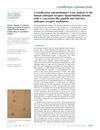
November 2008 in “Acta crystallographica” Scientists successfully created and analyzed the structure of a part of the human androgen receptor with specific modulators and a peptide to understand how it binds differently in various tissues.
12 citations
,
December 2003 in “Gene” The ovine Hoxc-13 gene is crucial for hair formation and may have other skin functions.
January 2011 in “China Animal Husbandry & Veterinary Medicine” Constant-release melatonin reduces SOX21 gene expression in goats during the hair follicle resting phase.
26 citations
,
February 1998 in “DNA and Cell Biology” K6 gene expression can be controlled and manipulated in mice for studying skin disorders.
9 citations
,
August 2021 in “International journal of molecular sciences” PPARγ is essential for maintaining healthy skin, controlling inflammation, and ensuring proper skin barrier function.
 May 2026 in “Theranostics”
 Targeting DKK3–CKAP4 can help reverse hair loss in androgenetic alopecia.
10 citations
,
June 2022 in “Biomedicine & Pharmacotherapy” ARTS helps stop tumors by promoting cell death.

Ocu-miR-205 affects hair density in Rex rabbits by promoting cell changes and influencing hair follicle phases.