 34 citations
,
October 1982 in “Journal of applied polymer science”
34 citations
,
October 1982 in “Journal of applied polymer science” Moisture content significantly affects how human hair breaks.
 1 citations
,
April 2022 in “International Journal of Women's Dermatology”
1 citations
,
April 2022 in “International Journal of Women's Dermatology” Classifying curl patterns might help doctors assess and treat hair loss better.
27 citations
,
September 1988 in “PubMed” Hair follicle shape determines hair type: curly, straight, or in-between.
 4 citations
,
January 2017 in “Annals of Dermatology”
4 citations
,
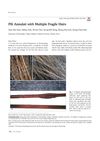
January 2017 in “Annals of Dermatology” Frequent hairdryer use may worsen hair fragility in people with Pili Annulati.
11 citations
,
January 2016 in “Biointerphases” The hair's outermost surface has multiple layers of lipids and proteins.
 22 citations
,
May 2021 in “Nature Communications”
22 citations
,
May 2021 in “Nature Communications” Tissue stiffness affects hair follicle regeneration, and Twist1 is a key regulator.
February 1988 in “Journal of the American Academy of Dermatology” July 2019 in “Dermatologic Surgery” 5 citations
,
January 2009 in “International Journal of Trichology” Two siblings had a rare hair condition with banded hair, which doesn't need treatment.
78 citations
,
May 2012 in “Journal of Investigative Dermatology” A specific gene mutation causes woolly hair and hair loss.
September 2014 in “Journal of the American Academy of Dermatology” The girl likely has Loose anagen hair syndrome, which may improve on its own or with minoxidil.
February 1999 in “The anatomical record” Two mouse mutants have defective hair cuticle cross-linking.
35 citations
,
September 1994 in “Journal of Investigative Dermatology” 73 citations
,
May 2009 in “Proceedings of the National Academy of Sciences” Disrupting the Sox21 gene in mice causes hair loss and regrowth cycles.
January 2024 in “Revista del Centro Dermatológico Pascua” Avoiding damage and using specific shampoo and supplements improved the hair condition.
1 citations
,
July 2024 in “International Journal of Cosmetic Science” Hair curvature is the main factor affecting curly hair manageability and product preferences.
 17 citations
,
June 2011 in “The journal of investigative dermatology/Journal of investigative dermatology”
17 citations
,
June 2011 in “The journal of investigative dermatology/Journal of investigative dermatology” The G60S Connexin43 mutation causes hair growth issues and poor hair quality in mice, similar to human ODDD patients.
4 citations
,
January 1991 in “Dermatology” Hair casts are small structures on hair shafts with unknown causes.
10 citations
,
November 2019 in “Journal of the European Academy of Dermatology and Venereology” The RAS pathway affects hair growth differently in CFCS and CS.
1 citations
,
January 2018 in “International Journal of Trichology” Circle hairs are harmless, spiral-shaped body hairs that don't need medical treatment.
90 citations
,
July 1993 in “Journal of Investigative Dermatology” May 2010 in “Faculty Opinions – Post-Publication Peer Review of the Biomedical Literature” A mutation in the KRT74 gene causes woolly hair by affecting hair texture.
 8 citations
,
November 2022 in “International Journal of Cosmetic Science”
8 citations
,
November 2022 in “International Journal of Cosmetic Science” Human hair varies widely and should be classified by curl type rather than race.
 September 2017 in “The journal of investigative dermatology/Journal of investigative dermatology”
 Human hair follicles have a unique way of using energy and might use the Cori cycle; blocking CCR5 could help treat hair loss.
264 citations
,
October 1958 in “Archives of Dermatology” A 4-year-old girl has a rare hair condition causing fragile, short hair.
February 2019 in “bioRxiv (Cold Spring Harbor Laboratory)” Cashmere goat hair growth follows a cycle with distinct growth, regression, and resting periods, influenced by specific genes.
2 citations
,
July 1994 in “Journal of Dermatological Science” Grafted human scalp samples on mice can produce human hair, useful for studying hair genetics.
 12 citations
,
February 2006 in “Lipids”
12 citations
,
February 2006 in “Lipids” Hair texture changes with age due to varying levels of lipids.
 18 citations
,
July 2003 in “Dermatologic Surgery”
18 citations
,
July 2003 in “Dermatologic Surgery” The conclusion is that creating natural-looking hair restoration requires replicating natural scalp whorl patterns and inserting grafts at specific angles.
 6 citations
,
January 2000 in “Dermatology”
6 citations
,
January 2000 in “Dermatology” A girl's severely tangled hair couldn't be fixed and had to be cut due to a rare condition called plica neuropathica.