 January 2024 in “Brazilian Journal of Hair Health”
 Combining low-level laser therapy with topical corticosteroids effectively improved Lichen Planopilaris symptoms.
TCA injections are more effective and safer than cryotherapy for treating alopecia areata.
 35 citations
,
January 2013 in “Indian Journal of Dermatology, Venereology and Leprology”
35 citations
,
January 2013 in “Indian Journal of Dermatology, Venereology and Leprology” Intralesional triamcinolone acetonide is effective for treating patchy hair loss, and dermoscopy helps detect treatment response and side effects early.
December 2025 in “Saudi Journal of Medicine and Public Health” Pharmacists are key in choosing and guiding the safe use of topical corticosteroids for skin conditions.
 August 2023 in “The Journal of Dermatology”
 Intralesional corticosteroid injections effectively treat scalp vitiligo.
8 citations
,
July 2018 in “The Journal of Dermatology” Current corticosteroid pulse therapy is not very effective for severe rapidly progressive alopecia areata.
January 2019 in “Springer eBooks” Combination therapies might work better for some vitiligo patients, but results vary.
 39 citations
,
June 2019 in “Toxins”
39 citations
,
June 2019 in “Toxins” Bee venom might be a good alternative treatment for various skin conditions because it has many healing properties.
278 citations
,
May 2013 in “Ca” Targeted anticancer therapies can cause severe side effects similar to traditional chemotherapy, but with different types.
 February 2026 in “Stem Cell Research & Therapy”
 Stem cell therapies show promise for hair regrowth in alopecia areata but need more research for safety and effectiveness.
 May 2025 in “The Journal of Rheumatology”
 Anifrolumab may help improve symptoms in patients with overlapping autoimmune diseases.
1 citations
,
July 2025 in “Stem Cell Research & Therapy” Stem cell technology may improve hair loss treatments by providing more effective and personalized options.
1 citations
,
June 2023 in “Journal of Patchouli and Essential Oil Products” Patchouli essential oil may help reduce eczema symptoms in infants and toddlers.
 July 2025 in “Journal of the European Academy of Dermatology and Venereology”
 A new treatment plan helps manage folliculitis decalvans effectively.
Janus kinase inhibitors are the most supported treatment for pediatric alopecia areata, while other options have limited evidence.
May 2024 in “Frontiers in Medicine” Targeted immunological therapies offer safer and more effective treatments for skin conditions like eczema and psoriasis.
 16 citations
,
January 2007 in “Actas dermo-sifiliográficas/Actas dermo-sifiliográficas”
16 citations
,
January 2007 in “Actas dermo-sifiliográficas/Actas dermo-sifiliográficas” The document concludes that there are no reliable treatments for frontal fibrosing alopecia, with only temporary benefits from current options.
December 2018 in “UNIFESP Institutional Repository (Universidade Federal de São Paulo)” Minoxidil 5% helps with patchy alopecia areata, but more research is needed.
2 citations
,
April 2025 in “Biologics” Dupilumab and ustekinumab are promising treatments for alopecia areata, showing significant hair regrowth.
Topical treatments like minoxidil and corticosteroids are effective for hair loss, with JAK inhibitors promising for alopecia areata.
Antimalarial agents are effective for LPP, and intralesional steroids are effective for FFA.
 January 2012 in “The Year book of dermatology”
 Many treatments for alopecia areata have inconsistent results; for under 10s, use minoxidil with a corticosteroid, and for over 10s, add ILC and consider diphenylcyclopropenone for widespread cases.
35 citations
,
April 2024 in “Life” Bee venom, fig, and geranium oil can effectively treat skin conditions and are safer alternatives to some conventional drugs.
 4 citations
,
September 2018 in “The Journal of Dermatology”
4 citations
,
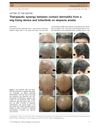
September 2018 in “The Journal of Dermatology” A man's hair regrew from alopecia areata after using tofacitinib and experiencing contact dermatitis from a wig device.
 April 2023 in “Revista colombiana de reumatología”
 JAK inhibitors like tofacitinib can effectively treat severe alopecia areata.
 36 citations
,
May 2011 in “Dermatologic therapy”
36 citations
,
May 2011 in “Dermatologic therapy” No treatments fully cure or prevent alopecia areata; some help but have side effects or need more research.
 7 citations
,
November 2021 in “Anais Brasileiros de Dermatologia”
7 citations
,
November 2021 in “Anais Brasileiros de Dermatologia” Skin side effects from cancer treatments can lead to changes in therapy and are common, with nail changes being the most frequent.
 7 citations
,
October 2019 in “Annals of palliative medicine”
7 citations
,
October 2019 in “Annals of palliative medicine” New targeted cancer drugs can cause skin side effects, and managing them requires patient education and timely care.
2 citations
,
January 2010 in “PubMed” Current treatments for postmenopausal frontal fibrosing alopecia stop hair loss but don't regrow hair.
February 2026 in “International Journal of Clinical Dermatology” Alopecia areata in children shows varied forms and treatment challenges, with some achieving full or partial hair regrowth.