![Integrating Multi-Omics Analyses of Nonomuraea Dietziae to Reveal the Role of Soybean Oil in [(4′-OH)MeLeu]4-CsA Overproduction](/images/assets/0eba9759-3aa4-4a06-a70a-2d9c46be53f3/small/23018.jpg) 1 citations
,
July 2017 in “Microbial Cell Factories”
1 citations
,
July 2017 in “Microbial Cell Factories” Adding soybean oil to Nonomuraea dietziae increases production of a beneficial compound by improving metabolism and enzyme systems.
 October 2025 in “International Journal of Novel Research and Development”
 Herbal hair masks can naturally improve hair health and appearance.
November 2025 in “Plant Science Today” Natural anti-aging products from plants may help improve skin health.
298 citations
,
June 2019 in “Marine Drugs” Chitosan is a sustainable, versatile ingredient in cosmetics, enhancing skin hydration and anti-aging while promoting eco-friendly practices.
83 citations
,
August 2020 in “Resources” Macroalgae compounds offer sustainable, effective benefits for cosmetics.
70 citations
,
May 2019 in “Preprints.org” Chitin and chitosans from seafood waste are eco-friendly and useful in cosmetics for skin, hair, nail, and oral care.
63 citations
,
June 2023 in “Journal of Nanobiotechnology” The sponge heals wounds without antibiotics and has strong antibacterial and antioxidant properties.
 13 citations
,
August 2019 in “Journal of Ethnopharmacology”
13 citations
,
August 2019 in “Journal of Ethnopharmacology” Eleven traditional Polynesian plants show potential for natural anti-aging, hair growth, and skin brightening products.
 6 citations
,
May 2022 in “Frontiers in Microbiology”
6 citations
,
May 2022 in “Frontiers in Microbiology” Marine microbes could be used in cosmetics for sun protection, skin care, and possibly preventing hair loss.
2 citations
,
September 2025 in “Food Production Processing and Nutrition” Capsaicin offers health benefits and flavor but faces challenges in food use.
2 citations
,
January 2022 in “Materials today: proceedings” Caffeine may be good for hair growth and skin care because it binds well with keratin.
1 citations
,
January 2025 in “IntechOpen eBooks” A comprehensive system is needed to ensure cosmetics are safe and effective, using global insights and new AI technologies.
 June 2026 in “International Journal of Molecular Sciences”
 Extracellular vesicles show promise in regenerative and cosmetic medicine but need more research and regulation for safe use.
August 2025 in “International Journal for Vitamin and Nutrition Research” Vitamin B complex improves plastic and cosmetic surgery outcomes by enhancing tissue repair and reducing inflammation.
 August 2025 in “Photodermatology Photoimmunology & Photomedicine”
 LED therapy is a promising, non-invasive skin treatment, but needs standardization and personalization.
 June 2025 in “IntechOpen eBooks”
 Exosomes may improve skin and hair treatments but need more research for safe use.
 February 2025 in “Healthcare”
 Caffeine may help with hair loss, but more research is needed.
January 2025 in “Molecules” Caffeine may help with hair loss, but more research is needed to confirm its effectiveness.
 March 2024 in “Nutrients”
 Gynostemma pentaphyllum and its component damulin B could help hair grow by activating certain cell pathways.
9 citations
,
April 2024 in “Metabolites” Cannabis has anti-inflammatory and antimicrobial properties, but more research is needed on its effects on plant and aquatic animal pathogens.
3 citations
,
August 2008 in “PubMed” Repeated digital perming with sodium thioglycolate lotion significantly damages hair protein and structure.

The GG genotype of the KRT71 gene leads to longer wool in Gansu alpine fine-wool sheep.
269 citations
,
October 2018 in “International journal of biological macromolecules” Hyaluronic acid is effective for skin rejuvenation and should be a key ingredient in cosmetic products.
1 citations
,
August 2025 in “Seeds” Cucurbitaceae seeds, like watermelon and pumpkin, can be used in cosmetics for skin and hair benefits.
 13 citations
,
January 2019 in “Colloids and Surfaces B: Biointerfaces”
13 citations
,
January 2019 in “Colloids and Surfaces B: Biointerfaces” The new drug delivery systems made with surfactants and block polymers are stable and not toxic.
6 citations
,
January 2020 in “Open Journal of Psychiatry” The Greek DCQ is a reliable and valid tool for assessing dysmorphic concern.
1 citations
,
November 2023 in “Journal of Innovations in Applied Pharmaceutical Science (JIAPS)” The neem oil emulgel effectively treats dandruff and is easy to use on the scalp.
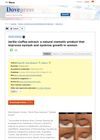 1 citations
,
January 2019 in “Clinical, Cosmetic and Investigational Dermatology”
1 citations
,
January 2019 in “Clinical, Cosmetic and Investigational Dermatology” Jarilla-Coffea extract gel effectively and safely increases eyelash and eyebrow thickness in women.
 November 2024 in “Applied Sciences”
 Wild strawberry waste extract can be a sustainable cosmetic ingredient for treating acne and hair loss.
21 citations
,
November 2023 in “International Journal of Molecular Sciences” Melatonin helps reduce aging signs in human eyelid skin.