 1 citations
,
May 1983 in “Acta dermato-venereologica”
1 citations
,
May 1983 in “Acta dermato-venereologica” Minoxidil caused hair regrowth, but cyproterone acetate did not maintain it.
April 2024 in “Journal of Pakistan Association of Dermatologists” Adding procapil to minoxidil is more effective for hair loss than using minoxidil alone.
 June 2024 in “British Journal of Dermatology”
 PRP with topical minoxidil is the most effective treatment for increasing hair density in androgenetic alopecia.
April 2023 in “Dermatology and therapy” Most patients stop using topical minoxidil due to side effects.
 26 citations
,
August 2018 in “Dermatologic Therapy”
26 citations
,
August 2018 in “Dermatologic Therapy” Minoxidil helps treat pattern hair loss in both men and women.
 1 citations
,
October 1990 in “The Lancet”
1 citations
,
October 1990 in “The Lancet” Using minoxidil for hair growth may cause skin lesions in some people, and taking breaks from nitrate patches for angina might worsen symptoms.
December 2009 in “Eclética Química” A simple and fast method accurately measures minoxidil in pharmaceuticals.
 4 citations
,
January 2011 in “Analytical Letters”
4 citations
,
January 2011 in “Analytical Letters” The method quickly and accurately measures minoxidil in drugs, comparable to standard techniques.
3 citations
,
January 1988 Minoxidil helps hair grow, especially in people with mild hair loss.
 55 citations
,
February 1985 in “Archives of Dermatology”
55 citations
,
February 1985 in “Archives of Dermatology” Using minoxidil on the scalp can help grow hair for people with hereditary baldness.

Minoxidil may harm male reproductive health by causing testicular damage and hormonal disruption.
 5 citations
,
March 2016 in “Acute medicine & surgery”
5 citations
,
March 2016 in “Acute medicine & surgery” Swallowing a lot of minoxidil, a hair growth liquid, can cause severe and long-lasting low blood pressure.
4 citations
,
January 1983 in “PubMed” Minoxidil can regrow hair, but cyproterone acetate doesn't help when used together.
 March 2021 in “Hair transplant forum international”
 Minoxidil helps hair growth.
 May 2015 in “Journal of The American Academy of Dermatology”
 Minoxidil response testing helps predict hair growth success.
 36 citations
,
September 2018 in “American Journal of Clinical Dermatology”
36 citations
,
September 2018 in “American Journal of Clinical Dermatology” Combination of 0.25% finasteride and 3% minoxidil works better than just 3% minoxidil for increasing hair thickness in women.
 3 citations
,
January 2009 in “Eclética Química”
3 citations
,
January 2009 in “Eclética Química” A simple and quick method was found to measure minoxidil in drugs accurately.

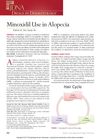
Oral minoxidil can be more comfortable and effective than topical, but treatment should be personalized.
 1 citations
,
August 2017
1 citations
,
August 2017 Minoxidil helps stimulate hair growth and enlarge small follicles in common hair loss, but doesn't stop it, and its effects can be boosted when combined with finasteride.
June 2025 in “Zenodo (CERN European Organization for Nuclear Research)” Combining Procapil with minoxidil improves hair growth in men with hair loss.
June 2025 in “Zenodo (CERN European Organization for Nuclear Research)” Combining Procapil with minoxidil improves hair growth in men with hair loss.
 51 citations
,
March 1987 in “Journal of The American Academy of Dermatology”
51 citations
,
March 1987 in “Journal of The American Academy of Dermatology” Minoxidil keeps most hair growth from first year and twice-daily use is better with few side effects.
 16 citations
,
May 2020 in “Journal of The European Academy of Dermatology and Venereology”
16 citations
,
May 2020 in “Journal of The European Academy of Dermatology and Venereology” Sublingual minoxidil effectively treats hair loss with mild side effects.
 31 citations
,
October 2002 in “Dermatologic Surgery”
31 citations
,
October 2002 in “Dermatologic Surgery” Minoxidil helps stabilize hair loss, increase density, and reduce shedding after hair transplant surgery.
December 2009 in “Digital Library of Theses and Dissertations (Universidade de São Paulo)” Iontophoresis and chitosan microparticles improve minoxidil delivery for hair loss treatment.
August 2025 in “International Journal of Molecular Sciences” Topical minoxidil 5% is the most effective over-the-counter treatment for male hair loss.
19 citations
,
October 1989 in “PubMed” Minoxidil helps hair growth by being sulfated in hair follicles.
 August 2024 in “Bioimpacts”
 Kopexil is an effective and safe hair growth treatment.