6 citations
,
January 2024 in “Cancers” Antiandrogens don't help with COVID-19 and aren't recommended.
 6 citations
,
March 2021 in “Cytotechnology”
6 citations
,
March 2021 in “Cytotechnology” Mesenchymal stem cells show promise in treating COVID-19 by reducing inflammation and aiding recovery, but more research is needed.
 6 citations
,
October 2020 in “Journal of the European Academy of Dermatology and Venereology”
6 citations
,
October 2020 in “Journal of the European Academy of Dermatology and Venereology” Teletrichoscopy is a promising method for diagnosing hair disorders remotely during the COVID-19 pandemic.
5 citations
,
December 2022 in “Viruses” Antiandrogens may help prevent or treat COVID-19 by blocking virus entry into cells.
 5 citations
,
November 2021 in “History & Philosophy of the Life Sciences”
5 citations
,
November 2021 in “History & Philosophy of the Life Sciences” Racial minorities faced more Covid-19 blame due to anti-fatness and structural racism.
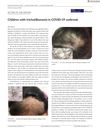 5 citations
,
May 2021 in “Journal of Cosmetic Dermatology”
5 citations
,
May 2021 in “Journal of Cosmetic Dermatology” More children are showing signs of hair-pulling disorders during the COVID-19 pandemic due to stress and lack of social interaction.
5 citations
,
May 2020 in “Journal of the American Academy of Dermatology” AGA might indicate higher risk for severe COVID-19.
 5 citations
,
April 2020 in “Journal of The American Academy of Dermatology”
5 citations
,
April 2020 in “Journal of The American Academy of Dermatology” Hydroxychloroquine might help prevent COVID-19, but more research is needed.
4 citations
,
November 2023 in “PLoS ONE” Interest in long-COVID symptoms in Japan increased with COVID-19 case peaks, especially for hair loss, cough, smell/taste issues, and headache.
4 citations
,
March 2022 in “Journal of Infection” 18% of COVID-19 survivors experience PTSD, with risk factors including age, gender, smoking, and lung damage.
4 citations
,
January 2022 in “OAlib” Antioxidants might help with Long Covid by addressing oxidative stress and nutrient imbalances.
 4 citations
,
November 2021 in “Journal of the European Academy of Dermatology and Venereology”
4 citations
,
November 2021 in “Journal of the European Academy of Dermatology and Venereology” There might be a skin condition related to COVID-19.
 4 citations
,
May 2021 in “medRxiv (Cold Spring Harbor Laboratory)”
4 citations
,
May 2021 in “medRxiv (Cold Spring Harbor Laboratory)” Long-lasting COVID-19 symptoms like fatigue and breathing difficulties can persist for over 60 days, requiring ongoing care.
 4 citations
,
May 2020 in “bioRxiv (Cold Spring Harbor Laboratory)”
4 citations
,
May 2020 in “bioRxiv (Cold Spring Harbor Laboratory)” Migrants from certain regions had a higher risk of COVID-19 than Spaniards.
 3 citations
,
April 2023 in “Clinical and Experimental Medicine”
3 citations
,
April 2023 in “Clinical and Experimental Medicine” The study identified five types of long COVID symptoms and suggests tailored management strategies for each.
3 citations
,
November 2022 in “Clinical Cosmetic and Investigational Dermatology” The pandemic changed the types of skin conditions seen, not the number of visits.
 3 citations
,
January 2022 in “Journal of Infection”
3 citations
,
January 2022 in “Journal of Infection” Some early COVID-19 mutations in patients predicted future common virus mutations.
 3 citations
,
December 2021 in “Physiological Research”
3 citations
,
December 2021 in “Physiological Research” Low testosterone may increase COVID-19 severity in men.
 3 citations
,
August 2021 in “Clinical, Cosmetic and Investigational Dermatology”
3 citations
,
August 2021 in “Clinical, Cosmetic and Investigational Dermatology” Teledermatology was popular among young adults and women, and high-resolution photos improved service during the pandemic.
3 citations
,
March 2021 in “Indian Journal of Rheumatology” Remote monitoring of chronic diseases like dermatomyositis is challenging and needs better tools for early detection and patient education.
 3 citations
,
December 2020 in “Problemy e̊ndokrinologii”
3 citations
,
December 2020 in “Problemy e̊ndokrinologii” Male hormones may make COVID-19 worse, while substances that block these hormones could lessen symptoms.
2 citations
,
May 2025 in “Frontiers in Epidemiology” Standardized definitions and better methods are needed to accurately estimate long COVID-19 prevalence.
2 citations
,
August 2024 in “Journal of Racial and Ethnic Health Disparities”  2 citations
,
July 2024 in “Ibn AL- Haitham Journal For Pure and Applied Science”
2 citations
,
July 2024 in “Ibn AL- Haitham Journal For Pure and Applied Science” PCOS women with COVID-19 have higher cardiometabolic risks.
 2 citations
,
March 2023 in “BioScience Trends”
2 citations
,
March 2023 in “BioScience Trends” The review indicates that understanding of long COVID symptoms is still limited and better research is needed for diagnosis and treatment.
 2 citations
,
March 2022 in “PubMed”
2 citations
,
March 2022 in “PubMed” Most skin reactions to COVID-19 vaccines in India were mild and not a reason to avoid vaccination.
2 citations
,
June 2021 in “RECERCAT (Consorci de Serveis Universitaris de Catalunya)” Clear definitions and strategies are needed to manage long-term COVID-19 symptoms effectively.
1 citations
,
September 2025 in “Viruses” Thrombophilic conditions may worsen Long COVID symptoms due to increased blood clotting.
1 citations
,
March 2024 in “Pathogens” Beau's lines on nails may indicate severe COVID-19 or vaccination response.
 1 citations
,
August 2023 in “Irish Journal of Medical Science (1971 -)”
1 citations
,
August 2023 in “Irish Journal of Medical Science (1971 -)” About a quarter of the participants experienced hair loss after COVID-19 vaccination.