July 2021 in “Plastic and reconstructive surgery. Global open” Radiation therapy in breast cancer patients changes gene expression related to DNA damage, fibroblast growth, and hair follicle development, which could help improve treatment for radiation-induced fibrosis.

Intramuscular injection of 131I is a safe and effective way to induce hypothyroidism in rats without harming muscle tissue.
 January 2022 in “International Journal of Medical Research”
 Chemotherapy harms healthy cells, causing side effects like hair loss and reduced immunity.
January 2025 in “Dermatologic Therapy” Combining punch excision with superficial X-ray effectively improves keloid scars safely.
52 citations
,
November 2013 in “Journal of Pain and Symptom Management” Cryotherapy helps reduce chemotherapy side effects but needs more research for best use.
 116 citations
,
May 2013 in “Proceedings of the National Academy of Sciences of the United States of America”
116 citations
,
May 2013 in “Proceedings of the National Academy of Sciences of the United States of America” Hair grows faster in the morning and is more vulnerable to damage from radiation due to the internal clock in hair follicle cells.
6 citations
,
August 2020 in “Oncology nursing forum” Minocycline reduces acne rash, pyridoxine lowers hand-foot syndrome risk, and scalp cooling lessens hair loss from cancer treatments.
14 citations
,
November 2023 in “Mycoses” Kerion Celsi in children is treated with antifungals, not surgery, to prevent scarring.
 4 citations
,
January 2009 in “Indian Journal of Plastic Surgery”
4 citations
,
January 2009 in “Indian Journal of Plastic Surgery” Surgery for scar-related hair loss on the scalp and eyebrow was successful in 75% of patients.
22 citations
,
September 1998 in “PubMed” Panax ginseng helps prevent hair follicle cell death and speeds up hair cell recovery after radiation in mice.
February 2026 in “JDDG Journal der Deutschen Dermatologischen Gesellschaft” Improved collaboration and education between dermatologists and oncologists can enhance care for chemotherapy-related hair loss.
 September 2019 in “The journal of investigative dermatology/Journal of investigative dermatology”
 Hair follicles repair 3D injuries using a 2D healing process.
November 2001 in “Oncology Times” The committee decided not to approve the drug due to low effectiveness and high risks.
 9 citations
,
May 2013 in “JAMA Dermatology”
9 citations
,
May 2013 in “JAMA Dermatology” Sunlight exposure improved a patient's skin condition, and there may be a link between a certain disease and skin growths; a leukemia treatment caused changes in hair color and growth.
 93 citations
,
May 2010 in “European Journal of Cancer”
93 citations
,
May 2010 in “European Journal of Cancer” BI 2536 had limited effectiveness against several advanced cancers and caused significant side effects.
February 2026 in “Journal of Cosmetic Dermatology” Combining triamcinolone acetonide with cryotherapy may reduce scalp hair loss more than using triamcinolone alone.
June 2026 in “Journal of Investigative Dermatology”  September 2022 in “Journal of Ayub Medical College Abbottabad”
 Steroid injections are more effective than platelet rich plasma for treating patchy hair loss.
March 2026 in “Journal for ImmunoTherapy of Cancer” Long-term data and a team approach are needed to manage chronic side effects from cancer treatments.
18 citations
,
November 2003 in “Australasian Journal of Dermatology” Hair loss in this case was caused by a tumor, not typical baldness.
 80 citations
,
November 1975 in “Acta dermato-venereologica”
80 citations
,
November 1975 in “Acta dermato-venereologica” Large doses of glucocorticoids are not suitable for general use in treating severe alopecia areata due to inconsistent results and risks.
March 1957 in “Archives of Dermatology” The treatments tried did not work for her alopecia areata.
4 citations
,
June 2002 in “Veterinary Dermatology” Prenatal retinoic acid exposure increased cell proliferation in mouse hair follicles without affecting their development.
5 citations
,
June 2016 in “JAMA Dermatology” People with hair loss should use strong sun protection to prevent scalp skin cancer.
1 citations
,
February 1971 in “JAMA” Triamcinolone acetonide helps scalp grafts grow hair successfully.
 January 2024 in “Wiadomości Lekarskie”
 Uveal melanoma is hard to treat when it spreads, but a new drug, tebentafusp, helps patients live longer.
26 citations
,
February 2015 in “Pediatric blood & cancer” Targeted anticancer therapies in children often cause skin side effects like rash and dry skin.
 September 2017 in “Journal of Investigative Dermatology”
 Injections of special skin cells showed potential in treating hair loss, with some participants experiencing increased hair density.
 1 citations
,
April 2019 in “JAAD case reports”
1 citations
,
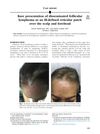
April 2019 in “JAAD case reports” A woman with lymphoma had a rare skin rash on her scalp and forehead, which was hard to diagnose but responded well to treatment.
September 2017 in “Pure and Applied Biology” Chemotherapy and radiotherapy improved quality of life and reduced symptoms in lung cancer patients.