 3 citations
,
June 2023 in “Journal of cosmetic dermatology”
3 citations
,
June 2023 in “Journal of cosmetic dermatology” A new drug, abrocitinib, helped a child with severe hair loss regrow hair.
 1 citations
,
December 2021 in “Tropical Journal of Pharmaceutical Research”
1 citations
,
December 2021 in “Tropical Journal of Pharmaceutical Research” Kanglaite injection with chemotherapy improves treatment and reduces side effects for advanced lung cancer.
6 citations
,
March 2024 in “SKIN The Journal of Cutaneous Medicine” Ritlecitinib is effective for long-term treatment of severe alopecia areata.
 June 2024 in “Journal of Clinical Oncology”
 Dalpiciclib is the safest and most satisfying CDK4/6 inhibitor for advanced breast cancer patients in China.
 July 2025 in “Journal of Cosmetic Dermatology”
 Alternative treatments are needed when Tofacitinib alone fails for alopecia areata.
26 citations
,
October 2019 in “JNCI Cancer Spectrum” Talazoparib is more effective than standard chemotherapy for advanced breast cancer with BRCA mutations.

YH0618 helps reduce chemotherapy-induced hair loss by targeting specific proteins and pathways.
19 citations
,
October 2016 in “Journal of oncology pharmacy practice” A cancer patient's hair became permanently curly after treatment with nivolumab.
 14 citations
,
November 2016 in “Annals of Internal Medicine”
14 citations
,
November 2016 in “Annals of Internal Medicine” Tofacitinib, an arthritis drug, helped hair growth in alopecia universalis but long-term safety needs more research.
 February 2026 in “Indian Journal of Dermatology”
 Upadacitinib may effectively treat twenty-nail dystrophy without causing pain.
 70 citations
,
April 2016 in “Experimental Dermatology”
70 citations
,
April 2016 in “Experimental Dermatology” A patient with alopecia areata regrew hair after taking tofacitinib and showed changes in certain blood and skin markers.
2 citations
,
May 2017 in “Journal of the American Academy of Dermatology” Tofacitinib helped a 19-year-old regrow hair after other treatments failed.
9 citations
,
October 2025 in “MedComm” PROTACs offer new ways to treat hard-to-target diseases, with promising drugs for cancer in advanced trials.
 June 2023 in “Fundamental & clinical pharmacology”
 JAK inhibitors help treat some diseases but may increase risks of blood clots and cancer in certain patients.
 3 citations
,
April 2016 in “Journal of Investigative Dermatology”
3 citations
,
April 2016 in “Journal of Investigative Dermatology” Tofacitinib, a JAK inhibitor, improved hair regrowth in most patients with severe alopecia areata and had minimal side effects.
 August 2022 in “Nature Biotechnology”
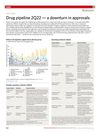
 Drug approvals slowed in 2Q22, but notable drugs like Amvuttra, Camzyos, and Olumiant were approved.
 45 citations
,
January 2012 in “The Journal of Steroid Biochemistry and Molecular Biology”
45 citations
,
January 2012 in “The Journal of Steroid Biochemistry and Molecular Biology” Too much AKR1C3 enzyme causes resistance to finasteride by increasing testosterone.
 8 citations
,
May 2017 in “Singapore Medical Journal”
8 citations
,
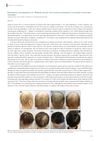
May 2017 in “Singapore Medical Journal” A Korean woman with complete hair loss regrew her hair after taking tofacitinib, with no side effects.
 September 2025 in “Experimental & Molecular Medicine”
 Small molecules KY19382 and KY19334 may help treat skin cancer by reducing CDK1 levels and blocking harmful cell signals.
68 citations
,
January 2013 in “BMC Pharmacology and Toxicology” Glibenclamide slows breast cancer cell growth by stopping cell division.
July 2025 in “SKIN The Journal of Cutaneous Medicine” Most patients with alopecia areata see significant hair regrowth within 93 days of starting ritlecitinib treatment.
169 citations
,
September 2002 in “British journal of dermatology/British journal of dermatology, Supplement” ZD1839 (Iressa) causes skin and hair side effects, treatable with tretinoin cream and minocycline.
1 citations
,
July 2025 in “Clinical and Experimental Dermatology” Deucravacitinib led to full hair regrowth in a severe alopecia areata patient.
 4 citations
,
May 2019 in “Sultan Qaboos University Medical Journal”
4 citations
,
May 2019 in “Sultan Qaboos University Medical Journal” Tofacitinib helped regrow hair in a patient with severe hair loss and improved their quality of life without side effects.
2 citations
,
February 2021 in “Indian Dermatology Online Journal” Imatinib can cause hair loss due to lichen planopilaris.
 March 2026 in “Clinical Cosmetic and Investigational Dermatology”
 Upadacitinib improved multiple immune-related conditions in one patient.
 24 citations
,
January 2018 in “International Journal of Trichology”
24 citations
,
January 2018 in “International Journal of Trichology” Tofacitinib helped regrow hair in patients with alopecia, with few side effects.
 July 2022 in “International Journal of Trichology”
 Tofacitinib helped an 8-year-old child recover from a type of hair loss that is hard to treat.
116 citations
,
December 2003 in “Acta Dermato Venereologica” Iressa often causes skin issues like acne and dryness in lung cancer patients.
January 2018 in “Journal of the advanced practitioner in oncology” Older patients with advanced kidney cancer can be managed with a drug called Sunitinib.