
Androgenetic alopecia is not linked to higher risks of hypertension or hyperaldosteronism.
 September 2024 in “African Journal of Biomedical Research”
 Alopecia areata patients have lower vitamin D and slightly lower copper levels, so these should be checked.
 July 2024 in “Journal of Dermatology Research Reviews & Reports”
 Stem cell therapy shows promise for treating hair loss by promoting hair growth.
 July 2024 in “Forum Dermatologicum”
 Topical treatments for hair loss can be effective but need careful safety evaluation.

Blocking the Mitochondrial Pyruvate Carrier causes stress in hair follicles, which can be reduced by an ISR inhibitor.
 January 2024 in “Journal of Pharmacognosy and Phytochemistry”
 Rosemary hair serum promotes healthier, stronger, and shinier hair.

Black hair's diversity in patterns and textures is influenced by follicle shape and keratin, and it holds cultural, artistic, and mathematical significance.
Dermatologists need better training on Black hair to improve care and outcomes.
 November 2023 in “Deleted Journal”
 Cedrus libani has potential medicinal uses but needs more safety studies.

A rare case of a woman having both lichen planus pigmentosus and classic lichen planopilaris at the same time.
 September 2023 in “Family practice”
 Nearly half of the classification tools in the National Institute of Health and Clinical Excellence's Clinical Knowledge Summaries might not effectively guide management for general practitioners.
 April 2023 in “Tikrit Journal of Pharmaceutical Sciences”
 Deferasirox effectively reduces iron overload in ß-thalassemia patients but may cause some manageable side effects.
 January 2023 in “Acta historiae medicinae, stomatologiae, pharmaciae, medicinae veterinariae”
 Historical baldness remedies were varied and often based on superstition.
 December 2022 in “Journal of Tropical Pharmacy and Chemistry”
 The hair tonic made from oil palm leaf extract is very effective in preventing hair damage from the sun.
 October 2022 in “Asian journal of healthy and science”
 Mother-in-law's tongue leaf extract at 20% concentration significantly promotes hair growth in male rabbits.
 September 2022 in “KnE medicine”
 Higher candle nut oil concentration increases droplet size and changes the hair tonic's properties and stability.
 August 2022 in “International journal of research in pharmacy and chemistry”
 Teak is a durable, termite-resistant wood with medicinal benefits.
 July 2022 in “SKIN The Journal of Cutaneous Medicine”
 A new lotion with halobetasol and tazarotene successfully treats acne keloidalis nuchae.
 February 2022 in “International journal of research in dermatology”
 The document concludes that proper diagnosis and treatment of hair shaft disorders require understanding their unique causes and avoiding hair-damaging practices.
 August 2021 in “Journal of Fundamental and Applied Pharmaceutical Science”
 Black tea extract at 5% concentration promotes the most hair growth.
 July 2021 in “Australasian Journal of Dermatology”
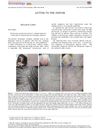
 The trichoscopy-assisted hair pull test is useful for diagnosing different types of hair loss.
 April 2021 in “Advances in Cosmetic Surgery”
 Hair restoration can be achieved through non-surgical treatments like minoxidil, antiandrogens, phototherapy, and PRP procedures, or through surgical methods like hair transplantation. Continued treatment is needed to maintain results, and full results are visible after 12-18 months.
People with androgenic alopecia are more likely to have metabolic syndrome than healthy individuals.
 November 2017 in “Asian journal of pharmaceutical and clinical research”
 Three compounds from Dadap leaves may help treat hair loss.
 May 2015 in “Journal of The American Academy of Dermatology”
 The algorithm can effectively diagnose different types of female hair loss with proper history, examination, and tests.
 May 2015 in “Journal of The American Academy of Dermatology”
 Combination therapy with cyclosporine and low-dose corticosteroid shows favorable long-term results for treating alopecia areata.
 January 2015 in “Springer eBooks”
 Some alternative treatments may help with hair loss, but more evidence is needed to confirm their effectiveness.
November 2014 in “PharmaTutor” Finasteride may help postmenopausal women with hair loss but is not effective for all and should be used cautiously in premenopausal women.
 August 2014 in “Annals of Plastic Surgery”
 The book is a detailed guide on hair restoration, useful for both new and experienced surgeons.
 May 2013 in “Trends in Urology & Men's Health”
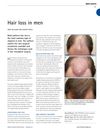
 Male-pattern hair loss is normal, often involves hormone effects on hair follicles, and can be treated with medication or surgery, but new treatments are being researched.