13 citations
,
March 2014 in “Journal of the American Medical Directors Association” Trichotillomania was successfully treated with risperidone and naltrexone.
 4 citations
,
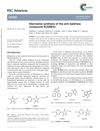
January 2014 in “RSC Advances”
4 citations
,
January 2014 in “RSC Advances” A new, less toxic and more efficient method to create the anti-baldness compound RU58841 was developed in 2014.
4 citations
,
July 2024 in “Pharmacology Research & Perspectives” Ritlecitinib is safe and may effectively treat alopecia areata.
9 citations
,
June 2017 in “Pharmacological Reports” ATP-sensitive potassium channels play a role in chloroquine-induced itch in mice.
 June 2026 in “The Russian Archives of Internal Medicine”
 Thallium poisoning can be treated successfully with the right antidote.
18 citations
,
December 2005 in “Journal of Medicinal Chemistry” A brominated phenoxy compound effectively inhibits a human enzyme and shows potential for clinical use.
 6 citations
,
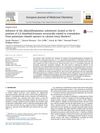
April 2014 in “European journal of medicinal chemistry”
6 citations
,
April 2014 in “European journal of medicinal chemistry” New compounds similar to cromakalim were less effective at inhibiting insulin release but improved in solubility and one acted as a calcium entry blocker, not a potassium channel opener.
 100 citations
,
May 2003 in “Journal of Neuroscience”
100 citations
,
May 2003 in “Journal of Neuroscience” Neuroactive steroids affect cocaine's rewarding effects through the ς1 receptor.
55 citations
,
March 2005 in “Neuropharmacology” A neurosteroid can reduce caffeine-induced anxiety in rats.
3 citations
,
February 2018 in “Experimental and Molecular Medicine/Experimental and molecular medicine” A protein called PCBP2 controls the production of a hair growth protein by interacting with its genetic message and is linked to hair loss when this control is disrupted.
 1 citations
,
November 2022 in “Journal of the Endocrine Society”
1 citations
,
November 2022 in “Journal of the Endocrine Society” Adults with classic congenital adrenal hyperplasia value medication that prevents weight gain from glucocorticoids the most.
54 citations
,
May 2015 in “Endocrinology” Manipulating 5α-reductase type 2 can affect liver fat production and glucocorticoid effects.
 20 citations
,
June 2007 in “Recent Patents on Endocrine, Metabolic & Immune Drug Discovery”
20 citations
,
June 2007 in “Recent Patents on Endocrine, Metabolic & Immune Drug Discovery” Certain inhibitors can potentially treat prostate cancer and other hormone-dependent conditions by controlling sex hormone levels in cells.
July 2023 in “SKIN The Journal of Cutaneous Medicine” Continued ritlecitinib treatment can improve hair regrowth in some alopecia areata patients who initially don't respond.
13 citations
,
June 2023 in “Frontiers in Pharmacology” Trastuzumab deruxtecan is effective for advanced breast cancer but has side effects like nausea and fatigue.
 July 2026 in “bioRxiv (Cold Spring Harbor Laboratory)”
 ACA2 is crucial for root hair growth by controlling calcium levels in cells.
3 citations
,
October 2024 in “Experimental Dermatology” Higher CRHR1 levels in AA patients lead to increased inflammation.
 January 2024 in “American journal of clinical dermatology”
 Ritlecitinib is safe and well-tolerated for treating alopecia areata in patients aged 12 and older.
10 citations
,
June 2022 in “Biomedicine & Pharmacotherapy” ARTS helps stop tumors by promoting cell death.
January 1987 in “Toxicological sciences” SMR-2 and SMR-6 are much more toxic than retinoic acid, causing severe symptoms and organ damage in mice.
88 citations
,
April 2012 in “Journal of Investigative Dermatology” Blocking TRPV3 may help treat itch in dry skin conditions.
July 2024 in “Journal of Investigative Dermatology” A KLK5 inhibitor effectively improved skin symptoms in a mouse model of Netherton Syndrome.
 July 2025 in “SKIN The Journal of Cutaneous Medicine”
 Ritlecitinib is generally safe for alopecia areata patients over 72 months.
 2 citations
,
June 2023 in “Journal of cell science”
2 citations
,
June 2023 in “Journal of cell science” Mutations in iRhom2 affect hair and skin in mice and are linked to esophageal cancer, with ADAM17 playing a crucial role.
December 2022 in “International Journal of Molecular Sciences” Afatinib, neratinib, and zanubrutinib could be effective against KRASG12C-mutant tumors.
9 citations
,
November 2023 in “Pain Physician” ExoFlo is safe and effective for treating Complex Regional Pain Syndrome symptoms.
34 citations
,
March 2007 in “Biochemical and Biophysical Research Communications” Thioredoxin reductase 1 does not affect glucocorticoid receptor activity in hair follicle cells.
 142 citations
,
March 2019 in “Frontiers in Cellular Neuroscience”
142 citations
,
March 2019 in “Frontiers in Cellular Neuroscience” The document concludes that adenosine receptor agonists have potential for treating various conditions, but only a few are approved due to challenges like side effects and the need for selective activation.
 January 2024 in “Journal of dermatology and skin science”
 Topical aprepitant reduces skin rash and hair loss caused by cancer treatment.
 June 2026 in “Dermatology and Therapy”
 Ritlecitinib provides new treatment options for diverse alopecia areata patients.