Search
forProducts matching "cruelty-free"
Tracking 1 products like 291 BondiBoost from by companies like Amazon. View product »
Sort by
Research
60-90 / 1000+ results
research The Use of Tofu Whey from Food Industry Waste in Podological Care
Tofu whey improves foot skin health and supports sustainable cosmetics.

research An Integrated Approach to Develop Innovative, Sustainable, and Effective Cosmetic Ingredients: The Case Report of Fatty-Acids-Enriched Wild Strawberry Waste Extract
Wild strawberry waste extract can be a sustainable cosmetic ingredient for treating acne and hair loss.
research Plants used in cosmetics
Natural products in cosmetics are beneficial for skin and hair care with low toxicity.
research Biocosmetics: technological advances and future outlook
Biocosmetics will grow by using natural ingredients and eco-friendly packaging.
research Applications of Engineered Skin Tissue for Cosmetic Component and Toxicology Detection
Engineered skin tissue is a promising tool for safer cosmetic testing.
research Trends in Surgical and Beauty Masks for a Cleaner Environment
Biodegradable masks are needed to reduce pollution and meet eco-friendly demands.
research Kudo Zero Sugar Collagen Anti-Aging Support Gummies Skincare & Beauty Reduces | Wrinkles & Fine Lines[WORK OR HOAX]
Kudo Zero Sugar Collagen Gummies may not effectively reduce wrinkles or improve skin, hair, and nails.

research Plant biomass materials in cosmetic application
Plant biomass materials are effective and eco-friendly for skin and hair care in cosmetics.
research Novel cosmeceuticals from plants—An industry guided review
Plant-based ingredients are effective and safe for modern skincare products.
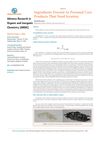
research Ingredients Present In Personal Care Products That Need Scrutiny
Certain ingredients in personal care products, like formaldehyde, oxidative hair dyes, and sulfates, pose health risks and need careful review.
research Topical effect of a specific spot-on treatment made of natural ingredients in rabbits (Oryctolagus cuniculus) with skin problems: A pilot study
The natural topical treatment improved rabbits' skin and hair condition.
research From crown to cosmetics: Exploring the efficacy of an upcycled pineapple biopolymer in sustainable skincare, suncare and hair care applications
Upcycled pineapple biopolymer is effective and eco-friendly for skincare, suncare, and haircare.
research Safety of food containing 5000 mg of collagen peptide and its effect on hair in health female subjects-a double-blind, placebo controlled study-
research Chitin and Chitosans: Characteristics, Eco-Friendly Processes, and Applications in Cosmetic Science
Chitosan is a sustainable, versatile ingredient in cosmetics, enhancing skin hydration and anti-aging while promoting eco-friendly practices.
research Establishing an Evidence-Based System for Cosmetic Safety and Efficacy Evaluation
A comprehensive system is needed to ensure cosmetics are safe and effective, using global insights and new AI technologies.
research MOOEW: Inovasi Hair Tonic Gel Eco-Friendly Berbasis Hydroxyproline Limbah Tulang Ikan Tenggiri dengan Ekstrak Chamomile Solusi Alopesia Kucing
MOOEW Hair Tonic Gel is a profitable, eco-friendly solution for cat hair loss.

research Keratin-modified waterborne polyurethane: an alternative circular economy technology for adding value to cattle hair waste from leather tanneries

research Comparison of the formulation and allergenic potential of “clean” and traditional shampoos
"Clean" shampoos use fewer allergenic preservatives than traditional ones but still contain fragrances, and their actual risk of causing skin reactions is unclear.
research Cosmetics
The U.S. FDA regulates cosmetics for appearance purposes, but not as strictly as some other countries.

research Visible Light-Mediated Environmentally Friendly and Universally Applicable Green Chemistry for Hair Cross-Linking
The study found a green method for strengthening hair works on all hair colors and is eco-friendly.
research QR678 & QR678 Neo Hair Growth Formulations: A Cellular Toxicity & Animal Efficacy Study
QR 678 and QR 678 Neo are safe and promote hair growth, potentially helping chemotherapy-induced hair loss.
research Luxury Hair Fibers for Fashion Industry
The industry should promote pure luxury hair fibers, improve technology, and diversify products to support growers and ensure sustainable use.
research Evaluation of a topical treatment for the relief of sensitive skin
QV Face Rescue Gel effectively soothes sensitive skin and boosts collagen without causing irritation.
research Flexabrasion Applied to the Evaluation of the Photodegradation of Hair Fibers
research Overview of Nanocosmetics with Emphasis on those Incorporating Natural Extracts
Nanocosmetics with natural extracts offer benefits but need more research on safety and environmental impact.

research Establishment of an in vitro hairless guinea pig dermal model
Researchers developed a cost-effective, ethical skin model using hairless guinea pig cells for toxicology studies.

research EFFECTS of SOME CHEMICALS in COSMETIC PRODUCTS on PREGNANT, FETUS and NEWBORN HEALTH
Some chemicals in cosmetics may harm pregnant individuals, fetuses, and newborns, and should be avoided unless necessary.
research Amino Acids, Peptides, and Proteins
The document concludes that cosmetics need biocompatible, eco-friendly ingredients due to aging populations and demand for effective products.
research DESENVOLVIMENTO BIOTECNOLÓGICO DE SÉRUM REJUVENESCEDOR ANTIOXIDANTE CONTENDO ATIVO LIPÍDICO ORIUNDO DA RANA CATESBEIANA SHAW
The serum is effective, safe, and stable for skincare.