35 citations
,
February 2003 in “Biochimica et Biophysica Acta (BBA) - General Subjects” Lead can help reveal and organize lipids in human hair.
 May 2025 in “Journal of Developmental Biology”
 Jawless vertebrates have teeth proteins similar to those in mammalian hair and nails.
317 citations
,
August 1997 in “The Plant Journal” Calcium is crucial for sustaining root hair growth in Arabidopsis thaliana.
 316 citations
,
June 2004 in “The journal of investigative dermatology/Journal of investigative dermatology”
316 citations
,
June 2004 in “The journal of investigative dermatology/Journal of investigative dermatology” Microspheres about 1.5 micrometers in size can best penetrate hair follicles, potentially reaching important stem cells.
June 2026 in “Virtual and Physical Prototyping” A new method creates precise, stable microscale structures with reduced friction and potential for complex designs.
3 citations
,
October 2024 in “Animals” Crimped wool has proteins linked to crimp formation, while straight wool has proteins linked to fiber fineness, which can improve wool quality and value.
Hair bulb cells can create skin-like tissues for potential skin repair.
Encapsulating hair follicle cells in a special gel boosts their activity.
February 2026 in “Apollo (University of Cambridge)” Droplet microfluidics can precisely create microgels for advanced bioengineering uses.
7 citations
,
April 2000 in “Mammalian Genome” A new mutation in mice causes crooked whiskers and messy hair.
27 citations
,
January 1983 in “Journal of the American Academy of Dermatology” A new method helps identify and classify different types of hair casts.
2 citations
,
August 2022 in “World Journal of Clinical Cases” Albumin and prednisone improved symptoms in a woman with Cronkhite-Canada syndrome, revealing potential genetic causes.
53 citations
,
September 2004 in “American journal of medical genetics. Part C, Seminars in medical genetics” Mutations in keratin genes cause cell fragility and various skin disorders.
3 citations
,
July 2019 in “Fibers And Polymers/Fibers and polymers” 26 citations
,
June 2016 in “Frontiers in Plant Science” Autofluorescence can sort plant cells without labeling.
January 2009 in “Repositório Científico do Instituto Politécnico de Viseu (Instituto Politécnico de Viseu)” The skin lesion was diagnosed as a matrical cyst with unusual features.
28 citations
,
December 2016 in “Journal of Biomedical Materials Research Part A” Bone-forming cells grow well in 3D polymer scaffolds with 35 µm pores.
9 citations
,
January 1989 in “Journal of Small Animal Practice” Abyssinian cats can have a hair abnormality that makes their coat look rough and dull.
 February 1999 in “Analytical Sciences”
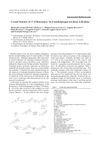
 A new antiandrogen compound was made and its detailed three-dimensional shape was described.
8 citations
,
June 2016 in “Journal of Investigative Dermatology” A rare genetic deletion in the KRT1 gene causes unique skin symptoms in a family.
January 2022 in “Institutional Repositories DataBase (IRDB)” Pen-type microwells are best for forming hair follicle germ structures.
25 citations
,
January 2013 in “Journal of Cell Science” Tenascin-C and tenascin-W help control stem cell movement and growth in whisker follicles.
1 citations
,
October 2024 in “European Journal of Histochemistry” Telocytes in silky fowl embryos develop distinct features and connections by the 20th day of incubation.
5 citations
,
February 2022 in “Biophysical journal” The model shows that filament flexibility and amino acid differences affect how fast intermediate filament proteins assemble.
75 citations
,
August 2018 in “Plant physiology” Hydrogen sulfide disrupts protein function and root hair growth in plants by modifying proteins.
3 citations
,
January 2013 in “Journal of cosmetics, dermatological sciences and applications” HAIRCARECUBE TM (HCC) helps hair products work better by getting active ingredients deeper into the hair.
 14 citations
,
February 2020 in “Scientific reports”
14 citations
,
February 2020 in “Scientific reports” Telocytes in the scalp may help with skin regeneration and maintenance.
 February 2025 in “Animals”
 Understanding proteins in skin structures like claws and hair is crucial for future research.
11 citations
,
September 1996 in “Journal of applied polymer science” Potassium cyanide treatment changes hair's disulfide bonds, making it more elastic.
46 citations
,
November 1963 in “Journal of Histochemistry & Cytochemistry” Arginine converts to citrulline in hair follicles as proteins harden.