46 citations
,
November 2019 in “Journal of Integrative Plant Biology” CaM7 and CNGC14 interaction controls root hair growth in Arabidopsis.
CCC1 is essential for ion balance and proper plant cell function.
 April 2007 in “Nature Clinical Practice Urology”
 TICE salvage chemotherapy is effective for treating germ-cell tumors with poor prognosis.
79 citations
,
October 2003 in “PubMed” Overexpression of PKCepsilon leads to increased TNFalpha, promoting metastatic squamous cell carcinoma in mice.
33 citations
,
August 2000 in “Experimental Cell Research”  6 citations
,
December 1997 in “Journal of The American Academy of Dermatology”
6 citations
,
December 1997 in “Journal of The American Academy of Dermatology” CTE can distort results in hair growth trials, so exclude it carefully.
 1 citations
,
August 2024 in “Transgenic Research”
1 citations
,
August 2024 in “Transgenic Research” Activated β-catenin affects hair growth and skin thickness, and changes are reversible.
 July 2023 in “Nasza Dermatologia Online”
 More research is needed on CCCA in children, especially Black and Asian adolescents.
52 citations
,
February 2012 in “PloS one” Lack of Ctip2 in skin cells delays wound healing and disrupts hair follicle stem cell markers in mice.
 3 citations
,
May 2023 in “International Journal of Molecular Sciences”
3 citations
,
May 2023 in “International Journal of Molecular Sciences” A new treatment using nanoparticles can effectively prevent and reduce hair loss caused by chemotherapy.
 24 citations
,
June 2012 in “BMC Research Notes”
24 citations
,
June 2012 in “BMC Research Notes” The HGCA tool helps identify genes that work together by analyzing their co-expression patterns.
April 2012 in “Neuropediatrics” Trichothiodystrophy is a rare genetic disorder causing hair issues and sometimes linked to DNA repair defects.
October 1984 in “Immunology Today” May 2025 in “International Journal of Women’s Dermatology” CCCA mainly affects Black women and is linked to high-tension hairstyles, heating tools, chemical relaxants, and genetics.
 61 citations
,
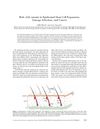
January 2008 in “Cold Spring Harbor Symposia on Quantitative Biology”
61 citations
,
January 2008 in “Cold Spring Harbor Symposia on Quantitative Biology” Beta-catenin is crucial for skin cell growth, development, and cancer formation.
44 citations
,
May 2023 in “MedComm” PROTAC technology shows promise for cancer treatment but needs more effective E3 ligase recruiters.
 86 citations
,
August 2011 in “Toxicological sciences”
86 citations
,
August 2011 in “Toxicological sciences” TCDD speeds up skin barrier formation by increasing certain gene expressions.
2 citations
,
April 2023 in “American Journal of Dermatopathology” CCCA may involve the PD1/PDL1 pathway and increased caspase 3, leading to permanent hair loss.
 March 2011 in “European Urology Supplements”
 CEC levels may be a useful marker for predicting prostate cancer progression.
 April 2023 in “Cancer research”
 KRTAP2-3 could help predict cancer recurrence by identifying specific cancer cells.
Trichoscopic examination is crucial for diagnosing congenital triangular alopecia.

A new AIRE gene mutation causes rare autoimmune symptoms in a Lebanese boy.
 145 citations
,
May 2008 in “Cancer Science”
145 citations
,
May 2008 in “Cancer Science” Cancer cells often have more copies of TERT and TERC genes, which helps them grow and could affect patient outcomes.
 August 2023 in “Sabuncuoglu Serefeddin Health Sciences”
 CT60 polymorphism might increase the risk of Alopecia Areata.
 January 2026 in “Dermatology Online Journal”
 CCCA can appear as patchy hair loss in younger men, not just the usual pattern.
August 2023 in “Journal of the American Academy of Dermatology” CCCA affects Black men too, with a genetic link found in the PADI3 gene.
9 citations
,
October 2017 in “Frontiers in plant science” The peach gene CTG134 helps control the interaction between auxin and ethylene, which could lead to new agricultural chemicals.
 July 2025 in “The Journal of Physiology”
 C-tactile afferents are linked to emotional touch and social bonding through hair movement.
 October 2024 in “Journal of the Endocrine Society”
 Certain genetic variants reduce enzyme activity, contributing to non-classic congenital adrenal hyperplasia.
12 citations
,
August 2001 in “PubMed” CE-PTG is a better method for analyzing hair growth in androgenetic alopecia.