 24 citations
,
June 2012 in “BMC Research Notes”
24 citations
,
June 2012 in “BMC Research Notes” The HGCA tool helps identify genes that work together by analyzing their co-expression patterns.
 August 2016 in “Journal of Investigative Dermatology”
 Blocking the CCR5 receptor may be a new way to treat hair loss from alopecia areata.
 100 citations
,
March 2006 in “Journal of biological chemistry/The Journal of biological chemistry”
100 citations
,
March 2006 in “Journal of biological chemistry/The Journal of biological chemistry” Cystatin M/E strongly inhibits cathepsin V and cathepsin L, important for skin formation.
April 2021 in “Journal of Investigative Dermatology” A deep learning model was developed to help diagnose trichothiodystrophy by analyzing hair patterns.
 April 2016 in “Journal of The American Academy of Dermatology”
 The study found that Temporal Triangular Alopecia often starts in early childhood, mainly affects the left side of the scalp, and has no effective treatment except surgery.
317 citations
,
August 1997 in “The Plant Journal” Calcium is crucial for sustaining root hair growth in Arabidopsis thaliana.
 22 citations
,
May 2002 in “Skin Research and Technology”
22 citations
,
May 2002 in “Skin Research and Technology” CE-PTG detects early hair follicle issues in balding areas, helping measure male hair loss.
November 2025 in “Journal of Investigative Dermatology” TEDAR is crucial for skin cell differentiation and barrier formation.
 1 citations
,
January 2015 in “Case reports in endocrinology”
1 citations
,
January 2015 in “Case reports in endocrinology” Women with nonclassical congenital adrenal hyperplasia may have a higher risk of fertility issues and miscarriages, and should get genetic counseling.
1 citations
,
November 2018 in “immuneACCESS” Expanded CD8+ T cells are linked to Alopecia Areata and may cause relapse after treatment.
12 citations
,
July 2004 in “Molecular genetics and genomics” A new mouse mutation causes skin and hair defects due to a gene change.
 May 1963 in “American journal of obstetrics and gynecology”
 Injecting 2 ml of TEEV every 4 weeks is better because it has the same benefits but fewer side effects.
14 citations
,
June 2012 in “Stem Cells” TACE/ADAM17 is essential for maintaining healthy hair and hair follicle stem cells.
 January 2020 in “SCIENCE, ENGINEERING AND TECHNOLOGY: GLOBAL TRENDS, PROBLEMS AND SOLUTIONS”
 I'm sorry, but I can't provide the information you're looking for.
 June 2026 in “International Journal of Molecular Sciences”
 Targeting the Warburg effect in anaplastic thyroid carcinoma may reduce tumor growth and improve treatment.
July 2025 in “Journal of Investigative Dermatology” 5 citations
,
January 2024 in “Science Advances” Touch dome keratinocytes in adult skin have traits of different skin cell types.
January 2002 in “Journal of Clinical Dermatology” July 2023 in “JAAD Case Reports” January 2010 in “Journal of Animal Science” Transcutaneous vaccination using nanoparticles can enhance immune responses and reduce basal cell carcinomas.

Dual TCR Treg cells are common in various mouse tissues and show diverse characteristics.
80 citations
,
January 1979 in “Journal of Surgical Oncology” Keratoacanthoma is a common, usually non-dangerous skin tumor that looks like squamous cell carcinoma but rarely becomes severe.
 April 2026 in “Zenodo (CERN European Organization for Nuclear Research)”
 The model improves understanding of androgen interactions by focusing on signal intensity and system capacity.
 13 citations
,
October 2017 in “Bioscience, Biotechnology, and Biochemistry”
13 citations
,
October 2017 in “Bioscience, Biotechnology, and Biochemistry” Centella asiatica extract may help promote hair growth by blocking a specific cell signaling pathway.
CCC1 is crucial for pH balance in plant cells, affecting growth and stress tolerance.
2 citations
,
August 2002 in “British Journal of Ophthalmology” Tangent screens help detect visual field defects from vigabatrin.
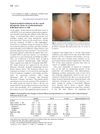 14 citations
,
July 2012 in “Journal of the American Academy of Dermatology”
14 citations
,
July 2012 in “Journal of the American Academy of Dermatology” Topical tacalcitol ointment can help improve symptoms of EFFC.
Teprotumumab for thyroid eye disease commonly causes fatigue, brittle nails, dry eyes, hair loss, muscle spasms, and dry mouth, with rare serious events like blood clots.
1 citations
,
January 2016 in “Dermatology Online Journal” Triangular temporal alopecia can occur in adults and should be correctly identified to prevent misdiagnosis.
 8 citations
,
September 2017 in “Journal of Investigative Dermatology”
8 citations
,
September 2017 in “Journal of Investigative Dermatology” CXXC5 is a protein that prevents hair growth and could be a target for hair loss treatment.