5 citations
,
January 2020 in “Veterinary Dermatology” Enilconazole and lime sulfur work well for whole body treatment, while other products need frequent application for effective antifungal action.
 September 2024 in “Journal of Parasite Science”
 Dermatophytosis in cats was most common in young, male Persian cats, with symptoms like hair loss and crusts.
 February 2024 in “Buletin Veteriner Udayana”
 Using sulfur soap helped improve skin problems in a dog with demodecosis.
11 citations
,
March 2004 in “Journal of Comparative Pathology” Norfolk Terriers have a genetic skin defect causing scaling and blisters due to a keratin issue.
3 citations
,
January 2020 in “Acta veterinaria indonesiana” The cat with ringworm got better after being treated with oral and topical medications for 35 days.
 May 2020 in “International journal of current microbiology and applied sciences”
 A Pug with skin issues was successfully treated for mite and bacterial infections.
 9 citations
,
September 2006 in “Veterinary pathology”
9 citations
,
September 2006 in “Veterinary pathology” A dog with unusual skin lesions near its tail was successfully treated for a rare form of lupus.
1 citations
,
April 2024 in “Pathogens” A pet ferret had a serious infection from Mycobacterium xenopi, which can spread to humans.
 August 2017 in “Companion animal”
 Focal alopecia in dogs has many causes and requires various tests for accurate diagnosis and treatment.
 January 2023 in “International Journal of Zoology and Animal Biology”
 Canine hypothyroidism can be linked to diabetes, requiring thorough testing for proper diagnosis.
 69 citations
,
January 2020 in “Veterinary World”
69 citations
,
January 2020 in “Veterinary World” Ringworm in pets is influenced by fungi type, immune status, and stress hormones.
 August 2019 in “International journal of current microbiology and applied sciences”
 Young dogs in Odisha with dermatitis are most often infected by Microsporum fungus, and Miconazole is the most effective treatment.
 January 2020 in “Animal Husbandry Dairy and Veterinary Science”
 Tetracycline successfully treated a Labrador's skin calcification and hair loss.
 2 citations
,
April 2022 in “PubVet”
2 citations
,
April 2022 in “PubVet” The cat's skin condition improved significantly with medication, with no relapse.
 33 citations
,
September 2007 in “Veterinary dermatology”
33 citations
,
September 2007 in “Veterinary dermatology” Topical 0.1% tacrolimus significantly improved ear infections in cats.
 December 2014 in “Bangladesh Journal of Veterinary Medicine”
 Ectoparasites cause skin issues in Egyptian lesser blind mole rats, affecting their population.
7 citations
,
May 2008 in “Journal of Veterinary Internal Medicine” A cat had a rare severe reaction to fenbendazole, but recovered with treatment.
 April 2018 in “Asian-Australasian journal of bioscience and biotechnology”
 The study concluded that tick infestation was the most common skin problem in hospitalized dogs in Chennai, with various treatments used for different conditions.
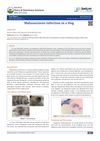 July 2018 in “Journal of Dairy & Veterinary Sciences”
 The dog recovered from a skin infection after treatment with medication.
 18 citations
,
July 2001 in “Australian veterinary journal”
18 citations
,
July 2001 in “Australian veterinary journal” A cat with skin bumps and itching had high blood fats and skin infections, which improved with diet and medication changes.
 4 citations
,
July 2022 in “Veterinary medicine international”
4 citations
,
July 2022 in “Veterinary medicine international” Mange in rabbits is a serious disease that can spread to humans and is treated with medications and supportive care.
 3 citations
,
March 2014 in “Veterinary dermatology”
3 citations
,
March 2014 in “Veterinary dermatology” Norwegian puffin dogs have a unique type of hair loss that often doesn't get better on its own and responds well to ciclosporin treatment.
 36 citations
,
January 2006 in “Veterinary Dermatology”
36 citations
,
January 2006 in “Veterinary Dermatology” Cyclosporin effectively and safely treated skin diseases in three pets with no side effects.
 15 citations
,
September 1984 in “Veterinary Clinics of North America: Small Animal Practice”
15 citations
,
September 1984 in “Veterinary Clinics of North America: Small Animal Practice” The document explains various skin conditions in cats and how to diagnose and treat them.
8 citations
,
July 1983 in “Veterinary Quarterly” Ketoconazole effectively treats skin fungus in cats and dogs with minimal side effects.
5 citations
,
September 2008 in “Journal of the Chinese Medical Association” A kidney transplant patient got a fungal infection from her dogs, but treatment improved her condition and hair grew back.
 10 citations
,
April 2013 in “Veterinary dermatology”
10 citations
,
April 2013 in “Veterinary dermatology” A new skin disease in four Labrador retrievers responded well to immunosuppressive treatment.
1 citations
,
May 2002 in “AAP Grand Rounds” Tinea capitis, though rare in infants, should be considered for hair loss or scalp issues, with oral griseofulvin as the recommended treatment.
34 citations
,
July 2006 in “Clinics in dermatology” Endocrine diseases in dogs often cause skin problems, with hypothyroidism and hyperadrenocorticism being common and leading to hair loss and infections.
August 2024 in “NPI Journal of Science and Technology.” The Golden Retriever's skin condition improved after treatment.