1 citations
,
April 2018 in “Journal of Investigative Dermatology” The Trichodysplasia spinulosa virus protein can cause abnormal hair growth in mice.
14 citations
,
June 2012 in “Stem Cells” TACE/ADAM17 is essential for maintaining healthy hair and hair follicle stem cells.
16 citations
,
July 2014 in “Cell Biology International” Lithium chloride helps hair follicle cells become tooth cells by activating a specific signaling pathway.
 64 citations
,
July 2016 in “Journal of Immunology”
64 citations
,
July 2016 in “Journal of Immunology” Blocking the CXCR3 receptor reduces T cell accumulation in the skin and prevents hair loss in mice.
191 citations
,
November 2007 in “Journal of Biological Chemistry” Very-long-chain acyl-CoA synthetases and fatty acid transport proteins play key roles in fatty acid metabolism and lipid processing in different tissues.

TLR3 signaling enhances the immunosuppressive properties of human periodontal ligament stem cells.
8 citations
,
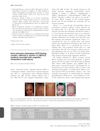
January 2011 in “International journal of trichology” Accurate diagnosis of APL is crucial to avoid unnecessary treatments.
 11 citations
,
September 2011 in “British Journal of Dermatology”
11 citations
,
September 2011 in “British Journal of Dermatology” New ABCA12 gene mutations were linked to a skin condition with scaling and hair loss, and a treatment helped with hair loss in a related case.
 7 citations
,
September 2017 in “Scientific Reports”
7 citations
,
September 2017 in “Scientific Reports” Mice with too much sPLA₂-IIA have hair loss and poor wound healing due to abnormal hair growth and stem cell depletion.
7 citations
,
May 2022 in “Cancers” UC.145 may be a new biomarker for predicting gastric cancer.
Lhx2 is essential for effective Sonic Hedgehog signaling in early retinal development.
 April 2023 in “The journal of investigative dermatology/Journal of investigative dermatology”
 p120-catenin helps control skin inflammation by regulating cadherin levels.
2 citations
,
September 2023 in “Journal of the American Academy of Dermatology” CTP-543 effectively promotes hair regrowth in adults with moderate to severe alopecia areata.
421 citations
,
September 2003 in “Development” Stem cell behavior varies with stimuli, and lineage changes can happen without affecting stem cell division.
 44 citations
,
November 2009 in “Archives of Dermatology”
44 citations
,
November 2009 in “Archives of Dermatology” CYLD mutations cause a variety of skin tumors with symptoms starting around age 16, and treatments are currently limited.
 2 citations
,
June 2024 in “Frontiers in Plant Science”
2 citations
,
June 2024 in “Frontiers in Plant Science” LLPS is crucial for RALF signaling, aiding plant growth and stress resilience.
1 citations
,
January 2025 in “Proceedings of the National Academy of Sciences” LPAR6 has a unique way of binding and activating, which helps in designing treatments for hair loss and cancer.
 August 2012 in “Nature Cell Biology”
 The tumor suppressor BRCA2 helps in cell division by bringing key proteins to the area where cells split.
 April 2024 in “Indian Journal of Paediatric Dermatology”
 Congenital triangular alopecia and vitiligo can occur together, but treatment for one may not affect the other.
20 citations
,
April 2014 in “Autoimmunity” A specific gene variant (rs4833095) is linked to a higher risk of alopecia areata in Koreans.
 28 citations
,
December 2018 in “Plant, cell & environment/Plant, cell and environment”
28 citations
,
December 2018 in “Plant, cell & environment/Plant, cell and environment” A protein called PLC2 is important for the growth and development of plant roots influenced by auxin.
27 citations
,
July 1993 in “The journal of investigative dermatology/Journal of investigative dermatology”  April 2026 in “International Journal of Drug Delivery Technology”
 Lactobacillus acidophilus substances can kill and stop the spread of cervical cancer cells.
 April 2024 in “The journal of investigative dermatology/Journal of investigative dermatology”
 ASH2L is essential for skin and hair development.
 May 2022 in “Experimental dermatology”
 Trichothiodystrophy hair is structurally abnormal with protein and organization issues.
 1 citations
,
October 2022 in “JCI insight”
1 citations
,
October 2022 in “JCI insight” Deleting the BRD4 protein in certain skin cells causes hair loss and skin inflammation.
 February 2025 in “American Journal of Biomedical Science & Research”
 A rare combination of hair loss and excessive fine hair growth was found in celiac disease patients.
May 2022 in “The journal of immunology/The Journal of immunology” FOXN1 is crucial for thymus development and immune response in Xenopus laevis.
 74 citations
,
January 2013 in “Journal of Investigative Dermatology”
74 citations
,
January 2013 in “Journal of Investigative Dermatology” Four genetic risk spots found for hair loss, with WNT signaling involved and a link to curly hair.
23 citations
,
July 2023 in “Proceedings of the National Academy of Sciences” CD8+ T cells drive alopecia areata, while regulatory T cells are protective.