 5 citations
,
March 2009 in “Pediatric Dermatology”
5 citations
,
March 2009 in “Pediatric Dermatology” The study found that pili bifurcati causes hair to intermittently split into two branches, each with its own outer layer.
 4 citations
,
December 2020 in “Mammalian genome”
4 citations
,
December 2020 in “Mammalian genome” Harlequin mutant mice have hair loss due to low AIF protein levels and retroviral element activity.
Loose anagen hair syndrome in children may improve with age, but treatment results vary.
 45 citations
,
May 2003 in “Journal of Cell Science”
45 citations
,
May 2003 in “Journal of Cell Science” α3β1-integrin is crucial for maintaining normal hair follicle shape and function but not needed for the development of the surrounding skin.
 6 citations
,
February 2016 in “American Journal of Dermatopathology”
6 citations
,
February 2016 in “American Journal of Dermatopathology” The boy with woolly hair nevus had thinner hair and abnormal hair follicles, which improved with treatment but worsened when treatment stopped.
 4 citations
,
August 2023 in “Nature Communications”
4 citations
,
August 2023 in “Nature Communications” Mouse zigzag hair bends form due to a 3-day cycle of changes in hair progenitors and their environment.
 May 2024 in “Scientific reports”
 Twist2 is essential for scarless skin healing and hair growth in mouse fetuses.
 March 2024 in “Research Square (Research Square)”
 Twist2 is essential for proper skin healing and hair growth in developing mice.
 December 2023 in “bioRxiv (Cold Spring Harbor Laboratory)”
 AP-2α and AP-2β proteins are essential for healthy adult skin and hair.
 January 2022 in “Acta dermatovenerologica Alpina, Pannonica et Adriatica (Tiskana izd.)”
 Uncombable hair syndrome causes frizzy hair and can affect the nervous system, eyes, and ears, often co-occurring with other hair, skin, nail, and teeth conditions, and is linked to three specific gene mutations.
 October 2018 in “InTech eBooks”
 The gene Foxn1 is important for hair growth, and understanding it may lead to new alopecia treatments.
 January 2017 in “Clinical approaches and procedures in cosmetic dermatology”
 Cosmetic procedures can harm hair, but damage can be minimized with knowledge and care; however, once hair is damaged, it cannot be reliably repaired.
 4 citations
,
May 2017 in “Pediatric Dermatology”
4 citations
,
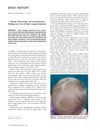
May 2017 in “Pediatric Dermatology” The study found that Short Anagen Syndrome results in short hair growth not due to hair fragility, and hair may grow longer after puberty.
 11 citations
,
March 2001 in “Clinics in Dermatology”
11 citations
,
March 2001 in “Clinics in Dermatology” Hair microscopy is useful for diagnosing hair disorders, but clear definitions are needed for accurate genetic analysis.
 October 2018 in “Springer eBooks”
 The document concludes that various hair disorders have different treatments, including medication, surgery, and addressing underlying causes.

Modern hair restoration techniques can effectively treat hair loss and provide natural-looking results.
42 citations
,
September 2003 in “Journal of Investigative Dermatology” A missing mK6irs1 gene causes hair loss in mice.
84 citations
,
April 2002 in “Archives of Dermatology” Loose anagen hair syndrome may be caused by keratin gene mutations.
13 citations
,
April 2019 in “iScience” EGFR helps control how hair grows and forms without needing p53 protein.
8 citations
,
January 2020 in “PeerJ” Alopecia Areata causes significant structural and compositional changes in hair.
151 citations
,
August 2011 in “The EMBO Journal” The enzyme PA-PLA1α is important for proper hair follicle development.
98 citations
,
December 2015 in “The Journal of Cell Biology” Keratin is crucial for skin barrier formation and affects mitochondrial function.
75 citations
,
April 2000 in “Developmental Dynamics” Whn is essential for hair growth, and its malfunction causes hair loss.
68 citations
,
December 2010 in “The journal of investigative dermatology/Journal of investigative dermatology” HOXC13 is essential for hair and nail development by regulating Foxn1.
34 citations
,
November 1998 in “Journal of Investigative Dermatology” A common mutation in the hHb6 gene is linked to monilethrix, but other factors may also play a role.
25 citations
,
October 2007 in “Developmental biology” Clim proteins are essential for maintaining healthy corneas and hair follicles.
17 citations
,
March 2012 in “Journal of biological chemistry/The Journal of biological chemistry” Hairless protein affects hair follicle structure by regulating the Dlx3 gene.
Mutant Cx43 causes slower wound healing and hair growth issues in ODDD.
28 citations
,
June 1991 in “Veterinary Dermatology” Black and white Saluki dogs have a unique hair loss condition different from Doberman pinschers.
1 citations
,
July 2024 in “New Phytologist” ZmSPL10, ZmSPL14, and ZmSPL26 genes are essential for forming maize structures needed for pollen capture and kernel production.