 May 2026 in “Iconic Research and Engineering Journals”
 Polyherbal hair oils effectively promote hair growth and scalp health.
 February 2026 in “International Journal of Research in Dermatology”
 Two adults with unusual scalp fungus symptoms were successfully treated.
 February 2026 in “Frontiers in Public Health”
 Lifestyle changes can help manage androgenetic alopecia.
 January 2026 in “International Journal of Advanced Research in Science Communication and Technology”
 The herbal beard balm effectively nourishes and hydrates beards, reducing dryness and irritation.
 January 2026 in “Biomedical and Biopharmaceutical Research”
 Pequi and buriti oils improve curly hair's gloss and strength.
 December 2025 in “IP Indian Journal of Clinical and Experimental Dermatology”
 Hair shaft disorders often indicate genetic or systemic issues and are managed by minimizing damage.
 December 2025 in “International Journal of Therapeutic Innovation.”
 The rice water hair mask effectively moisturizes, strengthens, and protects hair.
 November 2025 in “Quality in Sport”
 Consistent use of natural methods is key for healthy hair and scalp.
 September 2025 in “International Journal of Ayurvedic Medicine”
 Hair medulla patterns vary by Prakruti type, affecting hair strength.
 September 2025 in “Sahel Journal of Life Sciences FUDMA”
 Chemical hair straighteners can severely damage hair and scalp with repeated use.
 September 2025 in “Journal of Drug Delivery and Therapeutics”
 Targeting hair follicles can effectively promote hair growth and treat hair disorders.
 March 2025 in “International Journal of Advanced Research in Science Communication and Technology”
 Herbal hair dyes are safer and eco-friendly alternatives to synthetic dyes, offering natural color and hair benefits.
 January 2025 in “INTERANTIONAL JOURNAL OF SCIENTIFIC RESEARCH IN ENGINEERING AND MANAGEMENT”
 Herbal hair conditioners nourish and protect hair naturally without harsh chemicals.
MagicalRemedies serum effectively promotes healthy hair growth and reduces damage.

The polyherbal hair mask is a safe and effective alternative for improving hair health.
 January 2025 in “Journal of Pharmacognosy and Phytochemistry”
 The Aloe vera and Fenugreek hair mask improves hair health and reduces hair problems safely.
 January 2025 in “International Journal of Pharmacognosy and Clinical Research”
 The herbal scalp serum may help hair growth by reducing DHT levels.
 December 2024 in “International Journal on Science and Technology”
 Herbal hair oils promote hair growth effectively with minimal side effects.
 October 2024 in “International Journal of Life Science Research Archive”
 The herbal shampoo works well but needs improvement for better quality and safety.
 August 2024 in “Journal of the Korean Society of Cosmetology”
 Wild peach leaf extract improves hair strength, thickness, and shine after dyeing.
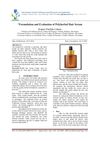 June 2024 in “International Journal of Pharmaceutical Research and Applications”
 Polyherbal hair serum can hydrate the scalp and promote hair growth safely.

Neem leaf extract combined with eucalyptus and lemongrass oils can effectively treat Tinea capitis.
The herbal shampoo effectively reduces dandruff and hair fall.
 March 2024 in “International Research Journal of Modernization in Engineering Technology and Science”
 The herbal shampoo made hair shinier, smoother, and softer without side effects.
 February 2024 in “Biomedical materials”
 Scientists created a lab-grown hair follicle model that behaves like real hair and could improve hair loss treatment research.
 February 2024 in “Infection and drug resistance”
 Tinea capitis in a child was caused by a fungus from cats, highlighting the need for accurate diagnosis and treatment.
The herbal hair dye using Platycladus orientalis effectively prevents hair loss, covers gray, and is gentle and safe for all ages.
 November 2023 in “Food science of animal resources”
 Lactilactobacillus curvatus LB-P9 taken orally helps hair regrow faster and thicker in mice.
 November 2023 in “International Journal For Multidisciplinary Research”
 Herbal hair oil made with natural ingredients helps reduce hair loss, dandruff, and graying.
 September 2023 in “Scientific reports”
 Segmental hair analysis can track testosterone over time but needs adjustments for sex, hair color, and washing frequency.